

I have been thinking about symphony orchestras.
An orchestra is full of different people playing different instruments. A violin doesn’t sound like a cello. A flute has another voice again. Percussion contributes something completely different.
They aren’t trying to become the same.
Yet when everyone plays in tune, following the composition and responding to one another, all those different sounds can become one piece of music.
The musicians know when it happens.
The audience can feel it too.
For a while, an entire room full of people can become absorbed in the same performance.
Everyone remains an individual.
Everyone experiences the music from their own perspective.
And yet somehow, for a moment, they are in tune.
Recently I started wondering whether something similar can happen when we create and share something with other people.
Why Do I Publish Anything?
I write because writing helps me understand what I’m thinking.
I make videos because I enjoy filming experiences and preserving them.
Neither requires an audience.
I could keep my writing privately on my computer.
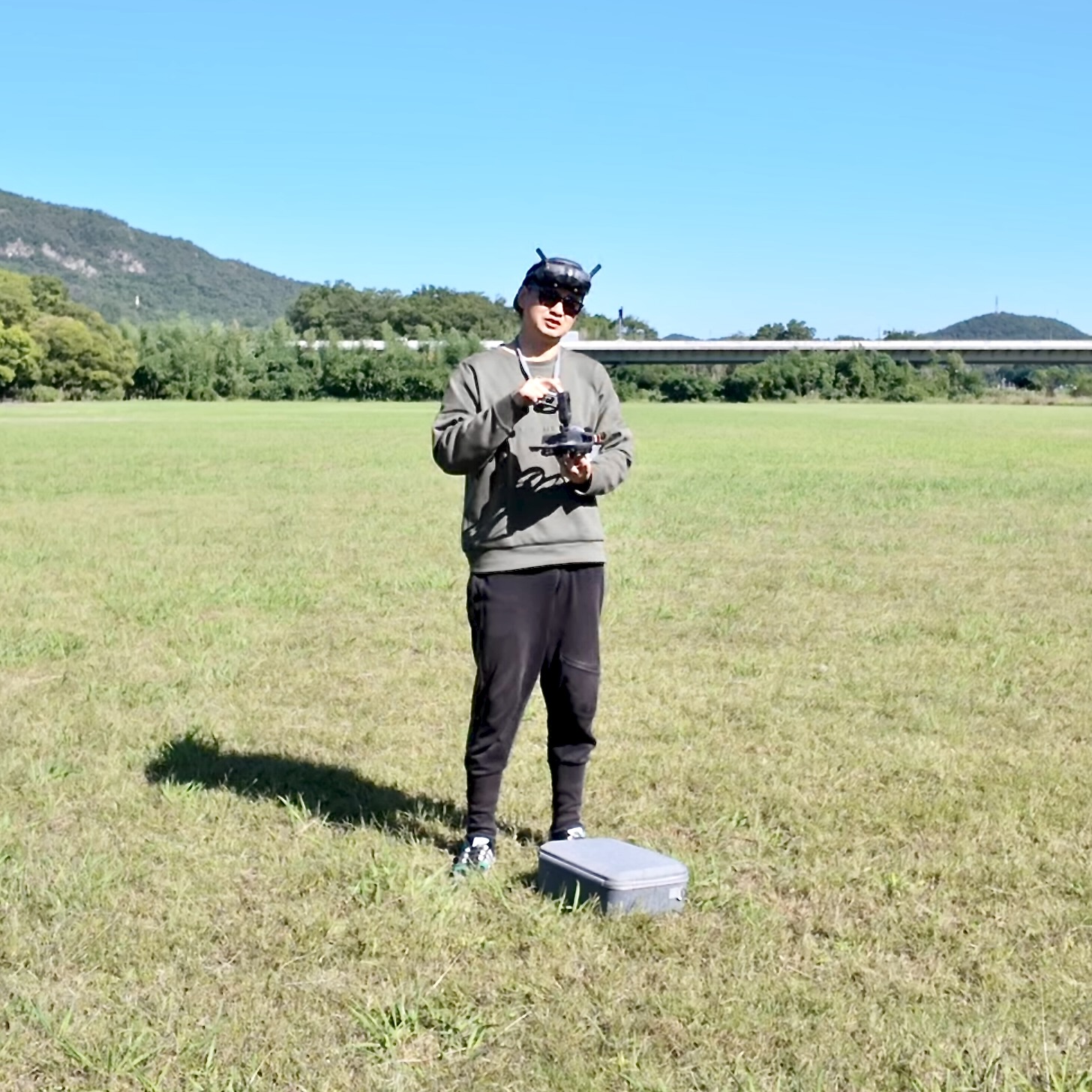
I could store my drone footage on a hard drive and watch it myself years later.
Yet I publish both.
Why?
The obvious answer might be attention.
If I publish something, presumably I want someone to see it.
And of course I do.
But attention doesn’t quite explain what I’m looking for.
Thousands of people could briefly see something I made without it meaning very much to any of them.
On the other hand, one person could read an essay and leave a thoughtful comment about something it reminded them of in their own life.
Those two experiences feel completely different.
Perhaps what matters isn’t merely being seen.
Perhaps it is resonance.
Something in Me Meets Something in You
When I talk about resonance, I don’t mean agreement.
Someone can read something I write and reach a different conclusion.
They can watch one of my videos and notice something completely different from what I noticed.
That might actually make the encounter more interesting.
What matters is that something in the work sets something into motion in another person.
I might write about a childhood memory involving my father.
The reader has never met my father.
They didn’t have my childhood.
They may never have visited any of the places I describe.
But something in that story might remind them of their mother.
Their grandparents.
A road they traveled as a child.
A place they haven’t visited for thirty years.
They aren’t experiencing my memory.
My memory awakened theirs.
Now something that began inside my life has touched something inside theirs.
Different notes.
But somehow they belong to the same chord.
Maybe That’s What a Like Sometimes Means
I’ve thought about this in relation to social media too.
Likes are easy to dismiss as validation.
Sometimes that’s exactly what we’re looking for.
Did people like what I made?
How many views did it get?
How many subscribers did I gain?
Those numbers can become addictive because they’re easy to measure.
But perhaps a Like can sometimes mean something much simpler.
Something there resonated with me.
The person may have nothing else to say.
So they tap a button.
A thoughtful comment tells me more.
Someone might explain what they noticed or what the video or essay reminded them of.
Then something interesting happens.
Their interpretation comes back to me.
And occasionally I notice something in my own work that I hadn’t seen before.
The audience isn’t merely receiving something.
They can add something too.
The Audience Brings Their Own Instrument
This is where the orchestra keeps returning to my mind.
If I publish an FPV video, different viewers can experience completely different things.
Someone interested in drones might watch my flying technique.
Someone else might notice rural Japan.
A beginner might recognize the frustration of learning.
Someone who has never touched a drone might simply enjoy moving through the landscape.
Another person might find the long, relatively quiet flight relaxing.
I can’t determine which one is the correct experience.
I brought my instrument.
They brought theirs.
The video is where they meet.
Perhaps that’s why I don’t particularly like thinking of an audience as simply content consumers.
A reader doesn’t just consume words.
They bring an entire lifetime to them.
Memories.
Experiences.
Beliefs.
Questions.
Relationships.
Losses.
Places.
Everything they’ve learned.
The same sentence enters a different world in every person who reads it.
I can write the words.
I cannot completely determine what happens after they arrive.
Research Suggests We Really Do Become Attuned
The orchestra metaphor isn’t entirely metaphorical.
Researchers studying live classical concerts have found that audience members can show synchronization in things such as movement, heart rate and other physiological responses while experiencing the same performance.
They aren’t having identical experiences.
But something about attending to the same unfolding event can bring aspects of their responses into alignment.
Psychologists also study something called shared reality: the experience that another person shares some part of our inner response to something in the world.
I find that idea fascinating.
Because perhaps what feels good isn’t simply:
You agree with me.
It is:
Something that exists inside me also seems to exist, in some form, inside you.
Our experiences don’t become identical.
But the world feels slightly more shared.
Different Notes Can Still Harmonize
An orchestra would be rather uninteresting if every musician played exactly the same note on exactly the same instrument.
Harmony requires difference.
Human connection may work similarly.
Someone doesn’t need to think like me for us to resonate.
They might even disagree with something I’ve written and leave a thoughtful comment explaining why.
If their response makes me reconsider the question, something meaningful has happened.
Dissonance belongs to music too.
Sometimes tension is what allows a later resolution to mean something.
So perhaps meaningful connection isn’t about surrounding ourselves with people who continually confirm what we already believe.
It is about being open enough for different perspectives to affect one another.
We remain different.
But we’re listening.
I Can’t Manufacture Resonance
This matters to me as a creator.
There are many things I can improve.
A better title might help someone discover a video.
A thumbnail might make someone curious enough to click.
Editing can make something clearer.
A Short might lead someone toward one of my much longer videos.
Those things matter if I want people to find what I make.
But I cannot make someone resonate with it.
I can’t decide:
At 3 minutes and 42 seconds, everyone will feel something profound.
Human beings don’t work that way.
Neither does music.
A composer can write the music.
Musicians can practice.
They can tune their instruments.
The conductor can guide the performance.
The concert hall can be prepared.
People can be invited inside.
But whatever happens between the music and each listener still belongs partly to the listener.
Maybe creating works the same way.
I can create the conditions.
I can’t command the response.
That Changes How I Think About Authenticity
This also helps me understand something that has bothered me about online content.
I see successful formats repeated everywhere.
Similar thumbnails.
Similar titles.
Similar drone comparisons.
Similar tests.
Similar cinematic sequences.
There is nothing inherently wrong with any of them.
Conventions exist for a reason.
An orchestra follows structures too.
But imagine an orchestra discovering that the audience applauded particularly loudly after a cymbal crash.
So next time they add another.
The applause is even louder.
Then another.
And another.
Eventually the entire composition becomes cymbal crashes because that’s what produced the strongest measurable reaction.
Something would be lost.
Online, we can do something similar.
A creator can become so attentive to what produces a reaction that the reaction gradually begins creating the work.
What gets clicks?
What gets retention?
What gets Likes?
What gets comments?
Those are useful questions.
But there is another question I don’t want to lose:
What am I actually trying to play?
I Have to Hear My Own Instrument First
Perhaps resonance has to begin there.
Something first has to catch my attention.
A landscape.
A thought.
A flight.
Something happening in my garden.
A memory.
A question I can’t quite answer.
I stay with it.
Sometimes I investigate it.
Eventually I might turn it into an essay or a video.
Then I put it into the world.
Not because everybody needs to agree with me.
Not because everybody needs to like it.
And certainly not because everybody needs to watch it.
I am simply playing my note as clearly as I currently can.
Someone else may hear nothing particularly interesting.
That’s fine.
Someone else may hear something completely different from what I intended.
That’s interesting.
And occasionally someone responds in a way that makes me think:
Yes. Something connected there.
Perhaps That Is Why Sharing Matters
A private experience doesn’t become less valuable because nobody else sees it.
A sunrise doesn’t need an audience.
Neither does a good flight.
Neither does a thought.
But sharing creates a possibility that didn’t exist before.
Something that moved me can move through what I create and encounter another person.
Then their experience responds.
Sometimes they send something back.
A Like.
A sentence.
A story of their own.
A different perspective.
And for a moment, something that belonged to two separate inner worlds overlaps.
I think that’s what I’ve been trying to describe as resonance.
Not validation.
Not agreement.
Not popularity.
Connection.
When We Are in Tune
At the end of a concert, the orchestra stops playing.
The musicians put down their instruments.
The audience gets up.
Everyone eventually leaves and returns to a different life.
Whatever sense of togetherness existed in that room was temporary.
That doesn’t make it less real.
Perhaps writing and filmmaking can occasionally do something similar.
I bring my experiences.
Someone else brings theirs.
We don’t need the same memories.
We don’t need the same opinions.
We don’t even need to take the same meaning from what I made.
But every once in a while, something I noticed touches something another person recognizes.
For a moment, two different experiences belong to something larger than either one alone.
Like musicians playing different notes in the same piece.
We remain separate.
We remain ourselves.
But for a little while,
we are in tune.




Leave a Reply