
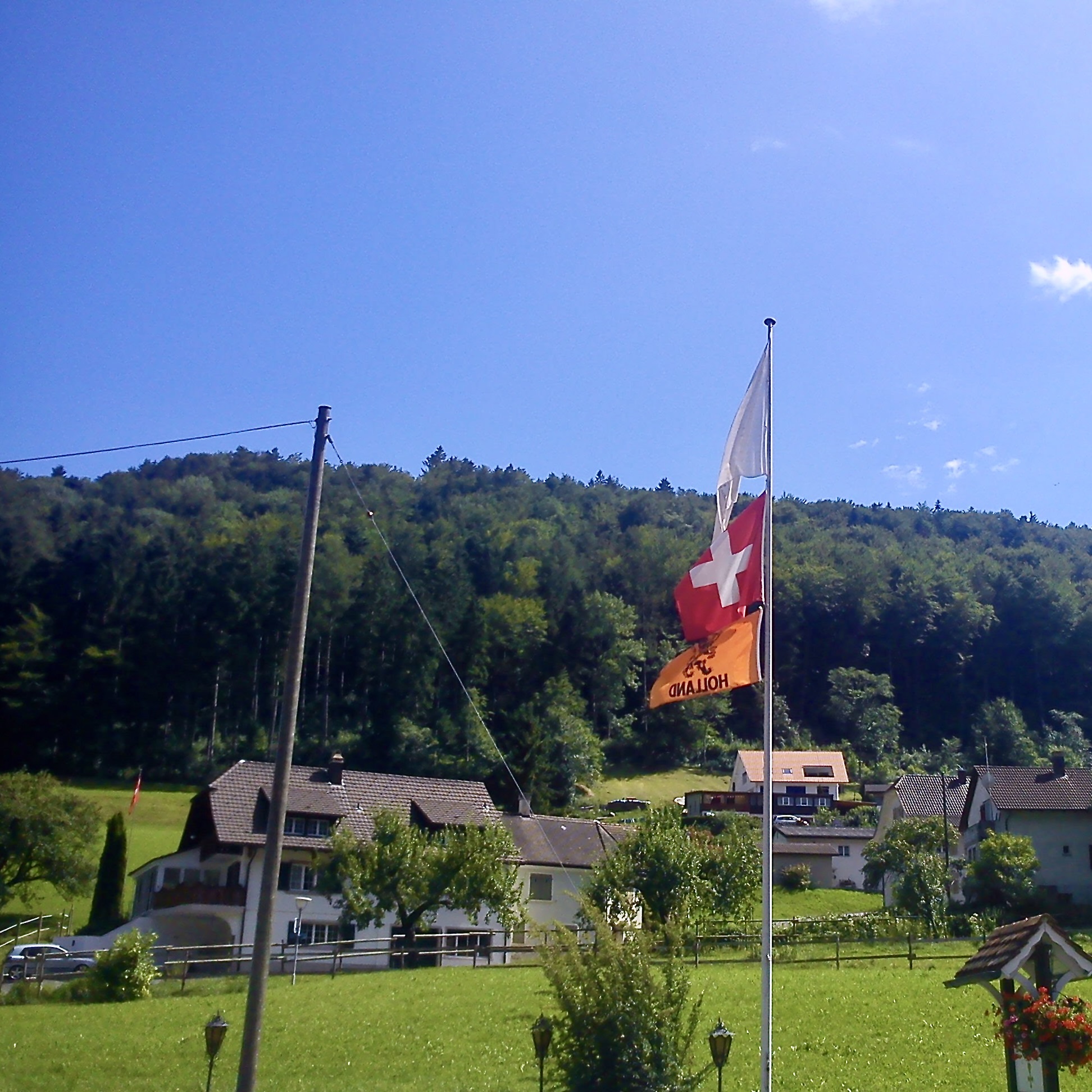
In February 2025, I wrote a post comparing Japan’s National Foundation Day with Swiss National Day.
I described Japan’s founding in 660 BC and Switzerland’s founding in 1291. I also compared the way the two countries celebrate, with Japan’s holiday being relatively quiet and Switzerland’s more festive.
Looking at it again, I realized I had treated the two dates as though they represented the same kind of historical event.
They don’t.
One comes from an ancient founding tradition. The other is connected to a surviving medieval document. And both became national holidays through decisions made much later.
That made me curious about what we are actually commemorating when we celebrate a country’s beginning.
Japan’s traditional beginning
Japan celebrates National Foundation Day on February 11.
The date is associated with Emperor Jimmu, traditionally regarded as Japan’s first emperor. According to the ancient chronicles, his accession took place in 660 BC.
In my original post, I presented that as Japan’s founding date.
But 660 BC is not a historically verified date on which the Japanese state began. It belongs to the traditional chronology of Japan’s imperial origins.
That distinction doesn’t make the tradition meaningless. It simply means we need to distinguish between a founding story and an event that historians can establish through contemporary evidence.
The holiday itself also has a much more recent history.
In 1873, the Meiji government established Kigensetsu, or Empire Day, to commemorate the traditional accession of Emperor Jimmu. The holiday was abolished in 1948 after World War II.
National Foundation Day was established again in 1966, with February 11 chosen as its date.
So the holiday Japan celebrates today is not an ancient celebration that has continued unchanged for more than two thousand years. It is a modern commemoration connected to an ancient tradition.
Why February 11?
I found the process of choosing the date particularly interesting.
When Japan was considering the establishment of National Foundation Day in 1966, the government conducted a public-opinion survey about which date should be selected.
February 11 received the largest share of responses, but it was not the only possibility. Other suggested dates included Constitution Memorial Day and the date Japan’s postwar peace treaty came into effect.
That tells us something important.
The question was not simply, “On which day did Japan begin?”
It was also, “Which date should modern Japan choose to commemorate its founding?”
Those are different questions.
The Japanese name, 建国記念の日 (Kenkoku Kinen no Hi), reflects this idea of commemorating the founding of the nation. The holiday does not require us to treat February 11, 660 BC as a verified historical birthday.
Switzerland’s founding document
Switzerland’s National Day is connected to the Federal Charter of 1291.
Unlike the traditional date associated with Emperor Jimmu, the charter is an actual surviving historical document.
It records an agreement between the communities of Uri, Schwyz and Nidwalden to provide mutual assistance and establish arrangements for dealing with disputes and maintaining order.
The document is dated to early August 1291.
Not specifically August 1.
That was the first detail I hadn’t appreciated.
The second was that the charter did not immediately become Switzerland’s national founding document.
For centuries, it was not treated as the definitive beginning of the country. It was rediscovered in 1758 and gained its present symbolic importance much later, particularly toward the end of the nineteenth century.
In 1891, Switzerland organized a national jubilee celebrating the 600th anniversary of the Confederation. August 1 subsequently became established as the national date.
The modern Swiss federal state, meanwhile, was founded in 1848.
So the Switzerland we know today did not suddenly appear on August 1, 1291.
The charter became a symbol connecting the modern country to its much older history.
The Rütli story
Growing up in Switzerland, I was familiar with the story of the Rütli oath.
Representatives of the founding cantons gather on the meadow and swear to stand together. It is one of the most recognizable images of Swiss national history.
But the legendary oath and the surviving Federal Charter are not the same piece of historical evidence.
The charter is a medieval agreement. The Rütli story is part of the tradition that developed around the Confederation’s origins.
The historical record and the national story became intertwined.
That doesn’t mean the story has no value. It means that the meaning later generations gave to the event is not identical to what we can establish about the event itself.
Two different kinds of beginnings
This is where the comparison became clearer for me.
Japan’s February 11 commemorates a traditional imperial founding whose date comes from ancient chronicles.
Switzerland’s August 1 commemorates a historical alliance that later became the symbolic beginning of the Confederation.
Neither date is the literal birthday of the modern state.
Japan’s present constitutional system developed through a long history, including the major changes after World War II.
Switzerland’s modern federal state was established in 1848, centuries after the 1291 charter.
Both countries have much longer histories than their modern political structures.
A national holiday chooses a point in that history and gives it special meaning.
Why do the celebrations feel so different?
My original post also compared the atmosphere of the two holidays.
Swiss National Day is often visibly festive. There are bonfires, fireworks, lanterns, speeches and gatherings in towns and villages.
Japan’s National Foundation Day is generally much quieter.
I still think that is a fair observation.
But I would be more careful about explaining the difference through national character.
It is tempting to say that Swiss people are more festive and Japanese people are more reserved. That is too broad an explanation for two particular holidays.
The holidays have different histories.
Switzerland’s August 1 developed around a medieval alliance, nineteenth-century nation-building and local communal traditions.
Japan’s February 11 is connected to an imperial founding tradition and the postwar decision to re-establish a national commemoration.
Those histories help explain why the celebrations developed differently.
We don’t need to turn them into general statements about how Swiss or Japanese people behave.
What I was actually comparing
When I wrote the original post, I thought I was comparing two national founding dates.
Now I see that I was comparing two ways countries commemorate their origins.
The dates are not arbitrary, but neither tells the whole story of how the country came to exist.
Japan’s date connects the present to an ancient imperial tradition.
Switzerland’s date connects the modern federal state to an older alliance that became central to its national story.
Both holidays look backward, but the meaning attached to that past was shaped by people living much later.
I think that is what I missed in my first comparison.
A national day doesn’t necessarily tell us the exact moment a country began.
It tells us which part of its past the country has chosen to remember as its beginning.
Sources
- My original post: Japan vs Switzerland — National Holidays Compared
- Japanese Act on National Holidays
- National Diet Library — Reference on February 11
- Cabinet Office — 1966 Public-Opinion Survey
- Swiss Federal Administration — Federal Charter of 1291
- Swiss Federal Administration — History of the Federal Council




Leave a Reply