
In February 2025, I wrote a post called Lessons from Japan’s Cutting-Edge Railway Technology.
I was trying to understand why Japan’s railway system works so well.
I looked at advanced trains, infrastructure, government investment, privatization and Japanese attitudes toward punctuality.
None of those things were necessarily wrong.
But looking at the question again, I think I was paying too much attention to the trains.
Because a train arriving on time is the visible result of a much larger system.
Privatization is only part of the story
Japanese National Railways was divided into the JR companies in 1987.
The old organization had accumulated enormous debt, and the reform divided passenger operations between regional companies.
In my original post, I described privatization as something that increased competition.
That was too simple.
JR East and JR Central, for example, don’t normally compete by running trains alongside each other over the same regional network.
The competition is broader.
Railways compete with cars, buses and airlines. In some places, JR lines also compete with private railway companies.
Privatization changed management, responsibility and incentives.
But it didn’t suddenly create Japan’s railway culture.
Much of that story had already begun decades earlier.
Some railway companies helped build the places they served
This was one of the most interesting things I learned.
Japanese private railway companies didn’t always treat the railway as nothing more than transportation between two places.
Some helped create the places people wanted to travel between.
Hankyu is a famous example.
The company developed residential areas along its railway lines. It also became involved in department stores, entertainment and other businesses around the places its trains served.
That created an interesting relationship.
Build attractive places along the railway and more people want to live there.
More residents create more passengers.
More passengers support better railway services.
Better railway services make living there more attractive.
The railway and the surrounding city can grow together.
That helps me understand why stations in Japan often feel like much more than places to catch a train.
Shops, restaurants, offices and other parts of everyday life can be built around them.
The railway isn’t simply passing through the city.
In many places, it helped shape the city around it.
Punctuality has to be designed
Japanese punctuality is probably what impresses visitors most.
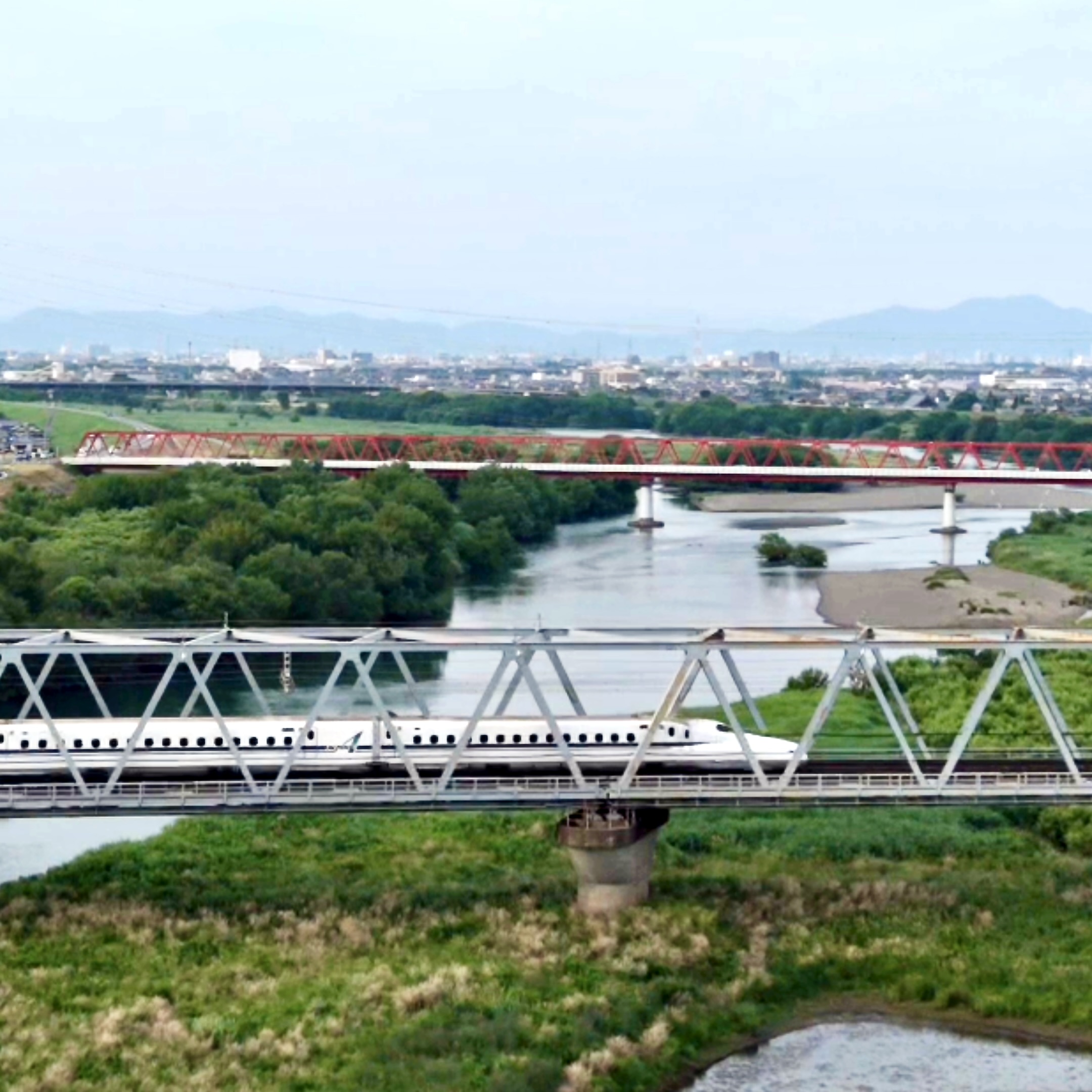
The Tokaido Shinkansen is an extreme example.
JR Central operates hundreds of trains on the line every day, with as many as 18 trains per hour. Yet average delays can still be measured in minutes rather than tens of minutes.
It is tempting to explain this by saying that Japanese people value punctuality.
I’m sure that matters.
But culture alone cannot make hundreds of trains arrive on time.
The timetable itself has to be designed for reliability.
Railway planners have to think about how long trains need between stations, how long passengers need to get on and off, where small delays can be absorbed and what happens when one train is late.
That last part is especially important.
On a busy railway, a delayed train doesn’t exist by itself.
There may be another train only a few minutes behind it.
A slightly longer stop at one station can affect the next train, which can affect another train after that.
A small delay can spread.
So punctuality isn’t simply about making every train go faster.
It is also about preventing small problems from becoming larger ones.
Busy railways make punctuality harder
This was something I hadn’t thought much about before.
The enormous number of passengers using Japanese railways isn’t only a strength.
It also creates a problem.
More passengers can mean longer stops at stations.
Crowded platforms can slow boarding.
Interconnected railway lines can allow a disruption on one line to affect another.
The convenience of the system can also make it more fragile.
That changes how I see a train arriving exactly on time during rush hour.
The impressive part isn’t that nothing went wrong.
It is how many things have to keep working together despite all the opportunities for something to go wrong.
What looks like culture may also be design
I also wrote about Japanese social discipline in my original post.
I would phrase that differently now.
Passenger behavior does matter.
Standing in the right place, allowing passengers to leave before boarding and moving efficiently through a station can help trains stay on schedule.
But look at everything surrounding that behavior.
There are markings showing where to stand.
Signs show where to go.
Announcements tell passengers what is happening.
Station staff manage platforms.
Train doors stop at predictable locations.
Timetables create expectations.
The environment helps people behave in ways that keep the system moving.
So when I see an orderly platform in Japan, I don’t think the explanation is simply:
Japanese people are disciplined.
The system also makes orderly behavior easier.
Culture and design are interacting.
The train is only one part of the technology
This also changes how I think about the title of my old post.
I called it Lessons from Japan’s Cutting-Edge Railway Technology.
The trains certainly contain impressive technology.
But imagine taking a modern Shinkansen and placing it on a railway with poorly maintained tracks, unreliable signalling, badly designed schedules and inadequate stations.
You wouldn’t have recreated the Japanese Shinkansen experience.
You would just have a very good train.
What Japan built is much larger.
The train depends on the tracks.
The tracks depend on maintenance.
The timetable depends on realistic running and stopping times.
The timetable depends on staff following operating procedures.
Frequent services depend on enough passengers using them.
Passengers depend on cities and stations that make rail travel useful.
All of those parts affect one another.
It doesn’t work equally well everywhere
There is another side to this story.
Japan’s railway model works particularly well in densely populated areas where large numbers of people use trains every day.
Rural Japan faces a very different problem.
As populations shrink, some regional railway lines struggle to attract enough passengers to remain financially sustainable.
Several JR companies have also had very different experiences since the breakup of Japanese National Railways.
JR East, JR Central and JR West operate in regions containing some of Japan’s largest population centers. JR Hokkaido and JR Shikoku face much more difficult conditions.
The same country.
The same reputation for railway expertise.
Very different results.
That makes it difficult to explain Japan’s railway success through technology, culture or management alone.
Where the railway operates matters too.
The part I couldn’t see
When I wrote about Japanese railways in 2025, I was looking for the reasons they worked so well.
I found several.
Technology.
Investment.
Privatization.
Management.
Punctuality.
Passenger behavior.
Looking at them again, I don’t think any one of them explains very much by itself.
What matters is how they work together.
A useful railway attracts passengers.
Passengers support frequent service.
Frequent service makes the railway more useful.
Development around stations creates more reasons to use it.
Dense schedules require precise operations.
Precise operations depend on good infrastructure, maintenance, planning, staff and passenger behavior.
It keeps circling back.
So perhaps I was looking at the wrong thing when I focused on Japan’s impressive trains.
When a Japanese train arrives exactly when the timetable says it will, the train is only the part I can see.
The more impressive part may be everything I can’t see that allowed it to arrive there on time.
Sources
Ministry of Land, Infrastructure, Transport and Tourism — JR reform and subsequent developments
MLIT White Paper
Ministry of Land, Infrastructure, Transport and Tourism — historical discussion of competition involving JR companies
MLIT Transport White Paper
East Japan Railway Culture Foundation — history of Japanese private railways and railway-linked development
Japan Railway & Transport Review
JR Central — Tokaido Shinkansen operations and punctuality
JR Central: Tokaido Shinkansen
Railway Technical Research Institute — research on timetable robustness and delay reduction
RTRI Quarterly Report
Ministry of Land, Infrastructure, Transport and Tourism — regional railway policy
MLIT: Regional Railways



Leave a Reply