

Years ago, when I was still working in the Netherlands, I spent a lot of time thinking about success.
At first, my ideas weren’t particularly unusual.
Become a millionaire.
Become a successful YouTuber.
Build an Amazon dropshipping business.
Run my own company.
Make enough money that I wouldn’t have to depend on an employer.
They were different versions of a successful life I could imagine at the time.
But eventually I asked myself a different question.
I imagined that I was already sixty years old and looking back at my life.
What would I regret not having done while I still had the time and energy to do it?
That question changed things.
Looking Back From Sixty
I started making a list.
I wanted to live abroad in Thailand.
I imagined owning a three-bedroom villa.
I wanted rental property producing income.
I wanted investments paying ever-increasing dividends.
I wanted to travel around the world with my wife while we were still young and energetic enough to enjoy it.
They weren’t all concrete goals yet.
They were more like a picture of a life.
Money was part of that picture, but gradually I understood that money wasn’t really the point.
I wanted control over my time.
That eventually became something I could measure.
Financial targets.
Investment income.
Rental income.
Timelines.
Deadlines.
I regularly looked at my progress because otherwise it was easy to lose sight of what I was working toward.
Not every day was successful.
Not every investment worked as expected.
Not everything happened according to plan.
But individual days didn’t need to be successful.
They belonged to a direction.
Eventually, I became financially independent.
And something happened that I hadn’t anticipated.
The Life I Imagined Never Happened
I didn’t move to Thailand.
I moved to Japan.
I didn’t end up living the life I had pictured years earlier.
And yet, strangely, much of what I had been looking for was there.
I was living abroad.
I had a home.
I had financial independence.
My wife and I had travelled together.
I had considerably more control over my time.
If I looked only at the original checklist, I could say the plan changed.
But if I looked at what those goals were trying to give me, I had come surprisingly close.
Perhaps even closer than I had known how to imagine.
And then other things started happening.
Things that had never been on the list.
I Had Never Planned to Become a Gardener
There was a garden at our home in Japan.
So I started working in it.
At first, I didn’t know much about what I was doing.
One question led to another.
I learned about pruning.
Plants.
Soil.
Composting.
Growing food.
Seasons.
Insects.
Trees.
I made mistakes.
I watched things die.
I watched other things unexpectedly return.
Something that happened outside my window gradually became a substantial part of my life.
Gardening gave me exercise, curiosity, frustration, learning and endless things to pay attention to.
How could I have put that on my list years earlier?
I couldn’t.
I hadn’t encountered the garden yet.
I Never Became a Pilot Either
When I was a child, I wanted to become a pilot.
That didn’t happen.
At least not in the form I imagined.
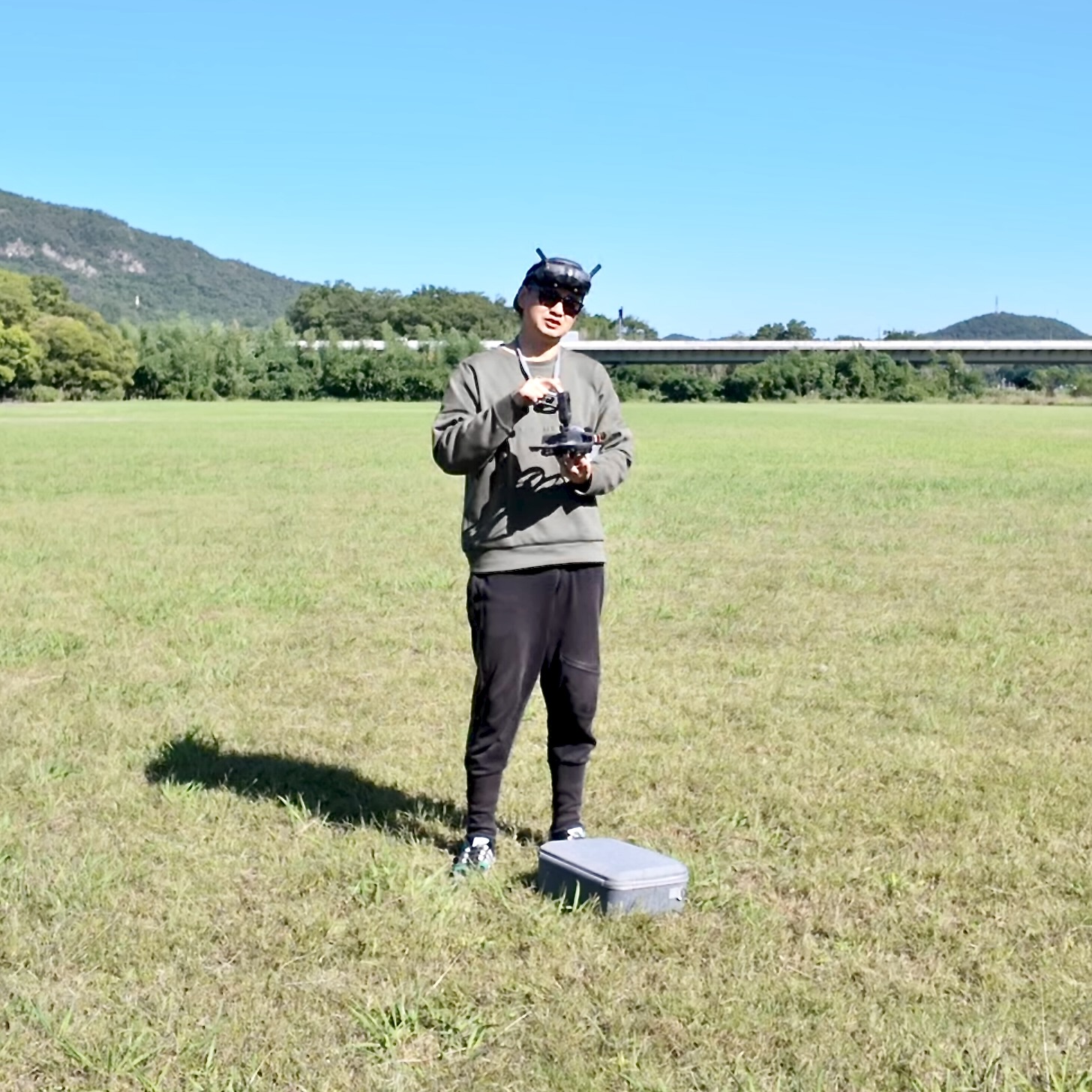
Decades later, I put on FPV goggles and learned to fly a drone manually.
Suddenly I was looking through the eyes of a small aircraft as I controlled it through three-dimensional space.
I practiced.
Crashed.
Learned.
Improved.
Then flying connected with filming.
Filming connected with storytelling.
And making videos became another thing I had never planned to care about this much.
Did I achieve my childhood dream of becoming a pilot?
Technically, no.
And yet something in that old dream seems to have been realized differently.
That distinction has become important to me.
Some Dreams Are Realized Differently
Perhaps we sometimes confuse the form of a dream with what we were actually seeking.
Thailand was a form.
Living freely abroad was underneath it.
Becoming a professional pilot was a form.
Flying was underneath it.
Becoming a successful YouTuber was a form.
Perhaps creating films I genuinely enjoy making and watching was underneath that.
Running my own business was another form.
Perhaps greater autonomy over my time was what mattered underneath it.
Seen this way, some goals I didn’t achieve weren’t necessarily failures.
Life answered them differently.
I couldn’t have predicted those answers because I didn’t yet have the experiences necessary to imagine them.
That has made me question what goals actually are.
Perhaps Some Goals Are Hypotheses
There are goals that should be precise.
Financial independence was one of them for me.
Numbers helped.
Deadlines helped.
Measuring progress helped.
But a life goal may be different.
When I said I wanted to live in Thailand, perhaps what I was really saying was:
Given everything I know about myself today, I think this kind of life would make me happier and more fulfilled.
That’s a hypothesis.
Then you start walking toward it.
And walking changes you.
You learn something.
You meet someone.
Circumstances change.
A possibility appears that wasn’t visible from where you started.
Suddenly the next stepping stone isn’t where you expected it to be.
That doesn’t necessarily mean you lost your way.
Perhaps you can only see the next stone because you reached this one.
Financial Independence Gave Me More Than Time
For years, I thought financial independence was largely about winning back my time.
I still think that’s true.
But now I see another consequence.
It gave me more opportunities to discover what my time was worth spending on.
That’s different.
Gardening doesn’t need to make money.
Flying drones doesn’t need to make money.
This blog doesn’t need to become a business.
I can investigate a question simply because I want to understand it.
I can spend time learning something without first calculating its economic return.
Removing the requirement that everything needs to be financially productive created room for other kinds of value to emerge.
Curiosity.
Learning.
Mastery.
Creativity.
Relationships.
Attention.
Meaning.
And perhaps that is one of the greatest returns financial independence has given me.
Not merely more free hours.
More room to encounter things I didn’t know I would care about.
But Freedom Can Become Another Job
There is a strange problem with all this freedom.
Nobody tells me what a successful day looks like anymore.
There is no employer deciding when I should start.
No manager setting my goals.
No performance review.
No fixed moment when I’ve done enough.
I define those things myself.
That sounds wonderful.
It is.
But it also means I can become my own demanding employer.
I should write.
I should exercise.
I should study.
I should make another film.
I should work on the garden.
I should make better use of my time.
Suddenly the freedom I worked so hard to create can become another schedule against which I evaluate myself.
So I started wondering:
How important is routine when I am responsible for defining my own success?
What Is a Routine Actually For?
I used to think about routines largely in terms of discipline.
Do what needs to be done whether I feel like doing it or not.
I still think discipline matters.
Financial independence certainly didn’t happen by waiting for inspiration.
But I now see routine differently.
A routine doesn’t need to tell me how to spend every hour.
It can simply protect the things I don’t want to lose through neglect.
My health needs some form of regular movement.
Skills require practice.
Relationships require time.
Finances require maintenance.
Writing requires sitting down and writing.
A curiosity may need repeated attention before I understand where it leads.
The value of a habit therefore isn’t necessarily that I completed it today.
A better question might be:
What does this habit repeatedly make possible?
That changes everything.
Some Things Need Repetition to Reveal Themselves
My first FPV flight couldn’t show me what years of flying might become.
My first gardening experience couldn’t show me what the garden would eventually mean to me.
My first blog post couldn’t show me what writing hundreds and eventually more than a thousand posts would do to the way I think.
Curiosity discovers things.
Repetition reveals their depth.
That’s perhaps the part of habit I had underestimated.
Habits aren’t merely tools for productivity.
They give promising encounters enough time to become something.
But that doesn’t mean everything deserves to become a habit.
Some interests disappear.
Others keep drawing me back.
I’ve learned to pay attention to that too.
What do I keep returning to even when nobody requires me to?
That seems to tell me something about myself.
And Some Time Should Remain Empty
There is another side to this.
If I schedule everything that matters, I may accidentally remove the conditions through which I discovered many of those things in the first place.
I never scheduled:
Become fascinated by gardening.
I encountered a garden.
I never scheduled:
Discover a new philosophy of paying attention.
I kept noticing things and writing about them.
The unexpected needs somewhere to enter.
So perhaps a good routine shouldn’t occupy my whole life.
It should create a few reliable anchors while leaving enough space between them for curiosity, weather, people, opportunities and ordinary life to interfere.
Maybe that isn’t poor planning.
Maybe the openness is part of the plan.
A Day Well Lived
This brings me back to the question that started this investigation.
What does success mean when nobody else defines it for me?
At first I thought I needed to determine what a successful day looks like.
Now I’m not sure that’s the right unit of measurement.
Not every day needs to contain an achievement.
Some days move something forward.
Some maintain what already exists.
Some teach me something.
Some are spent with someone I care about.
Some reveal an unexpected curiosity.
Some are difficult.
Some mostly allow me to recover.
And some simply let me experience the life I spent years working to make possible.
Perhaps a day doesn’t need to be successful by itself.
It needs to participate meaningfully in a life I want to continue living.
The pattern matters more than the streak.
Looking Back Again
Years ago, I imagined myself at sixty and asked what I would regret not having done.
I still think that was one of the most useful questions I asked myself.
But today I would add another.
When sixty-year-old me eventually looks backward, I don’t only want him to see what I accomplished.
I want him to see how I spent the years getting there.
Did I actually use the freedom I worked for?
Did I remain curious?
Did I keep learning?
Did I take care of myself and the people important to me?
Did I give meaningful interests enough time to develop?
Did I notice when something no longer belonged in my life?
And did I leave enough room for things I couldn’t possibly have planned?
If so, perhaps it won’t matter very much that the life looks different from the one I originally imagined.
It already does.
And I’m glad it does.
What Success Means to Me Now
I don’t think success is something I can reduce to money anymore.
Nor subscribers.
Possessions.
Productivity.
Completed goals.
Or perfect habits.
Those things can measure particular achievements.
They cannot measure a life.
For me, success seems closer to having enough freedom to direct my own life, enough discipline to keep what matters alive, enough curiosity to keep discovering, enough persistence to discover depth, and enough openness to allow life to change the plan.
Then, occasionally, I can look back and ask whether the life emerging from all of this is one I am glad to be living.
Right now, it is.
Perhaps that’s enough.
Years ago, I set goals because I wanted to build the life I imagined.
Financial independence eventually taught me something I couldn’t have put on any list.
Sometimes I first have to live in order to discover what kind of life I want.




Leave a Reply