
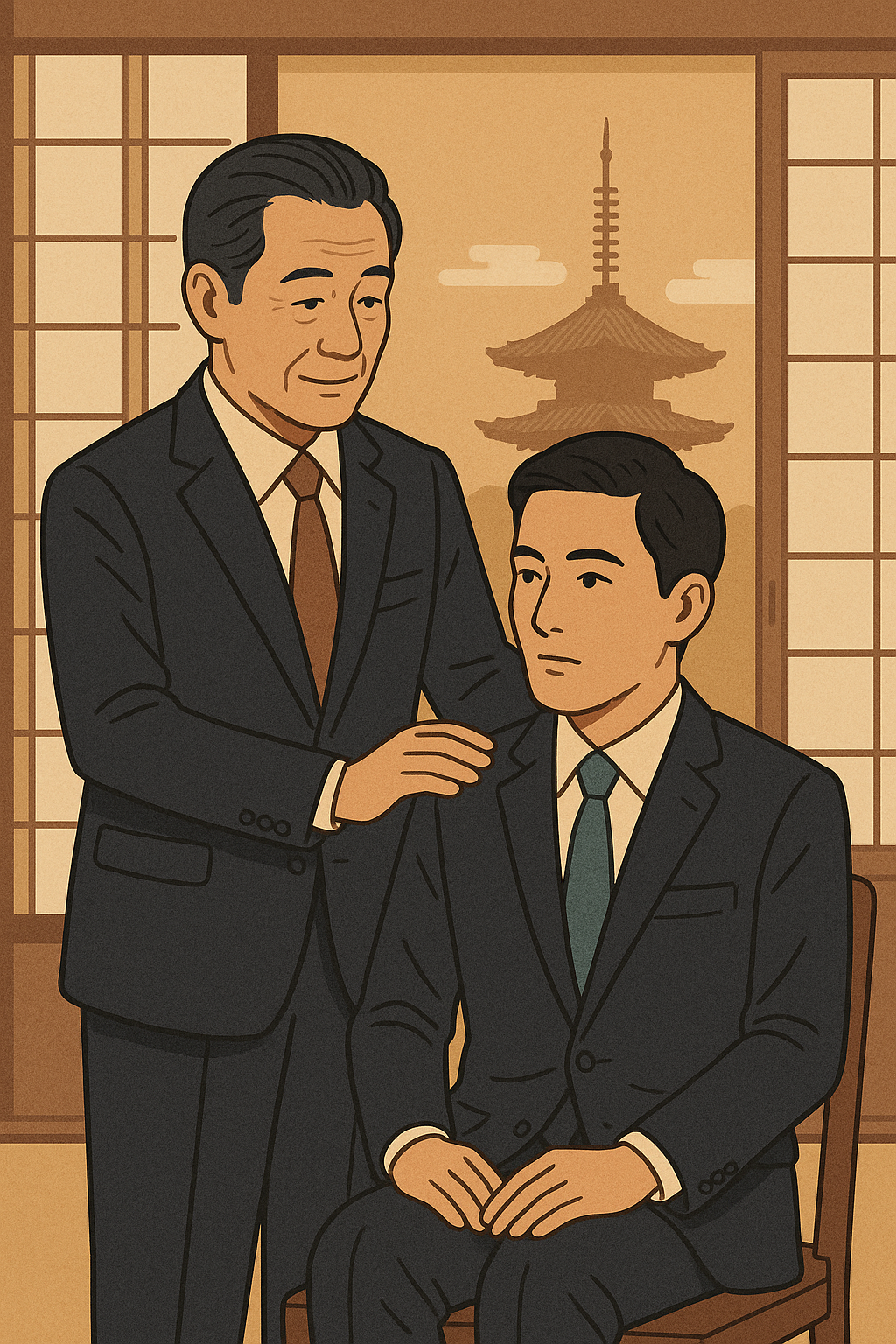
What if you could be adopted into a family not as a child, but as an adult? And not for love or rescue—but to carry a family name, business, or tradition into the future?
In Japan, that’s not just possible—it’s normal.
Let’s talk about one of Japan’s lesser-known cultural marvels: adult adoption for family business succession, a practice that still thrives in the 21st century.
👨👨👦 A Different Kind of Family Legacy
In the West, adoption usually conjures images of children finding a new home. But in Japan, adoption often happens in boardrooms, not nurseries. It’s known as yōshi-engumi (養子縁組)—the legal adoption of an adult, often for practical, not emotional, reasons.
When a family lacks a biological heir—or the current one doesn’t want the role—they often adopt a successor: sometimes a son-in-law, a skilled apprentice, or even a rising star from outside the family.
It’s less about blood and more about commitment, capability, and continuity.
🧑💼 Business Before Biology
Japanese culture places a strong emphasis on preserving what works. This is why you’ll find:
- Companies that have lasted 300–400+ years.
- Inns (ryokan), sake breweries, or artisan shops run by the 15th or 20th generation.
- Many of these lines unbroken not through birth, but through adoption.
The adopted adult takes on the family name, steps into the leadership role, and becomes part of the family registry (koseki), fully legal and often warmly accepted.
Some of Japan’s largest and oldest companies—Kikkoman, Toyota, Suzuki—have been passed down this way.
🧾 Why Do It?
Here’s why adult adoption makes perfect sense in Japan:
- No Willing Heir? No Problem. The family can choose the most capable person to carry the torch.
- Preserve the Family Name. Without a male heir, the family name might die out—unless someone adopts it.
- Marry and Adopt in One Move. In many cases, a man marries the family’s daughter, takes the wife’s surname (rare elsewhere), and is adopted by her family to become the future head.
- Merit over Bloodline. Japan often values effort, discipline, and humility. Adoption rewards skill and dedication.
🧠 It’s Strategic—and It Works
In a country where harmony (wa) and long-term thinking are prized, adult adoption is a stable, practical solution to a very human problem: “Who will continue what I’ve built?”
While some might view it as cold or transactional, many adopted successors feel deeply honored. They are chosen—not born—into responsibility. And they accept it as a duty.
🔍 A Tradition Still Alive Today
The numbers speak for themselves:
- Over 90% of adoptions in Japan are of adults, not children.
- Many are in their 20s or 30s.
- This isn’t fading—it’s still happening, especially among family businesses that care deeply about their legacy.
Even today, small businesses in rural Japan continue this tradition quietly, without fanfare. Sometimes the successor is a son-in-law. Sometimes, just a trusted apprentice who “feels like family.”
🪞What It Reflects About Japan
To me, this tradition reveals something timeless about Japan:
- That legacy matters—not only in name but in heart and service.
- That family isn’t just who you’re born to, but who you commit to.
- That preserving something good is more important than clinging to how it’s “supposed to be.”
In a world that often rewards the new, Japan reminds us to honor what’s been built—and to pass it on with care.
✍️ Final Thought
We often think of legacy as something we inherit. But in Japan, legacy is something you may be chosen for—not by fate, but by trust.
It makes me wonder:
What would I do if someone asked me to carry their life’s work forward?
Maybe that’s a question worth asking—even if you’re not in Japan.




Leave a Reply