
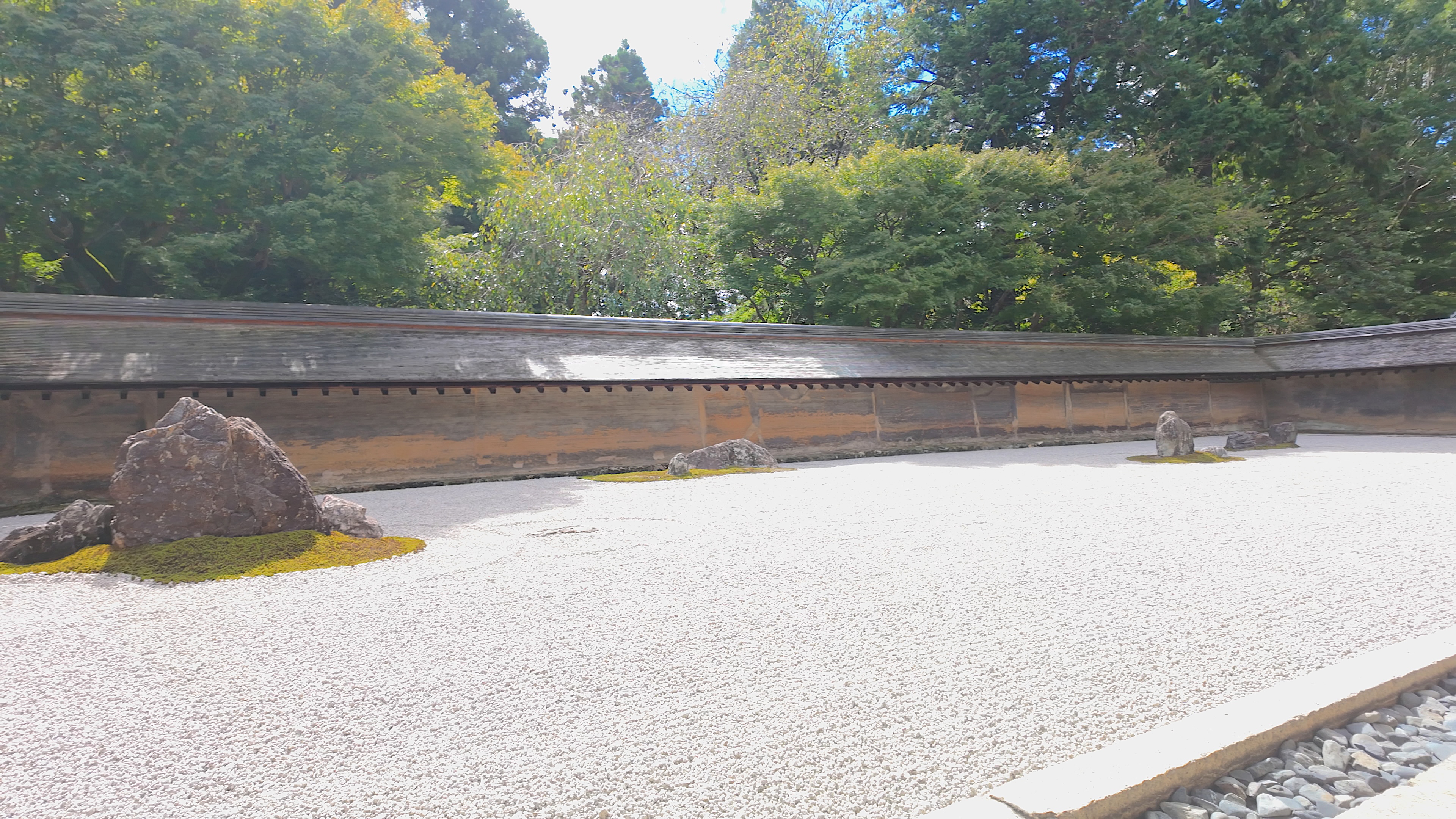
While I had visited Ryonan-ji several years ago, its true significance eluded me at the time. I often consider myself a cultural barbarian, which is why I started writing a daily blog—to ensure that what I experience doesn’t slip past my attention. Blogging compels me to delve deeper into the things I encounter, fostering a greater appreciation for them. Today, among the many destinations I explored with my mom in Kyoto, I wanted to take a closer look at Ryoan-ji.
Ryoan-ji (Ryōan-ji, 龍安寺) is a famous Zen temple located in Kyoto, Japan, renowned for its iconic rock garden. Established in 1450 by the Hosokawa family, it belongs to the Myoshin-ji school of the Rinzai sect of Zen Buddhism. The temple is a UNESCO World Heritage site and is part of the “Historic Monuments of Ancient Kyoto.”
Here are some key features of Ryoan-ji:
1. Rock Garden (Karesansui)
The temple’s rock garden is the main attraction, featuring 15 rocks of varying sizes arranged in a sea of meticulously raked white gravel. The garden is designed for meditation and contemplation, embodying the principles of simplicity and Zen aesthetics. Interestingly, from any viewpoint, only 14 rocks are visible at once—viewers must reach enlightenment to “see” the 15th, symbolizing hidden truths or spiritual awareness.
2. Zen Influence
Ryoan-ji’s garden reflects Zen Buddhist concepts like wabi-sabi, which emphasizes the beauty of imperfection and transience. The minimalist design encourages a calm mind and deep reflection, making the temple a prime spot for those seeking peace and mindfulness.
3. Kyoyochi Pond
Located within the temple grounds, Kyoyochi Pond enhances the serene atmosphere with its natural beauty. It was originally part of an aristocrat’s estate before the temple was founded. Visitors often enjoy strolling around the pond, especially in autumn when the surrounding trees display brilliant colors.
4. Cultural Importance
Ryoan-ji is not just a place for meditation; it is a symbol of Japanese cultural and spiritual heritage. It has influenced various aspects of Japanese garden design and continues to attract visitors interested in Zen philosophy, architecture, and aesthetics.
Ryoan-ji exemplifies the refined simplicity and spiritual depth of Zen Buddhism, making it a must-see for anyone visiting Kyoto, especially those drawn to minimalist beauty and meditation.





Leave a Reply