
I’ve been spending quite a lot of time working in our garden lately.
And I’m far from finished.
In fact, I suspect I’ll never really finish it.
Recently, I’ve been clearing weeds and removing surplus soil from the rock garden at our home in Gifu. It’s something I’ve wanted to do for quite some time, but other gardening activities always seemed to take priority.
When I first moved to Japan about three years ago, I knew very little about gardening.
Our garden had been established long before I arrived. My wife’s grandfather had even commissioned a professional gardener to design and create the rock garden.
Unfortunately, I don’t know what the gardener originally had in mind when arranging the rocks.
To me, some of the arrangements seem rather random. Perhaps there was a particular design concept behind them, but I haven’t been able to recognize it.
And over the years, parts of the rock garden had gradually disappeared beneath weeds and soil.
At first, I wasn’t particularly concerned about restoring its appearance.
I was more interested in learning how to grow things.
I started experimenting with composting, improving the soil, managing our raised beds, and planting fruit trees.
I enjoyed the idea of making our garden productive.
And I still do.
But I also admired the beautiful Japanese gardens in our neighborhood.
Many have carefully pruned trees and shrubs, with foliage arranged into distinctive shapes. Some have the cloud-like appearance that first attracted me to Japanese pruning techniques.
I’ve often wondered how much experience and knowledge goes into maintaining them.
Perhaps some of my neighbors learned gardening skills from their parents or grandparents. Others may simply hire professional gardeners to maintain their gardens.
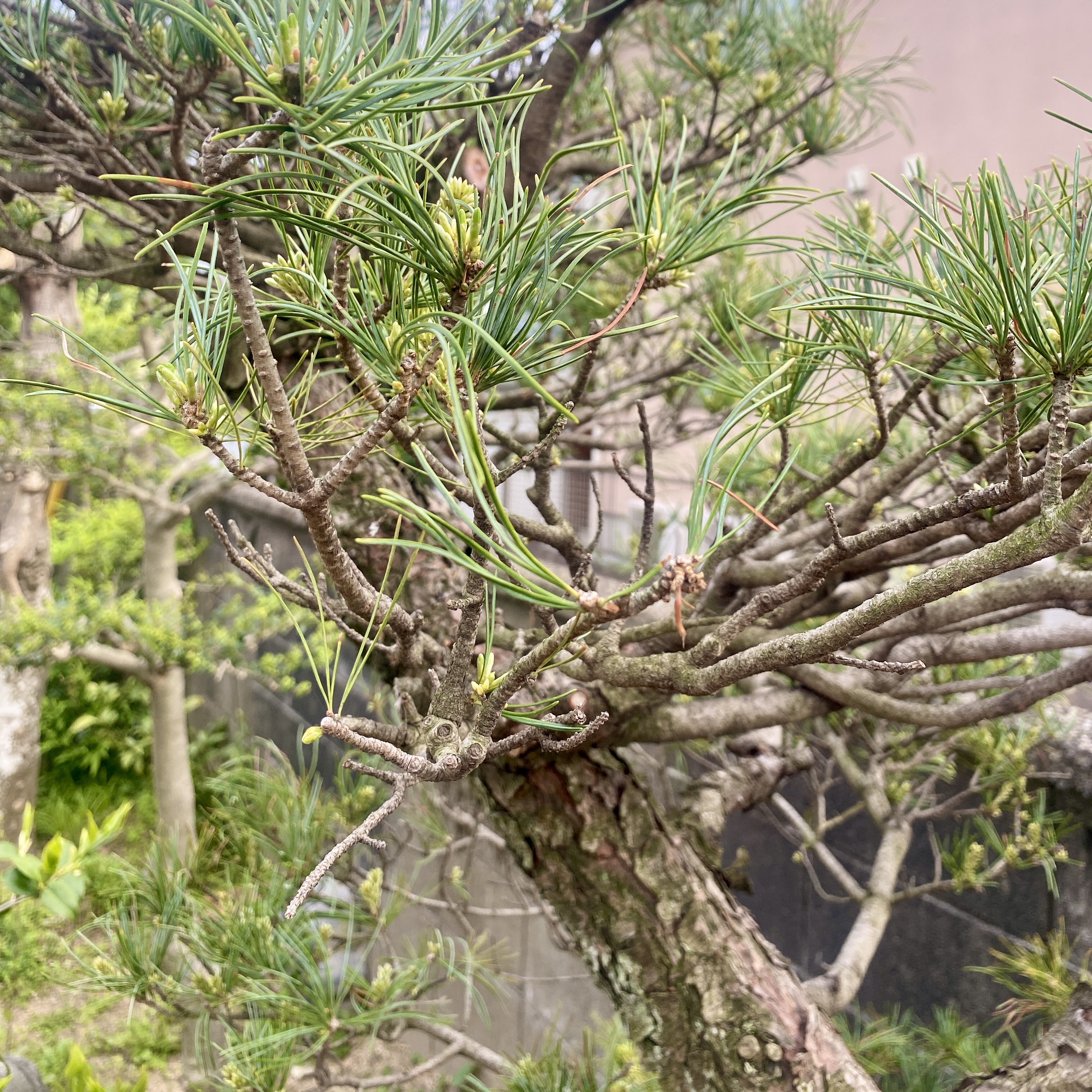
We do that too, when it comes to our two Japanese black pines.
But the rest of our garden is entirely left to the mercy of an inexperienced Swiss gardener.
Me.
I say that with some humor, although even after three years of trimming, pruning, composting, and experimenting, I still feel I have a great deal to learn.
One thing I’ve noticed in our neighborhood is that people often seem to have either a productive garden or a traditional ornamental garden.
Some use their land to grow vegetables and fruit. Others maintain carefully arranged Japanese gardens with beautifully pruned trees and shrubs.
I don’t often see the two approaches combined.
For a while, I thought I might simply let go of the idea of maintaining a beautiful Japanese rock garden and concentrate on our fruit trees, raised beds, and composting instead.
After all, there was already plenty of work to do.
But as I continued caring for the trees and shrubs, I gradually became more interested in their appearance as well.
I started learning about Japanese pruning techniques, including shin-tome, which I understand as removing or controlling a leading shoot to limit upward growth.
I also began experimenting with sukashi, thinning the branches to open up the canopy.
Some of our trees had become quite dense. On windy days, their branches would move and bend considerably, and I wanted to reduce their size while keeping them healthy.
By selectively removing dominant branches and thinning the interior, I could allow more daylight to reach the foliage beneath them.
I also liked how the branching structure became more visible.
And on sunny days, sunlight filtering through the leaves created beautiful patterns of light and shadow.
The Japanese call this komorebi.
It’s something I’ve come to appreciate more as I’ve learned to open up the canopies of our trees.
Of course, I’m still experimenting.
Different trees and shrubs respond differently to pruning, and I don’t always know what the results will look like until another growing season has passed.
But slowly, the garden has started to look more intentional.
The trees and shrubs are becoming more manageable in size, and I have a clearer idea of how I want them to develop in relation to one another.
That brings me back to our rock garden.
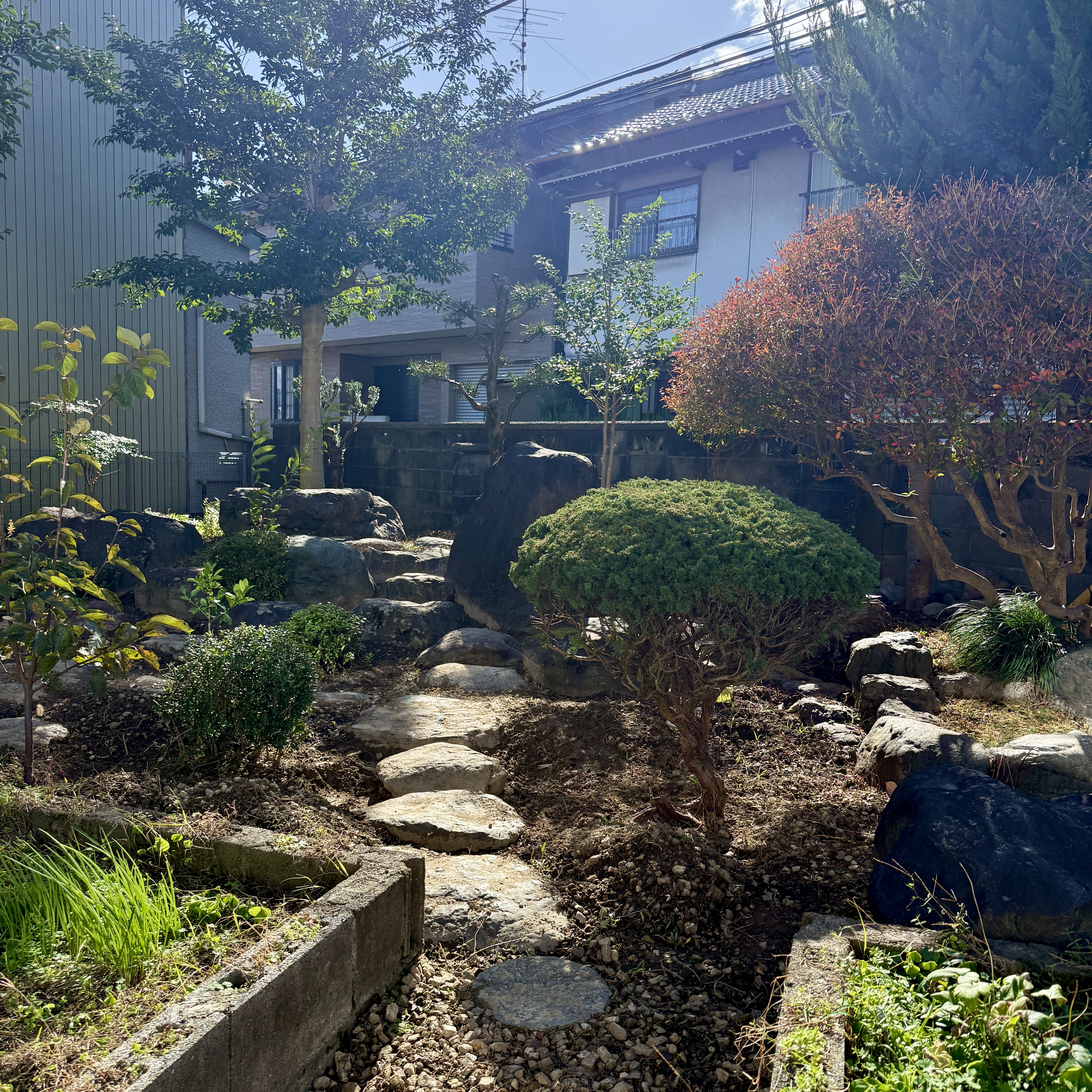
Recently, I decided to concentrate on clearing the weeds and removing the soil that had accumulated around the rocks.
As I worked, more of the original arrangement gradually became visible.
Some rocks were much larger than they had appeared when partly buried.
Others had almost disappeared beneath the surrounding vegetation.
I wasn’t rearranging them or trying to redesign the garden.
I was simply exposing what had already been there.
And the more I cleared, the more I liked what I saw.
The stepping stones became more visible, and the larger rocks began to stand out again among the trees and shrubs.
I took a photograph of the garden after my latest clearing session.
Looking at it, I can see how much work I’ve already done, even though there is still plenty left to do.
My wife and mother-in-law were particularly pleased when they saw the results.
That was encouraging.
After all, this garden has been part of my wife’s family home for much longer than I’ve been living here.
I don’t know exactly how it looked when her grandfather first had it created, and I don’t intend to pretend that I’m restoring the original gardener’s design.
I’m simply trying to take good care of what we have while gradually developing a garden that suits our lives today.
There are still more rocks to uncover in other parts of the garden.
I’ve even considered washing and brushing some of them to remove the accumulated dirt.
But for now, I’m happy to let the rain do much of that work while I continue clearing the weeds and excess soil.
Meanwhile, our fruit trees are growing, the raised beds are producing food, and the compost is helping improve the soil.
I haven’t abandoned those interests.
And perhaps I don’t have to choose between growing food and appreciating Japanese garden aesthetics.
Our garden may never look like the carefully maintained gardens I admire in our neighborhood.
But after three years of experimenting, making mistakes, and learning from the results, I’m beginning to see something I can be proud of.
Not because I’ve finally learned how to create a proper Japanese garden.
I’m still far from that.
But because the garden is gradually becoming healthier, more manageable, and more pleasing to look at.
And underneath the weeds and soil, I’m discovering something that was already there long before I arrived.
There’s still plenty of work ahead.
But I’m enjoying seeing what emerges.





Leave a Reply