

In my previous essay, I asked why we replace things that still work.
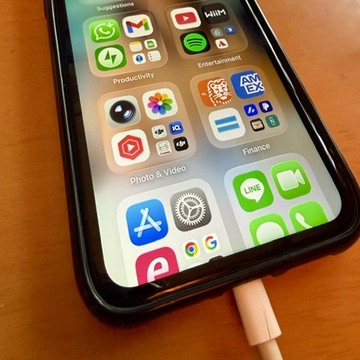
My old iPhone 11 gave me a simple way of thinking about that question. Newer phones kept appearing, but mine continued doing what I needed it to do.
So I kept it.
That seems sensible enough.
But following that principle too rigidly creates another problem.
Does something have to stop working before I can let it go?
Still Useful Doesn’t Mean Still Useful to Me
We can probably all find something in our homes that still works but hasn’t been used for years.
An old phone in a drawer.
Clothes we no longer wear.
A kitchen appliance stored in a cupboard.
A tool we bought for one particular job.
Technically, these things still have value.
But keeping something isn’t necessarily the same as using it.
An old camera sitting untouched in my cupboard might still take perfectly good photographs. If I know I will probably never use it again, keeping it doesn’t extend its useful life.
Someone else might use it every week.
That made me realize there are at least two different questions:
Does this still have value?
and:
Does this still have a place in my life?
They aren’t the same.
Does It Still Spark Joy?
This made me think about Marie Kondo.
Her well-known question is whether something sparks joy.
I used to think of that mostly as a method for getting rid of clutter. But after investigating our relationship with possessions, I see something more useful in it.
She isn’t asking us to calculate how much something is worth, how many years it might still last or whether keeping it is economically optimal.
She asks us to pay attention to our relationship with it.
Do I actually want this to remain part of my life?
That is a very human way of deciding.
Research into our attachment to possessions helps explain why such a question can matter. We don’t value objects only for their function or monetary worth. They can become connected to memories, identity and experiences.
An old camera isn’t necessarily just an old camera.
It might be the camera I carried for ten years.
That can make letting go difficult even when we no longer use it.
But something having meaning doesn’t necessarily mean we need to keep it forever.
We can appreciate what something gave us and still recognize that our relationship with it has ended.
My iPhone 11 Complicated the Question
Eventually, however, I discovered that even Does this still belong in my life? wasn’t enough.
My iPhone 11 still did.
I had deliberately kept it through several generations because it continued doing what I needed. Even when the display temporarily malfunctioned after being left in the summer heat, a reboot solved the problem.
There was still no reason for me to replace it.
Then something outside the phone changed.
I use a Dutch SIM card, and having a physical SIM slot was important to me. My Dutch mobile provider didn’t offer eSIM, while newer iPhones sold in Japan were moving away from physical SIM cards.
The iPhone 16 generation still provided what I needed.
But those phones were becoming harder to find.
Waiting until my iPhone 11 eventually stopped working could therefore create a new problem. By then, the replacement I needed might no longer be readily available.
Suddenly, keeping the old phone until it failed no longer seemed sensible.
I Replaced Something That Still Worked
I eventually found an iPhone 16 Pro in a shop.
It wasn’t even a factory-fresh phone.
It had previously been used as a shop display model and no longer came with the normal manufacturer’s warranty. But the model had become difficult to obtain, and it had the physical SIM slot I needed.
So I bought it straight from the shop.
That decision was almost the opposite of the upgrade cycle I had resisted for years.
I wasn’t buying the newest iPhone.
I wasn’t replacing my iPhone 11 because I was bored with it.
I wasn’t even waiting for the old phone to break.
I was replacing something that still worked with a previously used example of an older generation because that particular phone supported the way I needed to use it.
That experience changed my thinking.
Using something wisely doesn’t necessarily mean using it until it breaks.
Sometimes the World Around the Object Changes
Technology makes this particularly obvious.
A device can remain physically unchanged while the systems surrounding it move on.
Software support ends.
Apps stop working with older operating systems.
Connectors change.
Networks change.
Services disappear.
Standards change.
The object itself hasn’t necessarily failed.
Its relationship with the world around it has changed.
The same can happen without technology.
Our circumstances change.
Our bodies change.
Our work changes.
We move somewhere else.
Our interests change.
Something that once fitted naturally into our lives may no longer fit.
That doesn’t make the object bad.
And it doesn’t make our earlier decision to own it a mistake.
Its place in our life may simply have reached an end.
Perhaps There Is No Perfect Moment
This is where I think both frugality and decluttering can become too rigid if treated as rules.
Keep everything until it breaks doesn’t work.
Neither does discard everything that no longer excites me.
Sometimes something ordinary continues serving us perfectly well for years.
Sometimes something we love no longer meets an important need.
Sometimes we hold onto something because of memories.
Sometimes we replace something early because waiting would make life unnecessarily difficult.
There isn’t one test that can make all those decisions for us.
Even Does it spark joy? is perhaps less useful as a rule than as an invitation to notice.
What matters to me?
What do I actually use?
What am I keeping only because I already own it?
What would genuinely improve by replacing it?
Has my life changed?
These are surprisingly personal questions.
Letting Go Doesn’t Mean Something Has Lost Its Value
My iPhone 11 didn’t become worthless when I bought the iPhone 16 Pro.
It simply stopped being the phone I needed to rely on going forward.
That distinction now seems important to me.
I don’t have to convince myself that something is useless before I am allowed to part with it.
I can acknowledge that it worked well.
That I enjoyed it.
That it gave me years of value.
And that it is nevertheless time for it to leave my life.
Perhaps knowing when to let something go isn’t about waiting for a clear moment when the object becomes worthless.
It is about noticing when the relationship between what it provides and what we need has changed.
And once that happens, another question appears.
If something is finished with me, does that mean it is finished altogether?
I don’t think it does.
But that is the next loose thread.




Leave a Reply