
In one of my earliest gardening posts, Revival of Our Garden, I wrote that I believed in recycling things and putting them to good use as many times as possible and for as long as possible.
At the time, I was thinking about the garden. Plant cuttings could become compost. Cardboard could suppress weeds. Materials we already had could often serve another purpose instead of being replaced with something new.
I never really questioned why that way of thinking felt so natural to me.
Recently, I started wondering about the opposite:
Why do we replace things that still work?
Nothing Happened to the Old One
Technology makes this particularly easy to observe.
A new phone is announced.
It has a better camera, a faster processor, a brighter display and several features the previous model doesn’t have.
Suddenly the phone in our pocket can feel old.
But something strange has happened.
Nothing.
The phone didn’t become slower when the new one was announced. Its camera didn’t suddenly take worse photographs. The battery didn’t lose capacity because somebody unveiled its successor.
The product didn’t change. Our reference point did.
Researchers studying product obsolescence distinguish between different reasons products become obsolete. Sometimes they physically wear out. Sometimes technology moves on and compatibility becomes a problem. Sometimes repairing something no longer makes economic sense.
But products can also become obsolete in our minds.
Something newer exists, and what we already have begins to feel inadequate by comparison.
Newness Has Value
That doesn’t mean wanting something new is foolish.
New products can create genuine value.
A new camera might allow photographs we couldn’t take before. A newer appliance might use considerably less energy. A safer car is a real improvement. A faster computer can save hours of work.
And sometimes we simply enjoy something new.
There is nothing wrong with that either.
But newness has an unusual characteristic:
it doesn’t last.
Something I wanted for months can feel exciting when I finally buy it. I notice every improvement. I enjoy using it.
Then I become accustomed to it.
What was once my new phone eventually becomes simply my phone.
Psychologists describe this broader tendency as adaptation. We become accustomed to improvements in our circumstances, and some of the excitement they initially created fades.
Then another new product appears.
And the comparison starts again.
My iPhone 11 Taught Me Something About This
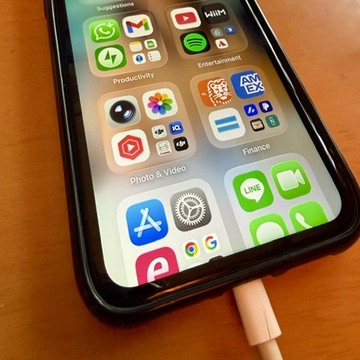
I experienced this with my iPhone 11.
For years, newer iPhones appeared while I continued using mine.
Eventually it was obviously an old phone by technology standards. Newer models had better cameras, faster processors and plenty of improvements.
But I kept asking myself a much simpler question:
Does my phone still do what I need it to do?
The answer remained yes.
At one point, the screen developed a problem after I had left the phone in the hot Japanese summer sun. I thought perhaps this would finally be the end of it.
But after a reboot, the display worked normally again.
So I continued using it.
I wrote about that experience in The Benefits of Delaying Upgrades.
What mattered wasn’t that newer phones were better. Of course they were.
What mattered was whether those improvements created enough value for me to justify replacing something that already provided what I needed.
For a long time, they didn’t.
Better Isn’t the Same as Necessary
I think this is where I used to confuse two very different ideas.
Something better exists.
And:
What I have is no longer good enough.
They sound similar, but they aren’t.
There will almost always be something better.
A better camera.
A faster computer.
A more efficient bicycle.
A newer car.
If the existence of something better becomes the reason to replace what we already own, almost nothing can remain satisfactory for very long.
The comparison has no natural ending.
But neither does that mean we should reject improvements simply for the sake of keeping old things.
The question is not whether the new thing is better.
It probably is.
The question is:
What meaningful additional value would replacing what I already have create in my life?
Sometimes the answer will be substantial.
Sometimes the most important thing we’re buying is simply the temporary feeling of having something new.
Knowing the difference isn’t always easy.
Perhaps Obsolescence Is Personal
This investigation changed what the word obsolete means to me.
A manufacturer can stop producing something.
The market can move on.
A newer generation can make it look dated.
None of those things necessarily tells me whether the object has stopped serving its purpose in my life.
That depends partly on what I require from it.
My iPhone 11 didn’t need to be the best phone available.
It needed to be good enough for what I asked it to do.
Eventually, circumstances did give me a genuine reason to replace it.
But that is another question:
How do we know when it is actually time to let something go?
For now, I think the old lesson from my garden still holds.
There is nothing wrong with something better existing.
And there is nothing wrong with wanting it.
But perhaps something we already own doesn’t become obsolete merely because the world has produced something better.
Sometimes what we already have is still enough.




Leave a Reply