
I hear a lot of discussion about artificial intelligence becoming dangerous.
AI getting out of control.
AI replacing people.
AI becoming too powerful.
Some of those concerns may be justified. Others seem to be amplified by the way we talk about new technology online. Fear gets attention.
But while listening to these discussions, I kept thinking about something much older.
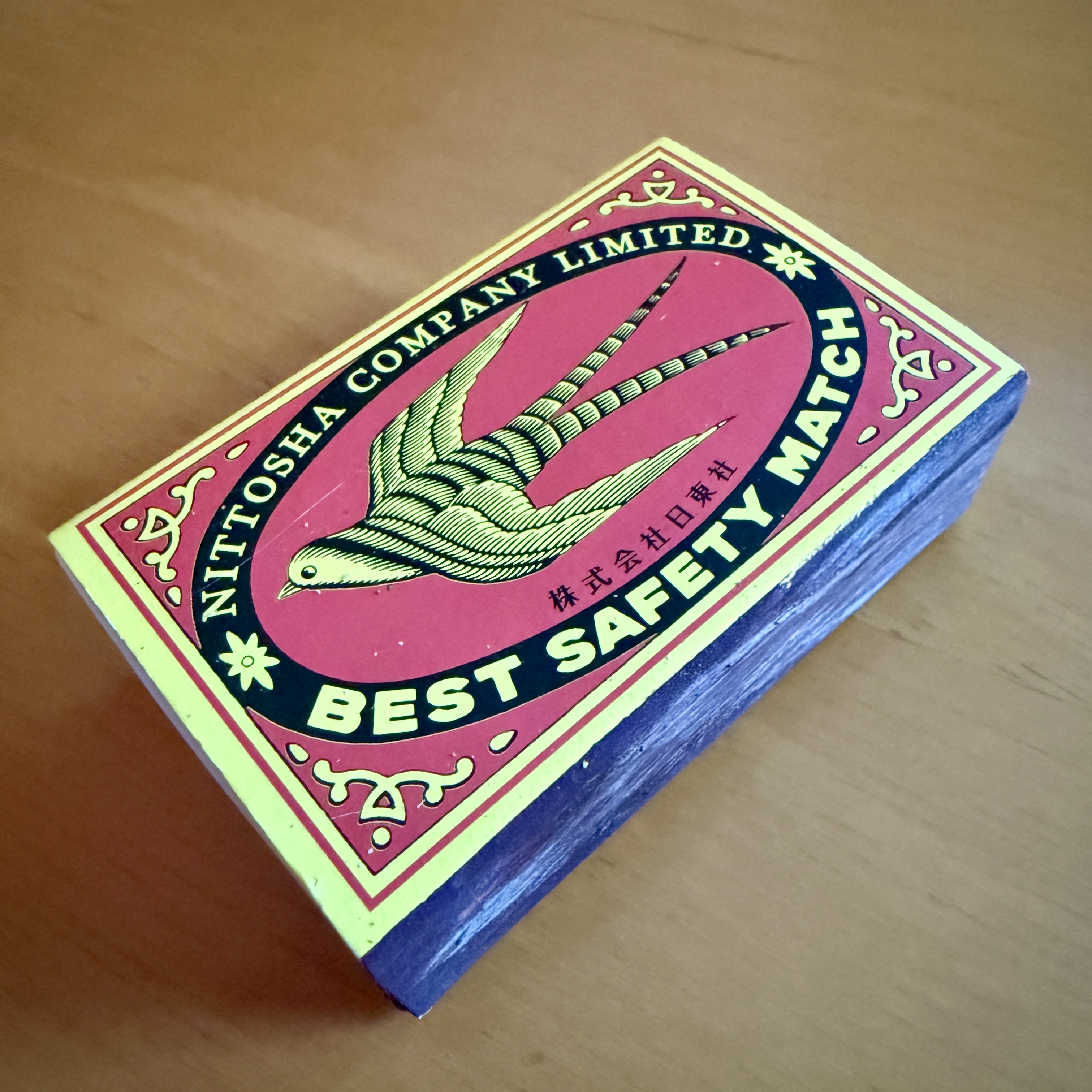
Fire.
Learning to Live With Fire
Humans didn’t invent fire.
Fire already existed in nature.
At some point, our ancestors learned how to control it.
Exactly how and when that happened is still debated, and I don’t think we can know how those early humans felt about it.
But fire must have presented an interesting contradiction.
It could destroy.
It could burn us.
And yet, once humans learned how to control it, fire became extraordinarily useful.
We could cook with it.
Keep ourselves warm.
Create light.
Eventually, our understanding of heat and combustion contributed to things our ancestors could never have imagined.
We didn’t make fire useful by making it harmless.
Fire is still dangerous.
We became better at understanding when, where and how to use it.
That made me wonder whether there is something useful in this analogy for AI.
When Everything Started Looking Like a Nail
When I first started using ChatGPT, I think I treated it a little like a hammer.
There is an old saying that when you have a hammer, everything starts looking like a nail.
A new capability naturally makes us look for places to use it.
I could ask AI to explain something.
Rewrite something.
Analyze something.
Research something.
Compare things.
Help solve a problem.
And because it could do all of those things, it became tempting to use it for all of them.
Over time, though, my relationship with AI changed.
I became better at using it.
But strangely, becoming better at using it also meant using it more selectively.
Sometimes ChatGPT is incredibly useful.
Sometimes another tool is better.
Sometimes I need to think about something myself.
And sometimes there isn’t a problem to solve at all.
Not Everything Needs Fixing
That last realization may be the most important one for me.
Having a powerful problem-solving tool can make it tempting to start looking for problems.
Something could be analyzed.
Something could be optimized.
Something could be improved.
Something could be explained.
But just because something can be changed doesn’t mean it needs to be.
I see this in my garden.
If I notice a leaf drooping, I could immediately start looking for an explanation.
Does the plant need more water?
Fertilizer?
Less sunlight?
Is something eating it?
Should I cut the leaf away?
Or I could simply notice it.
Maybe tomorrow the leaf will recover.
Maybe it is responding to the heat.
Maybe it is simply getting old.
Perhaps eventually I will need to do something.
But I don’t necessarily need to turn what I noticed into a problem the moment I notice it.
Sometimes observation is enough.
A Tool Can Change the Way We See
That may be one of the less obvious things about AI.
A tool doesn’t only change what we can do.
It can change what we notice.
If I have something that can analyze almost anything, almost anything can begin to look like something worth analyzing.
If I have something that can optimize almost anything, I can start seeing inefficiencies everywhere.
If an answer is always available, an unanswered question can start feeling uncomfortable.
But perhaps not knowing something yet has value too.
Perhaps uncertainty sometimes needs time.
Perhaps an experience doesn’t immediately need an explanation.
And perhaps paying attention doesn’t always have to lead to intervention.
Fire, Hammers and Gardens
The more I thought about it, the more I realized that no single analogy quite explains my relationship with AI.
A hammer reminds me that one tool shouldn’t become the answer to every problem.
Fire reminds me that powerful capabilities deserve understanding and respect.
But the garden reminds me of something else.
Sometimes the best thing I can do is nothing.
A good gardener doesn’t spend every day searching for something to fix.
Much of gardening is watching.
Waiting.
Learning what happens without interference.
Then, when intervention really is necessary, experience helps us recognize it.
Maybe using AI well requires something similar.
Understanding Doesn’t Remove Risk
The fire analogy has an obvious limitation.
Fire doesn’t talk to us.
It doesn’t give us information that sounds convincing but may be wrong.
It doesn’t change rapidly from one year to the next.
AI does.
So I don’t think the history of fire tells us that everything will be fine with AI.
Nor do I think every concern about AI is simply fear or ignorance.
Understanding a powerful technology can sometimes give us more reason to be careful with it, not less.
Someone who understands fire well probably respects it more, not less.
Perhaps AI will be similar.
The more I use it, the more useful I find it.
But I also become more aware of what I shouldn’t hand over to it.
Maybe This Is What Learning Looks Like
At first, learning to use AI meant discovering what it could do.
Then it became learning how to get better results from it.
How to ask better questions.
How to challenge an answer.
How to investigate further.
How to recognize when something needs verification.
But perhaps there is another stage.
Knowing when not to use it.
That doesn’t mean rejecting AI.
A person who leaves a hammer in the toolbox isn’t afraid of hammers.
A gardener who decides not to prune a branch isn’t afraid of pruning.
And someone who chooses not to light a fire isn’t afraid of fire.
They may simply understand that the situation doesn’t require it.
Maybe mastering a tool isn’t only learning what it can do.
It’s learning when it belongs in our hands.
And sometimes there isn’t a problem waiting for us to solve.
There is only something worth noticing.
And perhaps we should leave it that way for a while.




Leave a Reply