
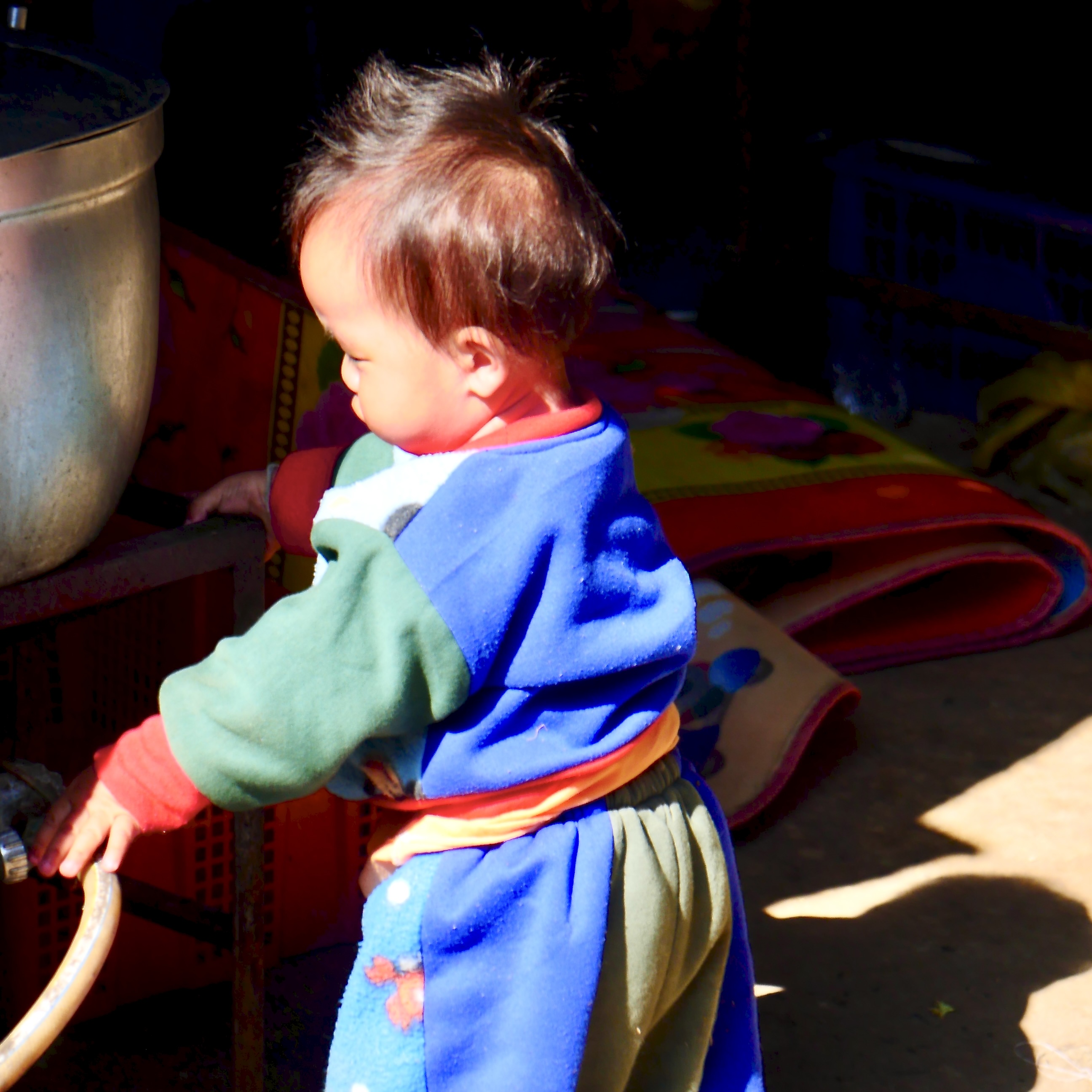
In February 2025, I wrote about one of the more unusual Japanese traditions I had come across.
Naki Sumo.
Crying Baby Sumo.
Babies are held by adults dressed as sumo wrestlers and encouraged to cry. Depending on the event, the first or loudest baby to cry may even be declared the winner.
It seemed completely backwards.
Normally, when a baby cries, we try to make it stop.
Here, adults were deliberately trying to make it happen.
I learned that the tradition was connected with the Japanese saying naku ko wa sodatsu—a crying child grows—and that a baby’s cry could be associated with strength, healthy growth and even driving away evil spirits.
I also wrote that Naki Sumo dated back to the Edo period.
More than a year later, I decided to look more closely.
And the first thing I discovered was that there isn’t really one Naki Sumo tradition.
How old is Naki Sumo?
One of the best-documented examples takes place at Ikiko Shrine in Kanuma, Tochigi Prefecture.
Its Naki Sumo has been designated an Important Intangible Folk Cultural Property by Japan’s Agency for Cultural Affairs.
Here, two small children are carried into the ring by men dressed as sumo wrestlers.
Traditionally, the first child to cry wins.
But when I looked for the origin of the event, the official record didn’t give me a neat starting date.
It says the exact origin is unknown.
There is evidence suggesting the practice existed by the Bunkyū era, between 1861 and 1864, near the end of the Edo period. Later records and votive tablets also provide evidence of children’s sumo associated with prayers for healthy growth.
So saying Naki Sumo comes from the Edo period isn’t necessarily wrong.
But it’s more accurate to say that one of its best-documented traditions can be traced to the late Edo period, while its exact origin remains unknown.
That distinction became important when I looked at another famous Naki Sumo.
An ancient-looking tradition from 1991
Sensō-ji in Asakusa also holds a well-known Naki Sumo event.
Look at photographs of it and everything appears ancient.
A Buddhist temple.
Sumo wrestlers.
Traditional clothing.
A referee.
Babies being held above a sumo ring.
It looks like something that could have been happening for hundreds of years.
It hasn’t.
The event began in 1991.
According to Taitō City, it was created to commemorate the restoration of a statue of the famous kabuki actor Ichikawa Danjūrō IX portraying the heroic character from Shibaraku.
The connection with babies came through the wish that they would grow up healthy and strong.
So now I had two events both called Naki Sumo.
One has roots that can be traced to the late Edo period.
The other began within my own lifetime.
They look similar.
They share ideas about children growing strong.
But they aren’t one continuous ancient tradition.
Even the rules are different
At Ikiko Shrine, the traditional rule is simple.
The first baby to cry wins.
At Sensō-ji, the event has used a different system. If both babies begin crying within a certain time, the louder cry can determine the winner.
Other Naki Sumo events have their own variations.
That made me realize that I had originally treated Naki Sumo almost like a national sport with one history and one set of rules.
It isn’t.
It’s better understood as a family of local rituals sharing similar ideas.
And the most important of those ideas may be surprisingly simple.
A crying child grows
泣く子は育つ.
Naku ko wa sodatsu.
A crying child grows.
I had included the expression in my original article, but this time I looked more closely at what it actually meant.
The idea isn’t that crying somehow causes a child to grow.
A vigorous cry is interpreted as a sign of vitality.
A baby capable of making itself loudly heard is alive, energetic and strong.
That association appears directly in the official documentation for the Ikiko Shrine tradition, where the ceremony is connected with prayers for children’s healthy growth.
Suddenly, the crying looked different.
I had been seeing distress.
The ritual was seeing vitality.
What about evil spirits?
My original article also said that a baby’s cry was believed to ward off evil spirits.
That idea does exist.
Some shrines holding Naki Sumo explicitly describe vigorous crying as having the power to drive away evil and bring good fortune while praying for the child’s healthy growth.
But I had made the explanation too universal.
It isn’t necessarily the reason behind every Naki Sumo tradition.
The official documentation for Ikiko Shrine emphasizes healthy growth and the belief that a crying child grows. It also suggests that the ceremony historically may have helped welcome children into the local shrine community.
Other places emphasize protection from evil.
Others focus on strength and growth.
The rituals look similar from the outside, but the meanings aren’t necessarily identical.
Once again, I had taken one explanation and applied it to something more varied.
Why would parents want this?
This was the question that kept bringing me back to the photographs.
Why would parents voluntarily hand over their baby so that someone could try to make it cry?
From outside the ritual, crying means something has gone wrong.
The baby is hungry.
Tired.
Frightened.
Uncomfortable.
Our instinct is to make the crying stop.
But inside Naki Sumo, the meaning changes.
For a few moments, the cry isn’t treated as a problem.
It’s celebrated.
The adults smile.
Families take photographs.
The child receives a blessing.
A strong cry becomes something to be happy about.
The same sound hasn’t changed.
What changed is how everyone around it understands it.
The babies aren’t really competing
There may be a winner.
One baby cries first.
Another cries louder.
A referee makes a decision.
But I’m not sure the competition is really the point.
The parents haven’t brought their babies because they need them to defeat another baby.
They’ve come because they want essentially the same thing.
For their child to grow.
To be healthy.
To be strong.
The sumo contest turns that wish into something visible, playful and memorable.
That makes the ritual feel much gentler to me than it did when I first encountered it.
I was looking at the crying
When I wrote about Naki Sumo the first time, what caught my attention was its strangeness.
Adults were deliberately making babies cry.
That was the story.
Looking more closely changed it.
There isn’t one ancient Naki Sumo festival practiced uniformly across Japan. There are local traditions with different histories, rules and explanations. Some are old. Some only look old. Some connect crying with protection from evil, while others emphasize vitality and healthy growth.
But underneath many of them is a simple idea that I hadn’t really appreciated.
A baby’s cry can mean more than distress.
It can also be evidence of strength.
I had been looking at adults making babies cry.
The parents may have been seeing something different.
They were watching their children show how loudly they were alive.
Sources
My original article, Naki Sumo Crying Baby Festival
https://karltschoppnavarat.com/?p=6780
Agency for Cultural Affairs, Cultural Heritage Online — Ikiko Shrine Naki Sumo
https://kunishitei.bunka.go.jp/heritage/detail/312/684
Taitō City, Naki Sumo at Sensō-ji
https://www.city.taito.lg.jp/kusei/sanka/release/2018/201804/press0425.html
Taitō City Tourism, Naki Sumo
https://t-navi.city.taito.lg.jp/event/1420
Ishikawa Gokoku Shrine, Naki Sumo
https://www.ishikawagokoku.or.jp/nakizumou/
Kotobank, Naku ko wa sodatsu
https://kotobank.jp/word/%E6%B3%A3%E3%81%8F%E5%AD%90%E3%81%AF%E8%82%B2%E3%81%A4-2236302


Leave a Reply