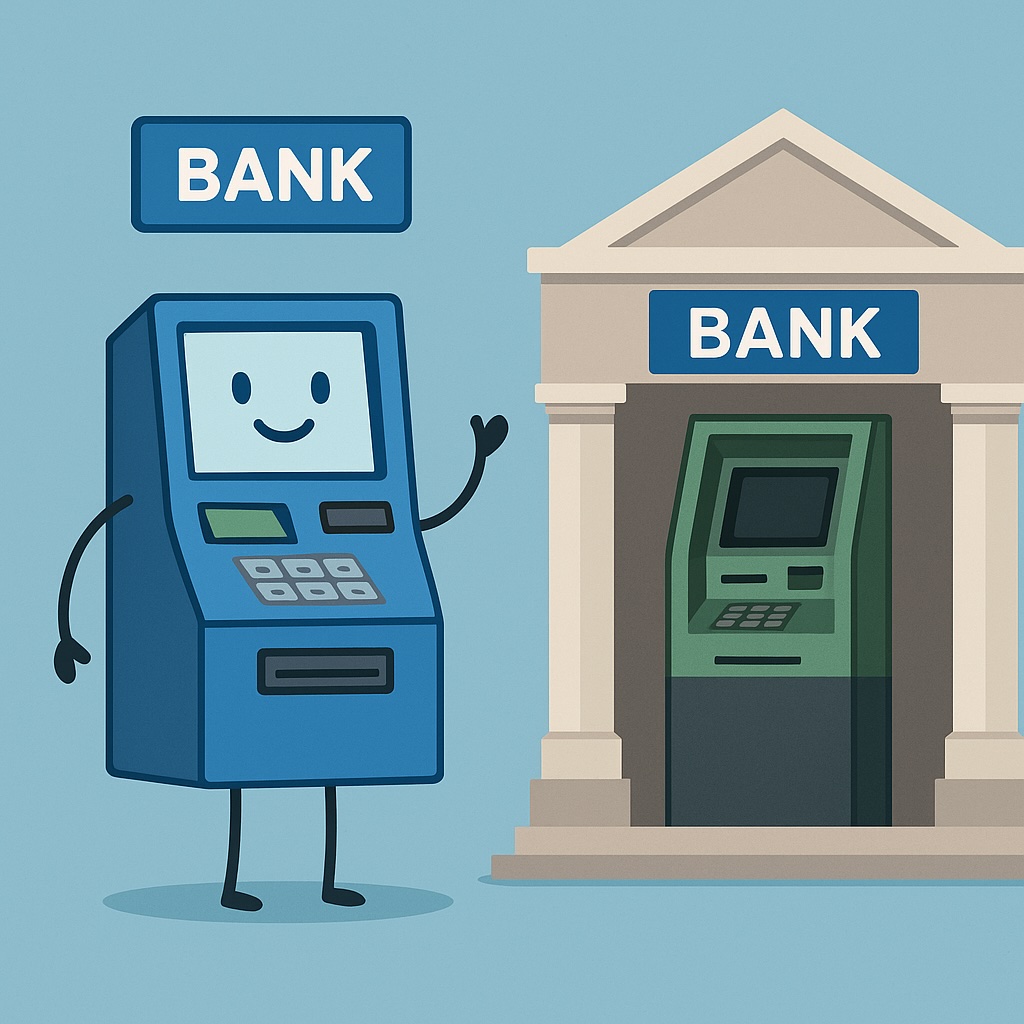
Why a Lawson ATM might welcome me more than Japan’s biggest bank.
When my wife and I walked into Mitsubishi UFJ Bank, we thought it would be a simple errand. She’s already a client. I’m her husband. I live here legally. We wanted to open a joint account. How hard could it be?
Well… turns out, pretty hard.
Despite bringing everything we thought we needed—residence card, ID, even my wife’s endorsement—the bank politely but firmly turned down my application. I was told that because I’m a foreigner, and had no specific reason to open a bank account, they couldn’t process it.
It didn’t matter that we’re married. That I legally reside in Japan. That I simply wanted to manage our finances together. That wasn’t enough of a reason.
I found that both strange and, frankly, a bit surprising.
📍 In the Netherlands, This Would Be Unthinkable
Back in my previous home, everything is online. In the Netherlands, all banks operate digitally. You can open an account on your phone in minutes, no matter your nationality—as long as you’re legally living there. Paper passbooks are a thing of the past. Bank branches are slowly disappearing.
It’s not just about technology—it’s about mindset. Access is seen as a right, not a privilege. Systems are centralized. Processes are streamlined. Even as a foreigner, I never had to explain why I needed a bank account.
Here in Japan? It’s a different world.
🧾 A Different Kind of Banking Culture
What I learned is this: in Japan, trust is built face-to-face. Even in 2025, banking still revolves around paperwork, physical branches, and personal impressions. Banks are risk-averse. If you don’t tick the right boxes, you might be turned away—even if nothing’s technically wrong.
Joint accounts? Not common in Japan. Most couples, even married ones, keep finances separate. There’s a whole cultural logic behind that, but still—coming from Europe, it was a surprise.
🏪 A Ray of Hope at Lawson Bank?
After our experience at MUFG, my wife and I looked into Lawson Bank—yes, the one tied to the convenience store chain. What’s fascinating is that Lawson Bank might actually be more open to foreigners like me. Their process is all online. They don’t issue paper passbooks. And the application can be done through a smartphone app.
It hasn’t been confirmed yet whether I’ll be accepted, but the fact that it feels even possible says something.
A convenience store bank might succeed where Japan’s largest financial institution didn’t.
There’s irony in that. And also, a glimmer of progress.
🌍 Reflecting on Two Systems
Living in Japan has made me realize that developed countries don’t always modernize in the same direction. Japan has bullet trains and vending machines that talk—but when it comes to banking, it still moves cautiously, almost protectively.
The Netherlands, on the other hand, runs on digital efficiency. Trust in the system replaces the need for face-to-face approval. In Japan, trust is personal. In the Netherlands, trust is institutional.
Neither is wrong. But when you’ve lived in both, the difference is impossible to ignore.
💬 Final Thoughts
This wasn’t just about opening a bank account. It was a moment of cultural contrast—a reminder that integration is more than learning the language or paying bills on time. It’s about navigating invisible systems, often without a manual.
I’ll let you know if Lawson Bank lets me in.
Until then, I’ll be quietly impressed that the place where I buy onigiri and iced coffee might also become my most accessible bank in Japan.






 Experiences - Life - Inspiration 🇨🇭🇯🇵
Leave a reply to Karl Cancel reply