
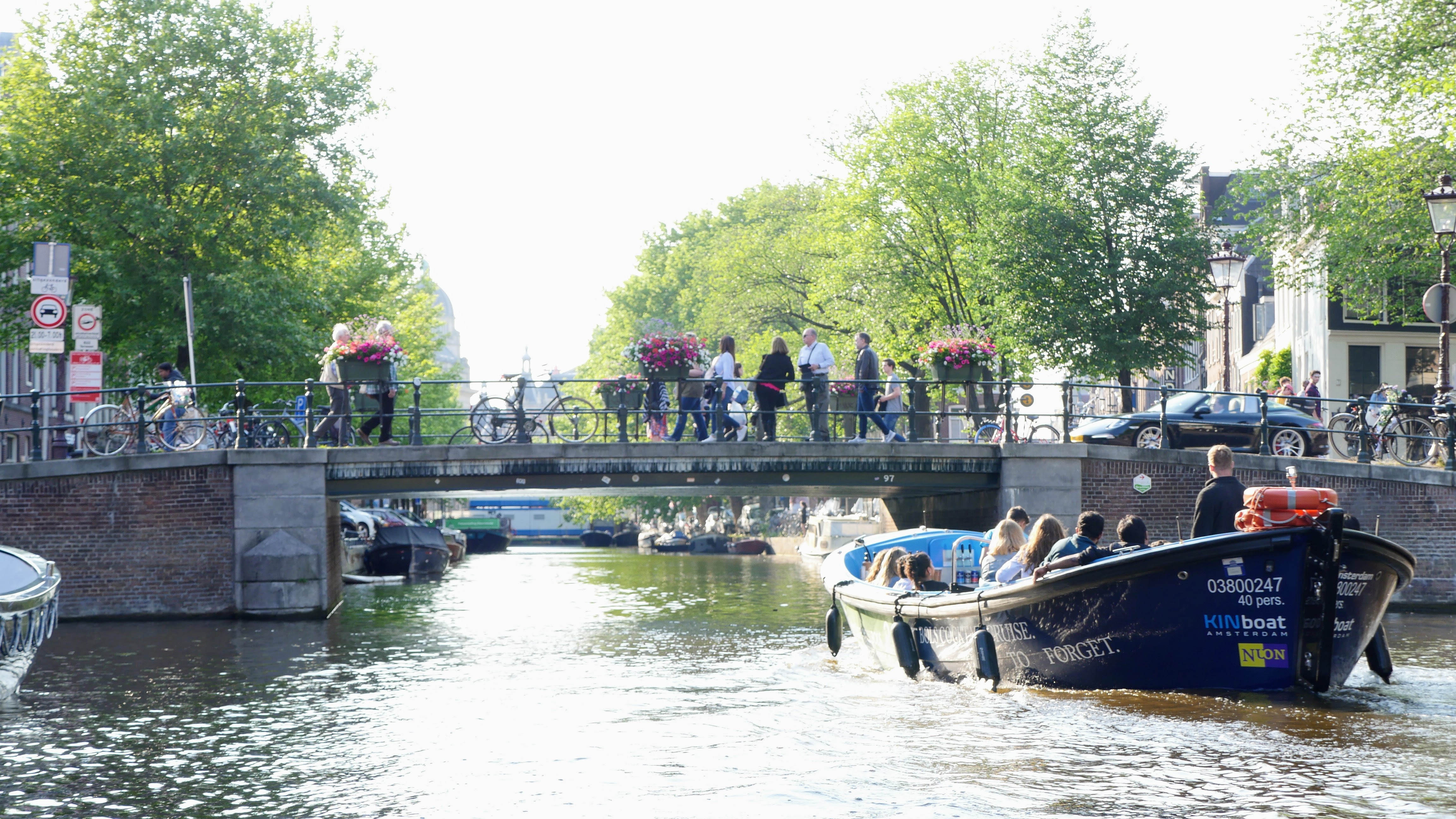
Surprisingly, I rarely talk about life in the Netherlands, even though I’ve lived there for twice as long as I ever lived in Switzerland. It’s a strange realization—especially today, when for no particular reason, I felt a sudden urge to write about something Dutch.
Maybe it’s because I’ve seen a lot of videos lately with tulips, windmills, and stroopwafels. Or maybe it’s because I’ve started to wonder: what do most people actually see when they visit the Netherlands? And how different is that from the Netherlands I used to call home?
A quick check shows that the top three most visited places in the Netherlands by tourists in 2025 are:
- Amsterdam – No surprise here. The canals, the bikes, the Anne Frank House, the Van Gogh Museum, and let’s be honest, the coffee shops and Red Light District. It’s a magnet.
- Keukenhof Gardens – Open for about eight weeks each spring in Lisse, Keukenhof showcases over 7 million flower bulbs, mostly tulips, in manicured, colorful patterns. A paradise for flower lovers and photographers.
- Zaanse Schans – An open-air museum near Amsterdam with traditional windmills, wooden houses, cheese farms, and clog workshops. It’s picturesque and educational, but definitely feels curated.
These places are undeniably worth seeing—especially if it’s your first time in the Netherlands. Amsterdam, in particular, is a no-brainer. It’s the cultural, historical, and artistic heart of the country. But if you want to see a broader and more authentic side of Dutch life, I believe it’s essential to go beyond the big three.
Let Me Suggest a Few Alternatives
As someone who once called the Netherlands home, I’d recommend these cities not just as tourist stops—but as real windows into the Dutch character, daily life, and diversity.
The Hague (Den Haag): The Royal City by the Sea

If Amsterdam is liberal and buzzing, The Hague is its elegant cousin—more reserved, more refined. It’s the political heart of the country and home to the Dutch Parliament, the International Court of Justice, and King Willem-Alexander’s working palace, Paleis Noordeinde.
Unlike the capital, The Hague feels far less crowded and more spacious, with wide, leafy boulevards and 19th-century architecture in neighborhoods like Statenkwartier and Archipelbuurt. And let’s not forget Scheveningen, the city’s popular seaside district. From spring to late summer, the promenade comes alive with beach bars, music, and relaxed sea views.
Travel tip:
🚆 How to get there: Direct trains from Amsterdam Centraal to Den Haag Centraal take about 50 minutes.
Rotterdam: Europe’s Modern Port City

Rotterdam is a city of resilience and reinvention. After being bombed during WWII, it chose to rebuild not with replicas of the past, but with a bold, futuristic skyline. You’ll find iconic sites like the Cube Houses, the Markthal, and the sweeping Erasmus Bridge, known locally as “De Zwaan” (The Swan).
It’s not just about architecture—Rotterdam is the largest port in Europe, a melting pot of cultures, and a growing hub for art and innovation. Museums like Boijmans Van Beuningen and Kunsthal cater to contemporary tastes, while the riverside district Kop van Zuid shows off the city’s dynamic transformation.
Travel tip:
🚆 How to get there: High-speed trains (Intercity Direct) from Amsterdam to Rotterdam take 40 minutes.
Delft: Where History and Charm Come Alive

Just a short hop from The Hague, Delft feels like a perfectly preserved postcard of old Holland. It’s a compact, walkable city famous for Delft Blue ceramics, charming canals, and its deep historical roots.
Delft is also the resting place of William of Orange, considered the father of the Dutch nation. You can visit his tomb in the Nieuwe Kerk (New Church), which towers over the central square, Grote Markt. But beyond the history, the city has a laid-back atmosphere I always loved.
I recall spending countless afternoons on the terrasjes (outdoor terraces) around the Grote Markt, sipping white beer and eating bitterballen—a deep-fried Dutch snack that goes surprisingly well with a sunny afternoon and good company. Can’t get more Dutch than that.
Travel tip:
🚆 How to get there: Just 15 minutes by train from The Hague or 1 hour from Amsterdam.
Final Thoughts
I don’t mean to discourage anyone from visiting Amsterdam or Keukenhof—they’re iconic for a reason. But the Netherlands is small and incredibly well-connected by train, which makes it easy to explore further.
The Hague offers royal class and sea breeze.
Rotterdam gives you bold design and global energy.
Delft takes you back in time with cobblestones and canal reflections.
As a former resident, I’d say: go beyond the obvious. You’ll still find the canals and the charm—but with more space to breathe, fewer lines, and plenty of pleasant surprises.




Leave a Reply