
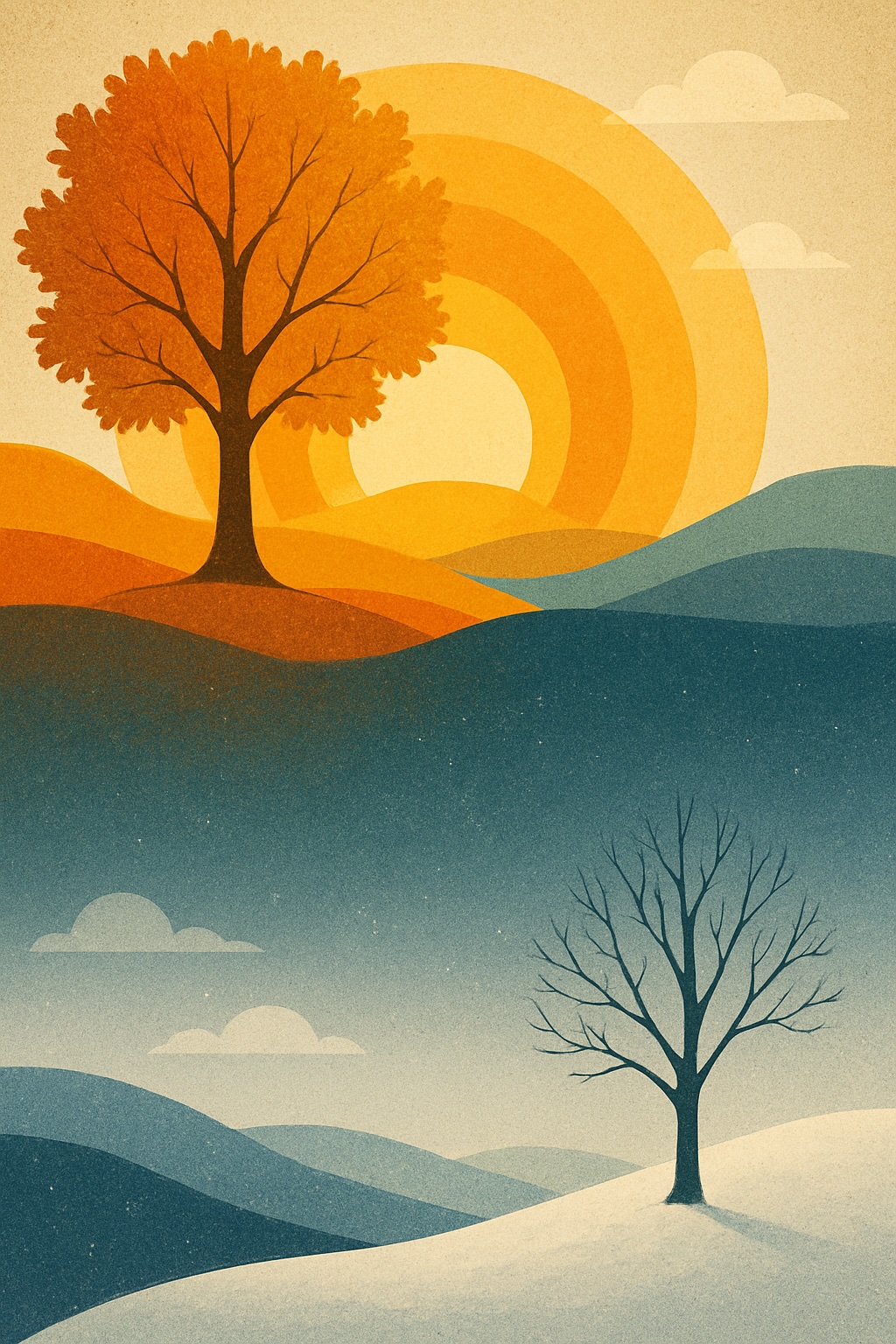
Rethinking Demographic Decline as Part of a Natural Life Cycle
We often hear about the “crisis” of aging populations in wealthy countries. Falling birthrates, shrinking workforces, and rising healthcare costs dominate headlines.
It sounds like a slow-motion collapse. A problem to solve. A disaster waiting to happen.
But… what if it’s not?
What if aging populations aren’t a sign of failure, but a natural phase of the economic and social life cycle?
What if, instead of fighting the “winter” of demographics, we learned to understand its purpose—and even embrace it?
The Seasons of Societies
Nature doesn’t bloom endlessly. Fields rest in winter. Trees shed their leaves.
Every season plays its role—growth, harvest, decay, and rest.
And after winter? Spring.
Prosperous nations grew rapidly after wars, industrialization, and technological revolutions.
They entered a “harvest” period of comfort, wealth, and stability.
And now, the numbers show a slowdown. An aging population. A demographic winter.
But maybe this isn’t decay—it’s preparation.
History Shows the Pattern
This isn’t just poetic thinking. History shows that human systems—from empires to economies—often move in recognizable cycles:
1. The Rise and Renewal of Civilizations
History is full of examples:
- Rome rose, fell, and left cultural seeds that blossomed into the Renaissance.
- China experienced dynasties that grew, collapsed, and gave way to renewal.
- Egypt went through multiple periods of greatness, decline, and rebirth.
2. Economic Long Waves (Kondratiev Waves)
Economists have observed 40–60 year waves of economic expansion and restructuring.
Industrial revolutions, financial crises, and shifts to service or digital economies reflect this natural rhythm of growth and renewal.
3. The Demographic Transition Model
As societies industrialize and stabilize:
- Birth rates drop.
- Populations age or shrink.
- Societies shift from quantity-driven growth to quality-driven systems—healthcare, education, technology.
This is exactly the phase much of the Western world finds itself in today.
4. Collapse and Regeneration
After seemingly terminal declines, new systems often emerge.
Europe after Rome, Japan after WWII, or decentralized economies after large institutions fail—all show how new life follows collapse.
5. Ecological Parallels in Human Systems
Just like forests and fields go through cycles of succession, so do human societies.
Periods of rapid growth give way to rest, reorganization, and eventually new forms of life.
What Comes After Winter?
Winter isn’t death. It’s reset. It’s nature preparing for the next cycle.
Perhaps the West is shifting into a quieter season, making room for new dynamics:
- New waves of migration that bring fresh energy and diversity.
- Shifts from quantity (growth) to quality (sustainability and well-being).
- Technological innovations that make “more people” less critical to productivity.
- Rebuilding social systems to fit smaller, more experienced populations.
History shows that renewal often comes not just from within, but through opening up.
Across time, migrating peoples have breathed new life into aging societies—bringing skills, energy, and cultural richness.
Far from being a threat, this movement can be part of nature’s way of restarting the cycle.
Maybe it’s not about defending old borders, but about planting new seeds.
Seeing the Bigger Picture
The life cycle of nations doesn’t have to be about endless growth.
It can be about meaningful cycles—each with value in its own right.
Spring will come again. It always does.
But maybe it won’t look like the last spring.
And that’s okay.
Because when we stop fearing winter, we begin to prepare for what comes after.
Further Reading & Related Perspectives
While this article offers a personal reflection on demographic change as part of a natural life cycle, several researchers and models have explored related ideas in greater depth:
- James R. Carey – Biodemography and the study of longevity patterns in populations, exploring how biological and demographic processes interact.
- Josh Mitteldorf – Proposes aging as an evolutionary population-level adaptation that helps stabilize ecosystems and prevent overpopulation.
- Iwao Fujimasa – Highlights potential social benefits of Japan’s demographic shift, such as improved quality of life and social balance.
- The Demographic Transition Model – A widely recognized framework explaining how societies naturally transition from high to low birth and death rates as part of economic and social development.
These perspectives invite us to see demographic change not as an endpoint, but as part of the ongoing story of human adaptation and renewal.
Disclaimer: The ideas in this article are offered as a perspective, not a policy recommendation or political stance. They invite reflection on long-term patterns in history, nature, and society—reminding us that change, while often uncomfortable, is a natural part of renewal. Readers are encouraged to explore these ideas with an open and thoughtful mind.





Leave a Reply