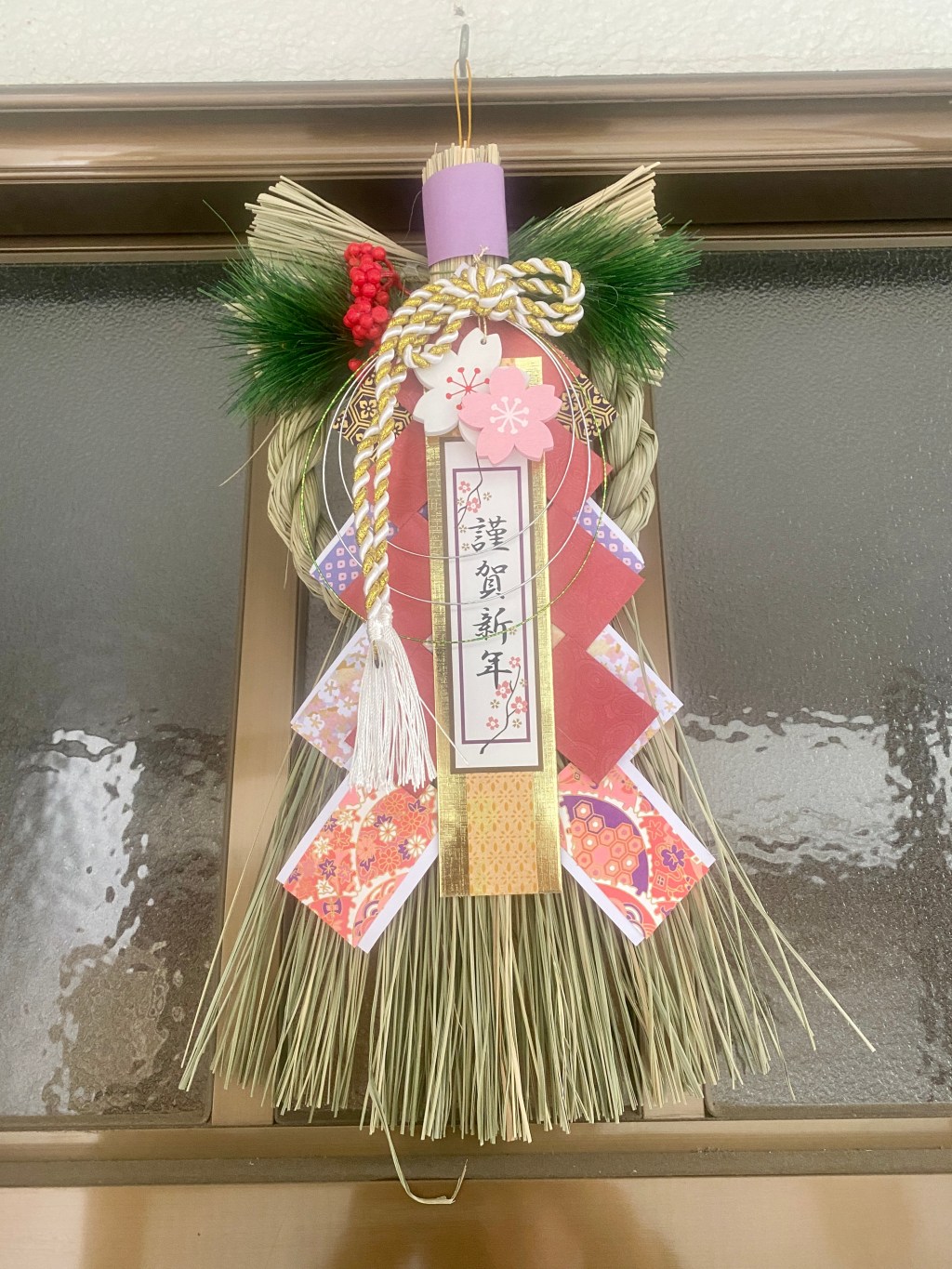
The shimekazari (しめ飾り) is a traditional Japanese New Year decoration that holds deep symbolic meaning and cultural significance. Rooted in Shinto beliefs, shimekazari is commonly hung above the entrance of homes and businesses to purify the space, ward off evil spirits, and invite good fortune, prosperity, and blessings for the upcoming year.
1. Symbolism and Purpose
- Purification: Shimekazari acts as a spiritual barrier, marking the household as purified and welcoming to the kami (deities) who bring blessings during the New Year.
- Warding Off Evil: It is believed to repel misfortune and protect the home from harm.
- Invitation of Good Fortune: This decoration embodies wishes for prosperity, health, and happiness.
2. Elements of Shimekazari and Their Meanings
Each component of a shimekazari is carefully chosen for its auspicious symbolism:
- Shimenawa (Sacred Rope): The base of the decoration, made of rice straw, representing purity.
- Daidai (Bitter Orange): A small orange often included, symbolizing family continuity and prosperity—a name that resonates with the phrase “from generation to generation” in Japanese.
- Pine Branches (Matsu): Representing longevity and resilience, evoking hopes for a long and fruitful life.
- Fern Leaves: Signifying hope for continued prosperity across generations.
- Rice Stalks: Symbolizing an abundant harvest and blessings, reminding us of the importance of sustenance.
- Zigzag Paper Strips (Shide): Indicating the presence of kami and purification.
- Additional Decorations: Depending on the region or household, you may find elements like plum blossoms, cranes, or lucky charms that reflect local traditions.
3. When and Where to Hang It
- Timing: Shimekazari is typically hung on or before December 28th, an auspicious date. It’s generally advised to avoid hanging it on December 29th (as the number 9 can symbolize suffering) or December 31st (considered last-minute and disrespectful to the gods).
- Placement: Usually hung above the main entrance, it welcomes the gods into the home and can also be placed in significant areas such as cars or small family altars (butsudan).
4. Removal and Disposal
- When to Remove: It is traditionally removed after the New Year celebrations, around January 7th or during the Kagami Biraki period (January 11th).
- Disposal: The decoration is burned at a shrine during a Dondo-yaki (どんど焼き) ceremony, purifying it and releasing its spiritual energy, which is a profound way to honor its purpose.
5. Regional Variations
Shimekazari designs vary by region in Japan, each area incorporating local touches with seasonal flowers or small charms that reflect unique traditions. For example, in certain regions, you might find shimekazari adorned with specific local flowers to highlight the area’s beauty and heritage.
6. Modern Usage
While many Japanese families continue to hang shimekazari at their doorways, modern adaptations have emerged, including minimalist designs or decorative versions for urban homes. Some individuals even hang smaller versions in cars or workplaces for added good luck. This evolution highlights the decoration’s enduring appeal and cultural relevance in contemporary society.
In conclusion, the shimekazari is more than just a decoration; it is a heartfelt invitation for blessings and a deep connection to Japanese heritage. The careful selection of each element tells a story of hope, prosperity, and respect for tradition.
#Shimekazari #JapaneseCulture #NewYearTraditions #Purification #GoodFortune #CulturalHeritage #Symbolism #ShintoBeliefs #JapaneseFestivals









 Experiences - Life - Inspiration 🇨🇭🇯🇵
Leave a reply to Experiencing Dondoyaki: A Unique Shinto Tradition – Daily Dose of Experiences | Life | Inspiration Cancel reply