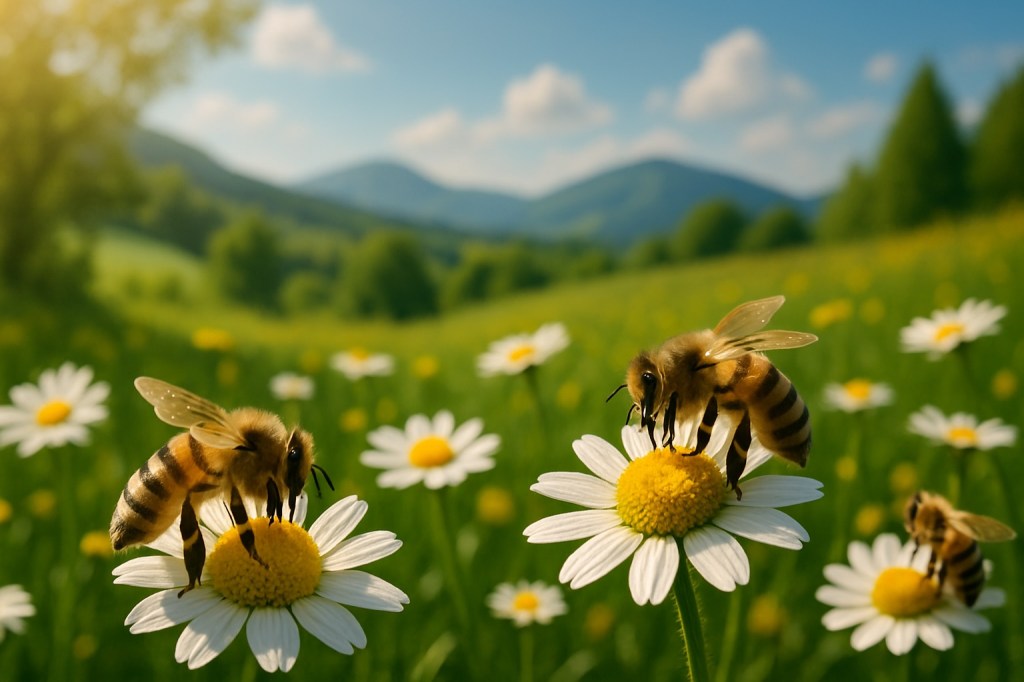
Ever since I started doing groceries in Japan after relocating here, one thing that caught my attention was the sheer variety of honey in the supermarket aisles. Beautifully labeled jars from all over the world — New Zealand’s Manuka honey with a price tag that made me do a double-take, and tubs of Chinese honey sold in generous quantities for a fraction of the price.
That contrast made me curious:
- What makes Manuka honey so expensive?
- Why is Chinese honey flooding into Japan at such affordable prices?
- And why are bee populations in places like the U.S. collapsing while in China they seem to be growing?
I decided to dig in — and here’s what I found.
🍯 What Makes Manuka Honey So Expensive?
Manuka honey comes from the nectar of the mānuka bush (Leptospermum scoparium), native to remote parts of New Zealand. The plant blooms for just a few weeks a year, often in rugged terrain. Harvesting is labor-intensive and weather-dependent. But that’s only part of the story.
What really sets Manuka honey apart is its medicinal potency. It contains high levels of methylglyoxal (MGO), a compound known for its antibacterial effects. To verify quality, it’s rated using systems like UMF™ (Unique Manuka Factor) and MGO ratings, and only certified Manuka honey earns the label.
And then there’s the market scarcity:
New Zealand produces roughly 1,700 tons of true Manuka honey each year — yet far more than that is sold globally. That gap invites counterfeiting, so producers have invested heavily in testing, branding, and certification, all of which increase costs.
It’s a luxury wellness product, not just a toast topping.
🍯 Why Is Chinese Honey So Affordable and Plentiful in Japan?
While Manuka honey is all about scarcity and certification, Chinese honey is about scale.
China is the largest honey-producing country in the world, exporting over 153,000 tons in 2023. Much of that ends up in countries like Japan, which has strong trade ties with China and a high demand for honey in cooking, teas, sauces, and snacks.
Chinese honey is often:
- Blended or ultrafiltered, sometimes removing pollen (which makes origin tracing harder).
- Produced at industrial scale, with lower labor costs and year-round foraging in some regions.
- Exported in bulk, making it a cost-effective ingredient in food processing.
So it’s no surprise that Japan imports it in large amounts — it simply fills a different market need than high-end, small-batch honeys like Manuka.
🐝 U.S. Bee Crisis vs. China’s Bee Boom — Why?
Just recently I saw a news piece saying the U.S. has lost around 60% of its bees. Meanwhile, China’s bee population has grown by 25%. That raised even more questions for me.
In the U.S., bees face multiple threats:
- Varroa mites, which spread deadly viruses and are becoming pesticide-resistant.
- Pesticides, especially neonicotinoids.
- Climate stress and habitat loss due to monoculture farming.
Beekeepers in the U.S. are struggling, with some calling this the biggest loss since tracking began.
In contrast, China has ramped up its beekeeping infrastructure. With government support and strong export incentives, beekeeping has expanded, especially in rural areas where families rely on it for income. In some parts of China, farmers have even developed manual pollination techniques due to local pollinator shortages — showing how seriously they treat production continuity.
It’s a mix of agricultural policy, environmental conditions, and economic priorities.
🌱 Bees Don’t Just Make Honey — They Feed the World
While this whole story started with jars of honey on a supermarket shelf, it quickly became clear that bees aren’t just producers of sweetness — they’re pillars of our entire food system.
About 75% of the world’s crops rely on pollinators like bees for reproduction. Without them, many fruits, vegetables, nuts, and even coffee would see sharply reduced yields or disappear entirely. From apples and almonds to melons, peppers, and sunflowers — bees are behind the scenes making it all possible.
Their pollination work supports not just crop growth but also the biodiversity of wild plants and the livelihoods of millions of farmers worldwide. In places where pollinators have vanished, like some regions in China, farmers have had to resort to hand-pollination using brushes — a costly and unsustainable alternative.
So when bee populations decline, it’s not just an environmental concern — it’s a global food issue. Honey might be the most visible product, but the real gold is the silent, continuous labor of pollination that keeps our plates full and ecosystems alive.
🍯 Final Drizzle of Insight
What started as a routine trip to the supermarket turned into a deep dive into the ecosystems, economies, and ethics behind what’s inside each honey jar.
- Manuka honey represents rarity, healing potential, and traceable origins — a luxury product driven by trust and testing.
- Chinese honey meets global demand with affordability and volume — thriving due to industrial scalability and export-driven growth.
- And behind them all are bees, whose fate reflects the state of our agriculture and environment.
For me, those supermarket shelves in Japan now tell a global story — one that’s still unfolding.
📚 Sources & Further Reading
- UMF Honey Association: umf.org.nz
- Bees & Trees: “Why is Manuka Honey So Expensive?”
- Bon Appétit: “Fake Manuka Honey Is Everywhere”
- Wikipedia: Manuka Honey
- Manuka Hut: “Unlocking the Mystery of Manuka Honey”
- Live Beekeeping: China Honey Export Statistics
- Iowa State University: U.S. Honey Market Reports
- Calgary Beekeepers: International Honey Pricing Study (PDF)
- ABC News: “Honey Bee Colonies Face 60–70% Losses in 2025”
- The Guardian: “Record US Bee Die-Offs in 2025”
- WSU Bee Lab: Colony Decline Research
- Wikipedia: Colony Collapse Disorder





 Experiences - Life - Inspiration 🇨🇭🇯🇵
Leave a comment