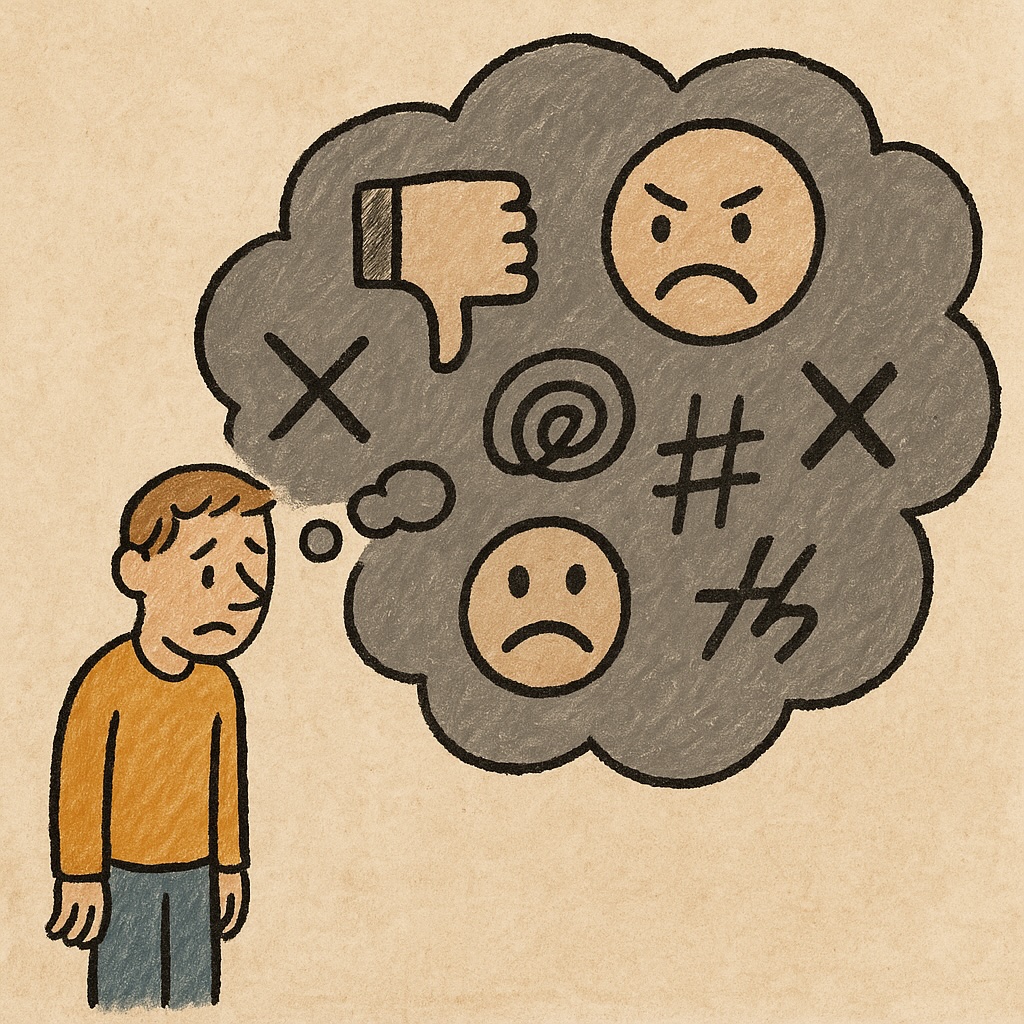
Let’s be honest: nobody wakes up in the morning hoping today’s menu will include a fresh serving of criticism. If avoiding criticism were an Olympic sport, most of us would already have gold medals. It doesn’t matter whether it’s online, at work, or around the dinner table — criticism feels like a punch to the stomach.
Why? Because it doesn’t just attack what we did. It often feels like it attacks who we are. And that sting is why so many people hide their voices, projects, or even dreams. Better to stay invisible than to face the arrows, right?
But here’s the twist: I’ve learned that criticism isn’t necessarily my enemy. It’s more like that annoying coach who makes you run laps when you’d rather sit down. You don’t enjoy it, but it might be exactly what you need.
When Criticism Feels Personal
I’ll admit it: I take criticism harshly when it feels deeply personal. My first reaction is usually defensive. But then I realized — it’s not really “me” that’s hurt. It’s my ego.
The ego is like a self-made image, built from memories, stories, achievements, and all the little ways I want to see myself. Criticism threatens to shatter that image. And my ego, well, it can get a bit dramatic. You’d think Shakespeare himself just insulted me.
But when I manage to put the ego aside — to see myself as just a human being, not above or below anyone else — criticism suddenly feels different. It becomes less of a wound and more of a mirror.
Criticism as Ego Training Ground
For me, criticism has become a kind of training ground. It keeps my “big head” in check. My ego loves to build castles out of identity and self-importance. Criticism is like the kid who walks by and gives the sandcastle a little kick. At first, I hate it. Then I see: maybe the castle wasn’t that solid after all.
Becoming more egoless doesn’t mean becoming weak. It means not being ruled by that fragile image I’ve built of myself. Criticism helps me practice that.
The Projection Game – It’s Not Always About You
Here’s something else I noticed: people who criticize are often projecting their own values onto me. When those values don’t match mine, friction is inevitable.
On top of that, many people don’t manage their emotions well. They blurt out criticism without empathy, not realizing how sharp their words land. Some people deliver criticism the way a cat delivers a dead mouse: “I brought this for you… surprise!”
But that doesn’t mean all criticism is bad. There’s a big difference between criticism and feedback.
Criticism vs. Feedback
- Criticism says: “This is wrong. I don’t like it.” It closes doors.
- Feedback says: “Here’s another way you might try it.” It opens them.
Feedback isn’t necessarily better. It’s just different. It gives options instead of shutting things down. That’s the kind of exchange that helps people grow.
If you’re ever tempted to criticize someone online, try turning it into feedback instead. The world doesn’t need more dead mice on doorsteps.
Criticism as a Sign of Impact
There’s something worse than being criticized: being ignored. Ghosted. Forgotten.
Criticism means you made an impact. Someone saw you. You made them react. Indifference, on the other hand, says: “You don’t even matter enough to respond.”
So in a strange way, criticism is a badge of courage. It means you showed up. You were visible. And yes, even posting photos of kittens can attract criticism (believe me, someone will find a way).
Compassion for the Critic
Another perspective: criticism often reveals more about the critic than about you. Maybe they’re in pain. Maybe they’re insecure. Maybe nobody ever taught them how to give feedback kindly.
If I can meet that with empathy — instead of hostility — I stay grounded. Their storm doesn’t have to become mine.
How to Receive Criticism Without Losing Yourself
A few practices that help me:
- Pause before reacting. Let emotions cool down.
- Separate tone from content. The delivery may be harsh, but is there a useful nugget inside?
- Let values lead. If criticism pushes against your values, maybe it’s proof you’re standing exactly where you need to.
- Remember visibility. Criticism is proof you’re brave enough to be seen.
Criticism as a Compass
At the end of the day, I see criticism as a compass. It points me back to my values. It keeps my ego in check. And most importantly, it reminds me that I’m out there, showing up, living as myself.
Criticism isn’t proof that I’m failing — it’s proof that I dared to be visible. And if nobody ever criticizes me? Maybe I’m not really standing for anything yet.
So the next time criticism comes knocking — and it will — maybe treat it less like an enemy and more like an unwanted guest who, despite their annoying habits, somehow makes you stronger.
💡 Think about the last piece of criticism you received. Was it really about you? Or was it about their values, their lens, their delivery? And what did it teach you about your own?




 Experiences - Life - Inspiration 🇨🇭🇯🇵
Leave a comment