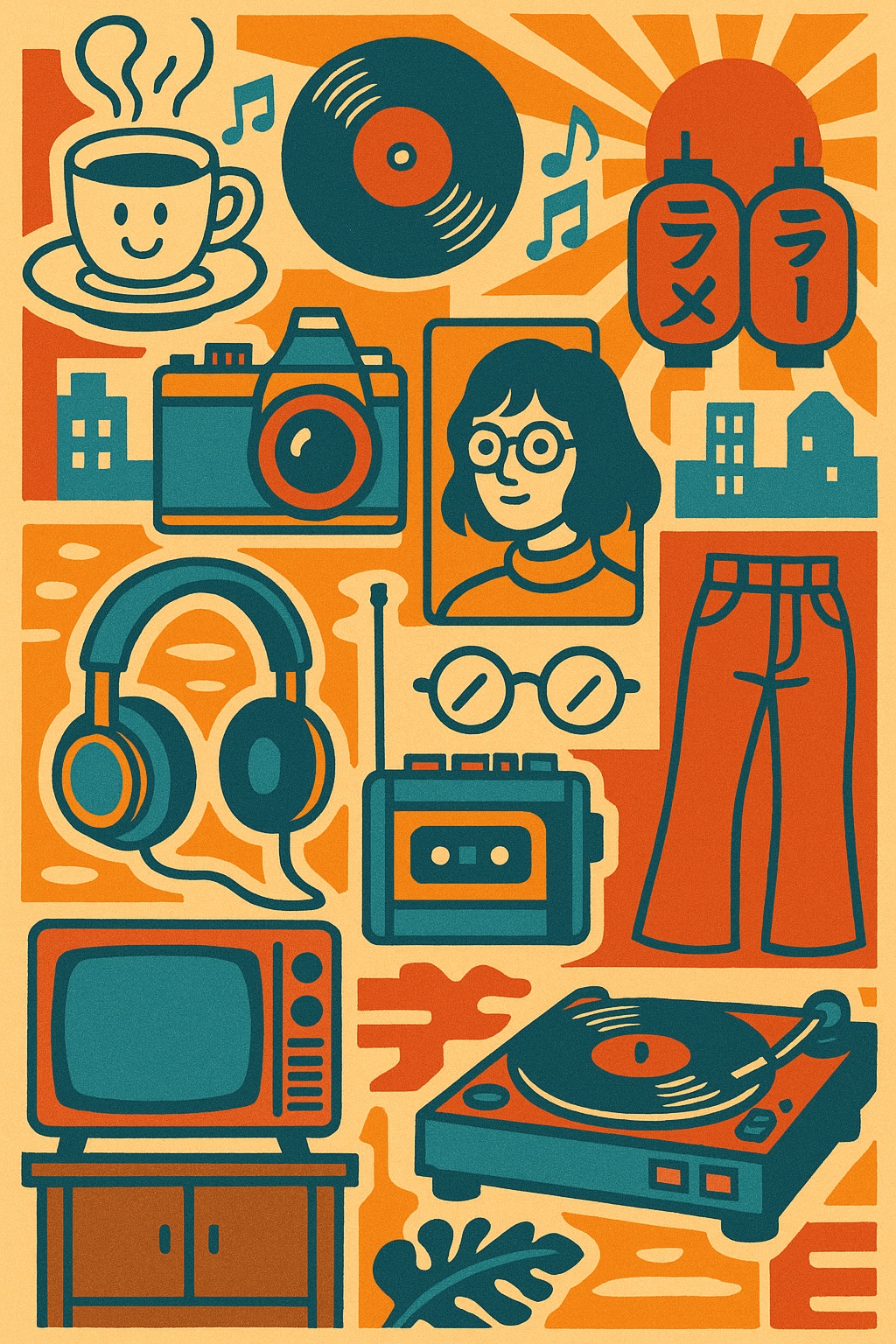
Walk through a shopping street in Tokyo today, and you might feel like you’ve slipped back in time. Vinyl records, cassette players, Shōwa-era coffee shops with wood-paneled interiors, and neon signs glowing in colors just slightly faded by time. What surprises me most is that this revival isn’t driven by the people who lived through it. It’s Gen Z—the generation born into TikTok, Spotify, and AI—who are falling head over heels for an era that ended back in 1989.
Why would the youth of today choose to escape into the Japan of yesterday?
Escaping Into Aesthetic Warmth
The Shōwa era (1926–1989) was a time of enormous change for Japan—postwar hardship, explosive economic growth, and the rise of modern consumer culture. Today, it’s the later Shōwa years that are being rediscovered: cozy coffee shops, analog photography, and a “cluttered charm” that feels so different from the sleek glass and minimalist perfection of the digital world.
Even Wikipedia has an entry for “Shōwa nostalgia”, describing this very longing for the atmosphere of late 20th-century Japan. Imperfections—like the static on a record or the softness of film photography—carry a warmth that digital polish can’t replicate.
Rituals of Analog Life
Cassettes, vinyl, and film cameras are hot again in Japan. But it’s not just about the objects—it’s about the ritual. Pulling a record from its sleeve, rewinding a tape, or clicking the shutter of a 35mm camera slows life down in a way a smartphone never could.
The Japan Times recently covered how cassette players are being revived by young Japanese—not for sound quality, but for identity. Owning a Walkman today is an act of rebellion against convenience culture.
Music That Outlived Its Era
And then there’s city pop. Songs like Mariya Takeuchi’s Plastic Love or Tatsuro Yamashita’s smooth grooves are everywhere again. They’re being rediscovered on YouTube and TikTok, where algorithms turned them into global hits. BBC Culture even traced how Plastic Love went viral decades after its release.
For Gen Z, these songs feel fresh. Yet the emotions—freedom, longing, urban melancholy—are timeless. The music becomes a portal, letting today’s youth taste the bittersweet rhythms of a life they never lived.
Dressing in Yesterday’s Future
Fashion, too, has been swept into the nostalgia wave. In Harajuku and Shimokitazawa, thrift shops specializing in Shōwa-era pieces are booming. Vogue Japan notes how high-waisted jeans, oversized jackets, and vintage round glasses are back in circulation.
This isn’t about copying their parents—it’s about remixing the past. Each thrifted jacket or old-school accessory becomes a statement of individuality, a way to stand out in a mass-produced world.
Nostalgia Without Memory
Here’s what fascinates me most: most of these young people never lived in the Shōwa era. Psychologists call this cultural nostalgia—a longing for a past you never personally experienced.
Maybe it’s not really about Shōwa Japan at all. Maybe it’s about what it represents: simplicity, authenticity, a slower pace in life. In a chaotic and overstimulated world, that imagined warmth becomes a source of identity and comfort.
A Global Movement With Japanese Flavor
This retro revival isn’t unique to Japan. Around the world, Gen Z is embracing Polaroids, vinyl, vintage clothing, and mid-century aesthetics. But Japan’s Shōwa wave feels particularly rich. It’s local history woven with global curiosity.
Travel writers at CNN point out how even foreign visitors are seeking out “nostalgic towns” in Japan, where the streets and shopfronts look frozen in time. Retro Japan has become a cultural time machine—not only for locals, but for travelers too.
Final Thoughts: The Past Still Has a Future
The Shōwa revival among Gen Z isn’t just a quirky trend. It’s a search for grounding in a disposable age. By choosing record players over streaming, thrifted jackets over fast fashion, and analog photos over endless phone snaps, young people are making a quiet statement: the past still has a future.
And maybe that’s the real magic here. The Shōwa era might be long gone, but its echoes remind us of something we’ve all felt—the human longing for a life that feels slower, warmer, and more connected.
✅ Sources & Further Reading:







 Experiences - Life - Inspiration 🇨🇭🇯🇵
Leave a comment