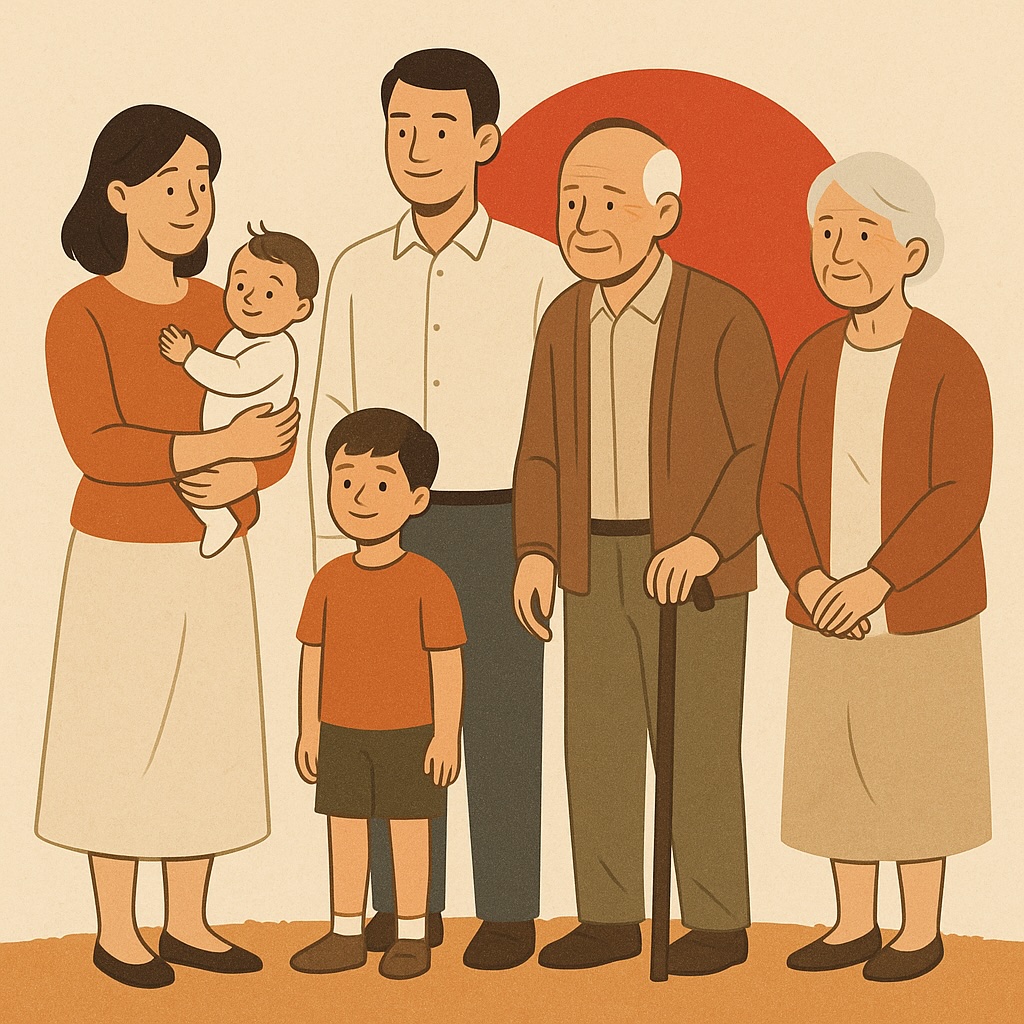
“What shrinking towns, rising ages, and falling birthrates reveal about the future — and how Japan can still turn it around.”
Japan, a nation long admired for its innovation, safety, and quality of life, is now facing one of its most significant and complex challenges: a rapidly aging and shrinking population. This demographic shift is not just a number game; it has profound consequences for every facet of Japanese society—from the economy to rural communities, from labor markets to cultural traditions.
Living in Japan, I often find myself appreciating its quiet beauty, rich traditions, and sense of social harmony. But beneath the surface, there’s a growing sense of concern—a subtle, unspoken question about where things are heading. This post isn’t about sounding an alarm. It’s a reflection, a way to understand what’s unfolding and how we might adapt together.
The Shape of Japan Today (2025)
As of 2025, Japan’s population pyramid reveals a stark reality. The base—the youngest age groups—is narrow. Fewer children are being born each year, with the fertility rate sitting at a record low of 1.15. Meanwhile, the top of the pyramid—the elderly—is expanding rapidly. Approximately 29% of the population is over 65, making Japan one of the oldest countries in the world.
The population structure resembles an inverted pyramid, with too few young people supporting an increasingly large aging population. This is a logical consequence of decades of low birthrates and increasing life expectancy. However, the implications are far from simple.
Looking Ahead to 2050
Fast forward 25 years, and the picture becomes even more concerning. By 2050:
- The population will likely shrink by over 15 million people.
- More than 35% of the population is projected to be over 65.
- The working-age population (15–64) will shrink dramatically.
- Rural areas may become ghost towns due to depopulation.
The consequences of this demographic shift include:
- Economic stagnation: A shrinking workforce means reduced productivity and tax revenue.
- Rising healthcare and pension costs: An older population requires more medical care and support.
- Labor shortages: Essential services may become understaffed, affecting quality of life.
- Cultural shifts: Traditional ways of life in rural areas may disappear.
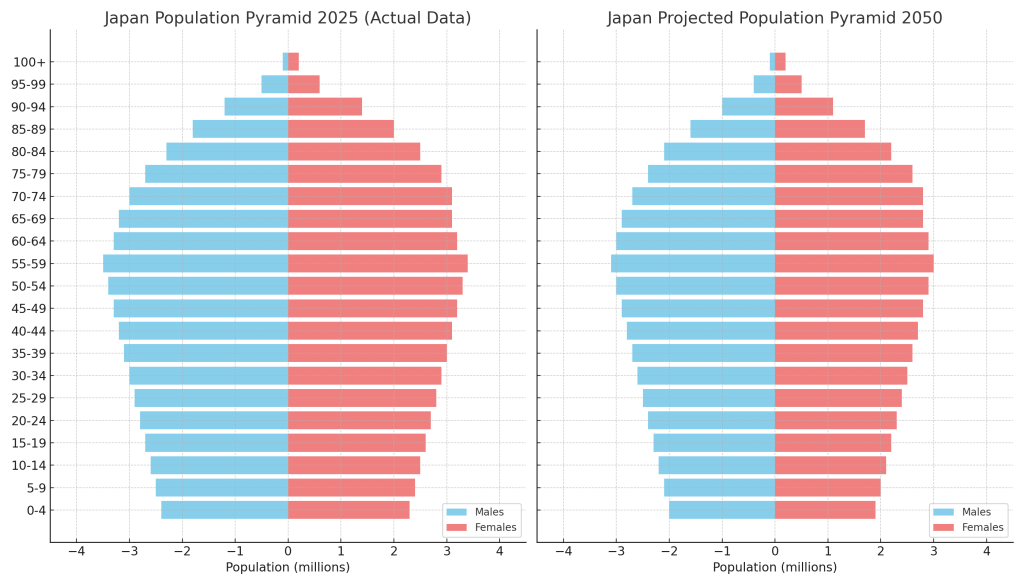
This combined graph illustrates the current and projected population distributions by gender and age group. The narrowing base and widening top emphasize the demographic imbalance.
What Would an Ideal Population Structure Look Like?
An ideal population structure for Japan would resemble a rectangular or beehive-shaped pyramid:
- A healthy number of children (ages 0–14) being born every year.
- A stable, robust working-age population.
- A gradually tapering elderly population that doesn’t overburden younger generations.
This kind of structure allows for:
- Sustainable economic growth
- Intergenerational balance
- Sufficient human resources for innovation, caregiving, and infrastructure

This graph shows a more balanced demographic structure—something Japan could aim for through thoughtful policy and social change.
How Can Japan Get There?
Japan has already taken important steps in many of these areas—but experts agree they need to go further, faster, and deeper. Here’s what’s being done, and what more could help tip the balance:
1. Support Families and Working Parents
- What’s happening: Japan has expanded child allowances, made preschool education free, and offers childcare subsidies. Some companies provide flexible work and parental leave.
- What’s missing: Long working hours, expensive housing in cities, and low uptake of paternity leave (due to stigma) still discourage family formation. Stronger enforcement and cultural change are needed.
2. Promote Gender Equality
- What’s happening: There are government campaigns promoting women in leadership and legal frameworks like the Basic Act for a Gender Equal Society. Companies must now disclose gender gap data.
- What’s missing: Japan still ranks low in global gender equality, and women remain underrepresented in decision-making roles. Social expectations and workplace norms must shift significantly.
3. Welcome Immigration Strategically
- What’s happening: Japan has opened new visa programs for foreign workers in sectors like caregiving and agriculture, and encourages international students to stay.
- What’s missing: Integration support (language, housing, cultural inclusion) is limited. Long-term residency options are narrow, and public sentiment remains cautious about large-scale immigration.
4. Invest in Automation and Productivity
- What’s happening: Japan leads in robotics, especially in manufacturing and elderly care. The government promotes “Society 5.0″—a tech-forward vision for the future.
- What’s missing: Small and mid-sized companies struggle to adopt automation. More training, funding, and digital transformation support are needed.
5. Revitalize Rural Areas
- What’s happening: Programs offer financial incentives for moving to the countryside, including free housing and job placement.
- What’s missing: Rural infrastructure and job opportunities still lag behind. More investment in connectivity, education, and entrepreneurship is vital to make these areas livable long-term.
In all these areas, the foundations are there. But to truly shift the demographic trajectory, Japan will need bold policies, coordinated national vision, and a cultural shift toward embracing change.
Final Thoughts
Japan’s demographic path is not irreversible. In fact, it could be an invitation—a moment for society to rethink what it means to thrive. With courage, creativity, and compassion, Japan can build a new future. One that honors its past while opening space for fresh beginnings.
This is not just a challenge for Japan. Many nations may one day face similar questions. But Japan has a chance to lead by example—quietly, resiliently, and wisely.
What are your thoughts on Japan’s future? Could similar demographic trends affect other countries too? Join the conversation and share your perspective.




 Experiences - Life - Inspiration 🇨🇭🇯🇵
Leave a comment