Last year, I watched an NHK video on YouTube explaining why Japan gets such insane amounts of snow. I remember sitting there, half watching, half doing something else, and then slowly realizing that what they were explaining was not just “winter is cold”. It was a whole large-scale natural machine that turns parts of Japan into something that looks more like the Arctic than the country of cherry blossoms and green tea.
What stuck with me most was the idea that Japan’s snow does not really start in Japan.
It starts in Siberia.
Every winter, a massive high-pressure system builds up over the Asian continent. Siberia becomes a gigantic reservoir of cold air. Not just “a bit chilly” cold, but seriously, bone-deep cold. This air is dry, heavy, and it wants to move. And when it does, it flows east and southeast, straight toward Japan.
If cold air alone were enough, Japan would just be cold and dry in winter. But between Siberia and Japan lies the Sea of Japan. And this sea changes everything.
Compared to the freezing air coming from the continent, the Sea of Japan is relatively warm. When this cold air passes over it, something interesting happens. The air gets warmed from below and, more importantly, it picks up moisture. A lot of it. What started as cold and dry air slowly turns into cold and wet air, full of heavy clouds that are just waiting for a reason to unload their contents.
That reason is called Japan.
The Japanese islands are extremely mountainous. When those moisture-filled clouds hit the west coast and try to move inland, they cannot just continue on their way. They are forced upward by the mountains. And when air rises, it cools. When it cools, it can no longer hold all that moisture.
So it starts to snow.
And it does not just snow a little.
It snows properly.
This is why the Sea of Japan side of the country gets buried every winter, while the Pacific side often enjoys blue skies and dry cold. On the same day, you can have people in Tokyo walking under a clear winter sun while, on the other side of the mountains, entire towns are digging themselves out of yet another white blanket.
Places like Niigata or Aomori sit in what feels like the perfect storm of geography. They are directly exposed to these Siberian air masses. They are backed by mountain ranges that squeeze the clouds until they give up everything they have. And this does not happen once or twice per winter. It happens again and again and again.
Aomori, in particular, has become almost legendary for this. Every year, you see photos of cars that look like small bumps in the landscape and houses that seem to be slowly swallowed by the snow. Snow walls higher than people. Streets that look more like corridors cut into a glacier than parts of a city.
And the truly fascinating part is that this snow often comes in bands, like long invisible rivers in the sky. These snow clouds can line up over the Sea of Japan and keep feeding the same areas for hours or even days. It is not just a snowfall. It is a continuous delivery system.
As if nature said, “Here. And here. And here some more.”
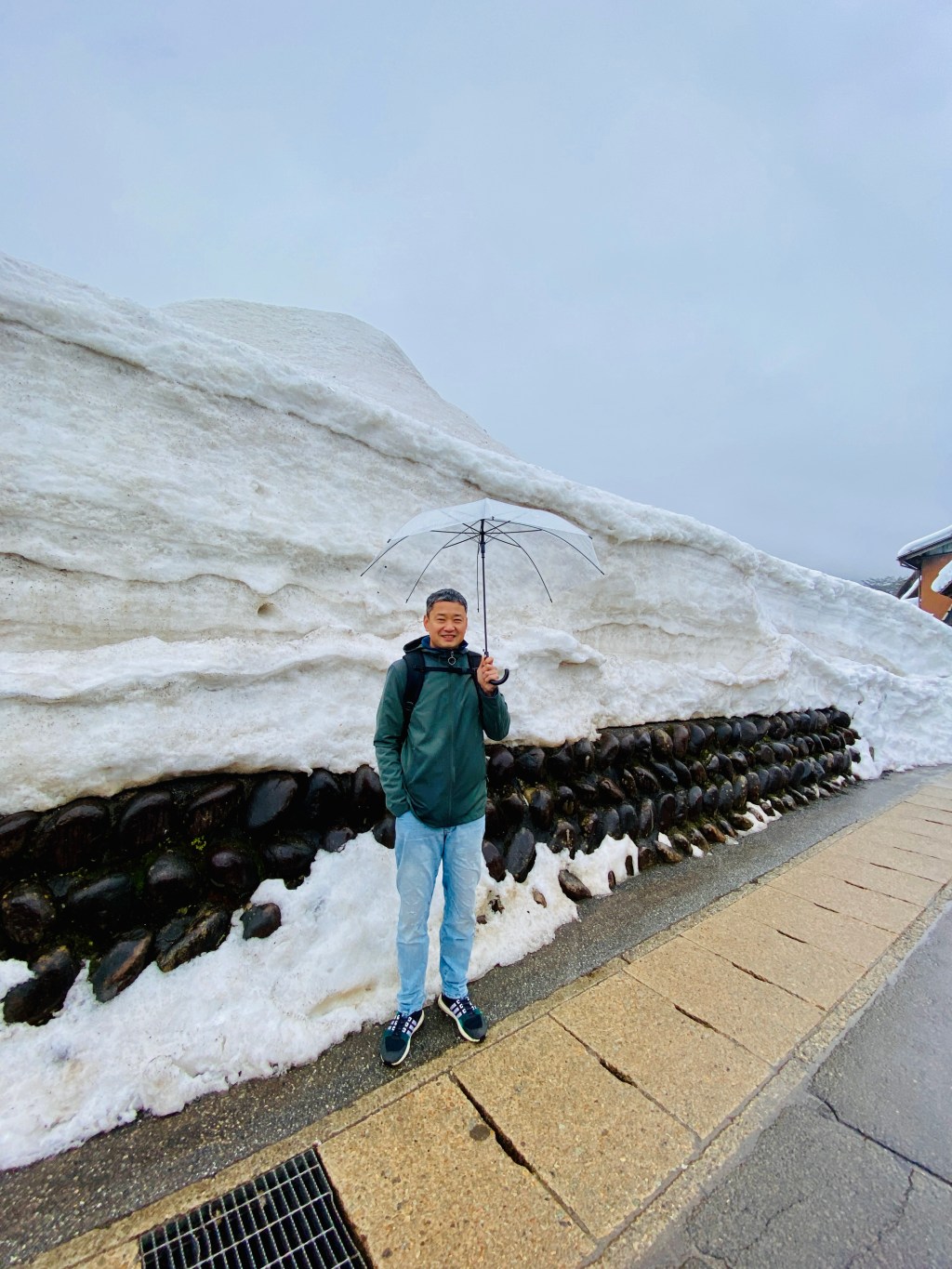
Oh, and the picture of me standing in front of that massive, towering wall of snow was taken last winter in Shirakawago.









 Experiences - Life - Inspiration 🇨🇭🇯🇵
Leave a comment