For a while, I thought investing was about picking the right stocks.
It wasn’t.
It was about understanding how much loss I could emotionally tolerate.
I lost money early on.
When a stock dropped significantly, I felt it in my stomach.
At first, I reacted emotionally.
Then I began observing myself.
That observation became the system.
Step 1 — Accept Loss as Tuition
Every loss taught me something about myself.
How fast do I panic?
How long can I hold?
At what percentage drop do I lose sleep?
Instead of pretending losses shouldn’t happen, I treated them as data.
Losses calibrated me.
Step 2 — Define Identity
I realized something important:
I am not a trader.
Watching stock prices daily increased anxiety and reduced clarity.
So I stopped.
I chose to be a long-term investor.
That meant:
- Buying with intention.
- Not reacting daily.
- Allowing time to work.
Identity reduced stress.
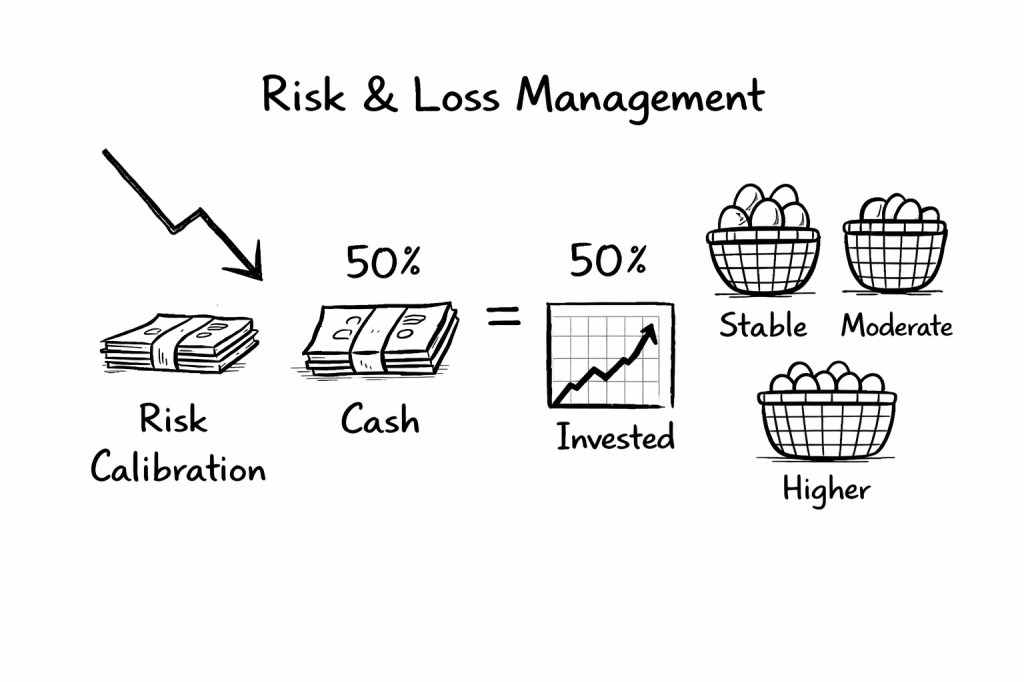
Step 3 — Position Sizing Rule
I stopped putting large amounts into a single stock.
My rule became simple:
Only put as many eggs in one basket as you are comfortable losing.
If losing that amount would cause emotional instability, the position was too large.
That rule alone reduced fear.
Step 4 — Diversify by Risk Category
I bought different types of stocks:
- Stable dividend stocks.
- Moderate-risk stocks.
- Higher-risk positions.
Not to gamble.
But to learn how I respond in different environments.
Over time, I naturally gravitated toward stability.
That told me something about my risk appetite.
Step 5 — My Allocation Anchor
I created a personal rule:
50% cash.
50% invested.
If I had €10,000 saved,
I would aim for €10,000 invested.
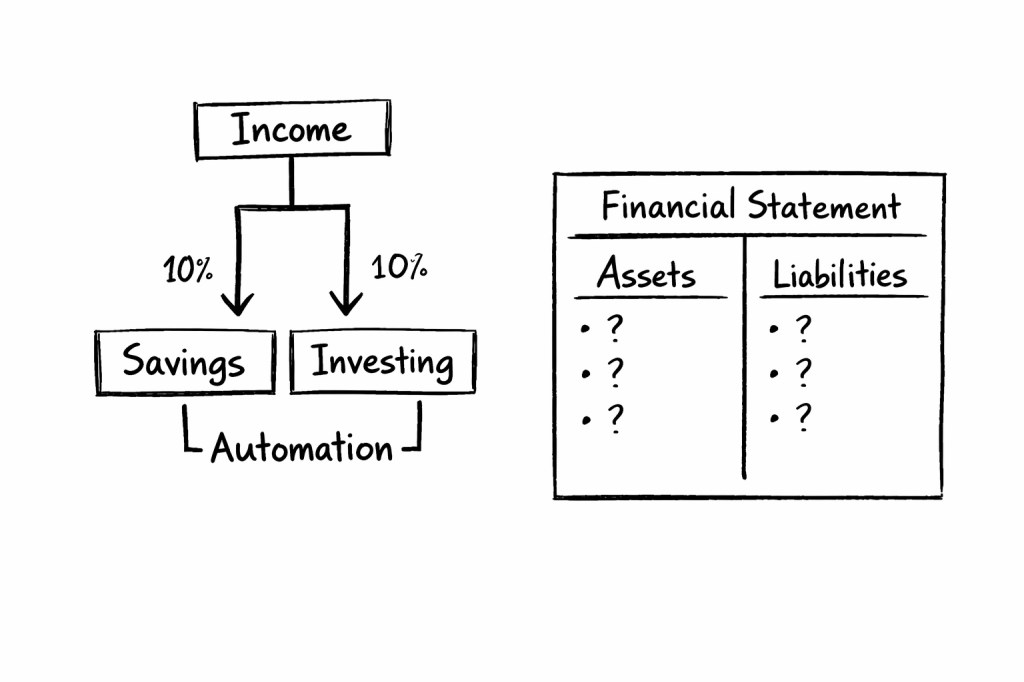
As savings increased through my 10% automation,
I gradually increased investments to maintain balance.
This prevented overexposure.
It also prevented paralysis.
It kept my system mechanical.
What Changed
I stopped chasing returns.
I started managing risk.
I stopped trying to be clever.
I started trying to be consistent.
And over time, I understood something:
Investing is not about predicting markets.
It’s about predicting yourself.
If you want to experiment with this, start by asking:
At what percentage loss do you feel physical discomfort?
That number is more important than any stock tip.




 Experiences - Life - Inspiration 🇨🇭🇯🇵
Leave a comment