For the past five years, I have not worked a 9–5 job.
This didn’t start with an investment.
It started with a simple spreadsheet.
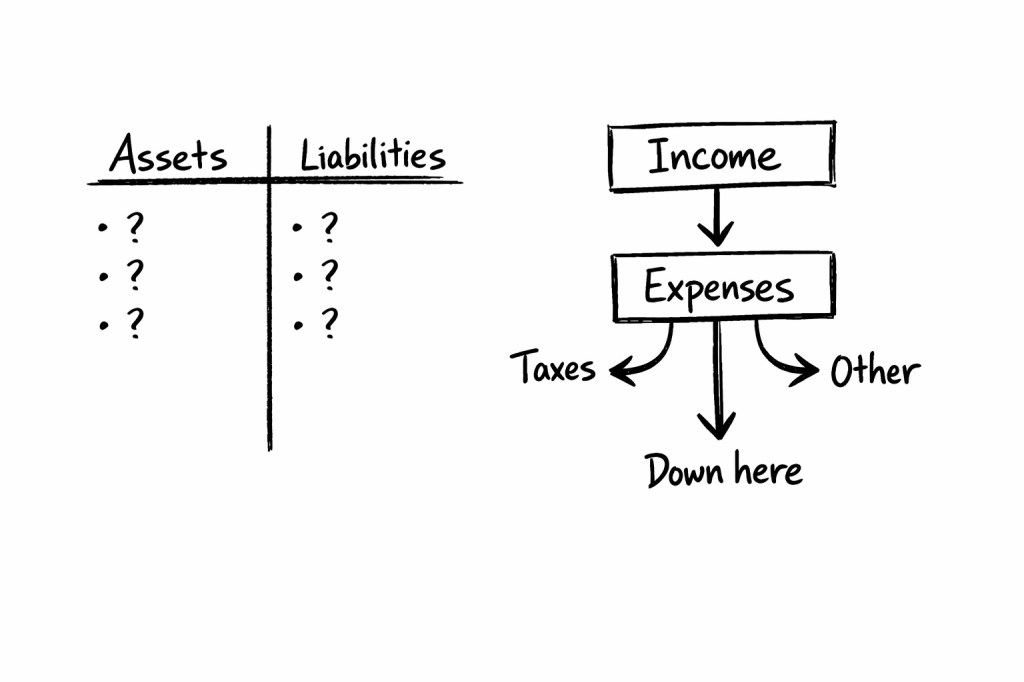
More than 10 years ago, after reading Rich Dad Poor Dad, I began tracking my personal financial statement. What stayed with me from that book was not motivation. It was the idea of thinking in terms of assets and liabilities instead of income alone.
So I made a rule for myself.
I would always know my numbers.
Not once a year.
Not when I felt inspired.
But consistently.
I started writing down:
• Assets
• Liabilities
• Income
• Expenses
At first, it was uncomfortable.
Seeing everything clearly removed the stories I told myself. It removed emotion. It removed identity. It showed reality.
And reality is where change begins.
Step 1 — Measure Without Interpretation
The first shift was simple:
Just write the numbers down.
No judgment.
No excuses.
No optimism.
Just clarity.
That alone changed how I made decisions. When you see your financial situation clearly, vague ambition disappears.
Step 2 — Define the Target Version
After documenting my current state, I created a second version of the same financial statement.
But this time, I filled it with desired numbers.
What level of assets would produce enough income to cover essential expenses?
What expenses could be reduced?
What income could be added?
Now I wasn’t drifting. I had a direction.
Step 3 — Close the Gap
The spreadsheet revealed only two real levers:
• Reduce expenses
• Increase income
Every financial decision had to move the numbers in the right direction.
Sometimes that meant sacrificing privacy (house hacking in the early years).
Sometimes it meant delaying lifestyle upgrades.
Sometimes it meant learning new skills to increase income.
It wasn’t glamorous. It was mechanical.
But mechanical systems create stability.
Step 4 — Maintain Daily Awareness
I still look at my financial statement daily.
Not obsessively.
Not emotionally.
Structurally.
Markets change.
Life changes.
Unexpected costs happen.
There is no “set and forget” version of financial independence.
It requires maintenance and mental flexibility. What worked years ago may not work tomorrow.
The spreadsheet keeps me honest. It forces adaptation.
What This System Did for Me
It removed fantasy.
It replaced vague goals with measurable movement.
It made financial independence less emotional and more operational.
Before I built assets, I built awareness.
And awareness became my backbone.
If you want to experiment with this, start simple.
Write down your assets, liabilities, income and expenses today.
No interpretation. Just clarity.
And if this resonates with you but you’d rather not comment publicly, feel free to reach out through my contact page. I read every message personally.






 Experiences - Life - Inspiration 🇨🇭🇯🇵
Leave a comment