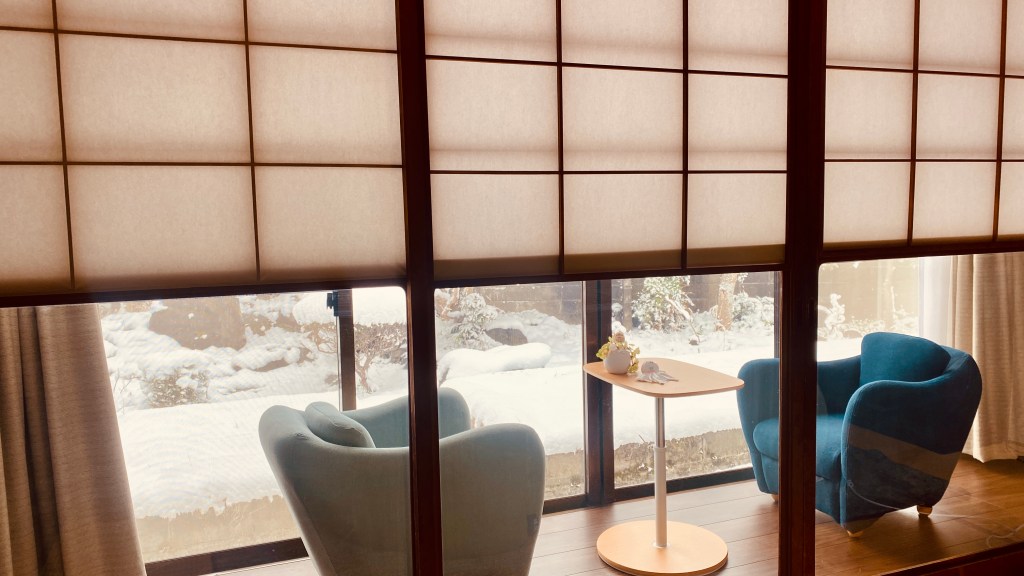
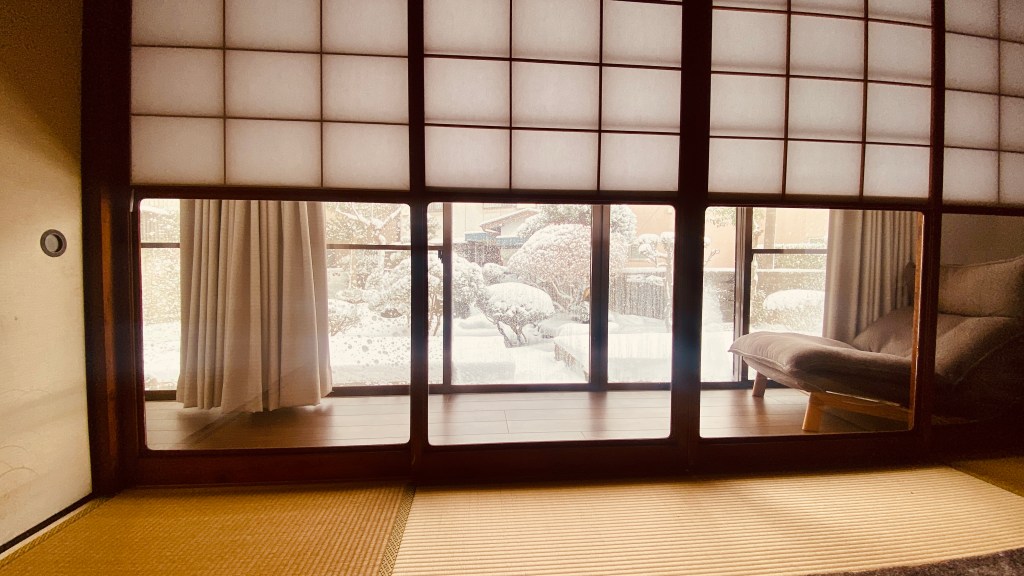
This morning, I looked outside through the shoji and the engawa and noticed that it had snowed during the night. Our garden was covered in a clean, white layer, changing its familiar shapes without really changing the place itself.
What I was actually looking through were not just shoji, but yukimi shoji. Snow viewing shoji.
I learned about them three years ago, after we moved into this traditional house in Gifu. At first, they were just an interesting architectural detail. Over time, I started to understand why they exist.
Yukimi shoji are sliding paper doors with a small glass window at the bottom. This window can be opened and closed. The idea is simple. When you sit on the tatami, your eye level is low. Normal windows are often too high to see much of the garden, especially when snow piles up. The yukimi shoji solves this by placing a window exactly where your view naturally is when seated.
In winter, you can open this small window and look at the snow covered garden without opening the whole door and without letting the cold air inside.
This kind of detail says a lot about how traditional Japanese houses are designed. They do not try to completely separate inside and outside. Instead, they create many small ways to stay connected to what is happening outdoors, even during uncomfortable seasons.
The yukimi shoji does not change winter. It just makes it easier to observe.








 Experiences - Life - Inspiration 🇨🇭🇯🇵
Leave a comment