
There is a growing perception that foreigners are more interested in rural Japan than the Japanese themselves. This idea surfaces in conversations, local observations, and increasingly in tourism data.
The reality is more nuanced, but the trend is real.
Recent accommodation statistics from Japan’s Tourism Agency show that overnight stays by foreign visitors are growing faster in regional and rural areas than in major metropolitan regions. While cities still receive the largest absolute numbers, rural areas are seeing higher growth rates year on year. At the same time, domestic travel by Japanese residents has remained comparatively flat, especially when measured against pre pandemic levels.
This does not mean Japanese people are abandoning rural Japan. Domestic travel still accounts for the majority of total stays. But it does suggest that, right now, foreign interest is expanding outward more quickly.
One reason lies in how foreigners travel.
Visitors from Europe, North America, and Australia tend to stay longer in Japan and visit more prefectures on a single trip. With time as a flexible variable, movement naturally spreads beyond the well known urban routes. Once the major cities are experienced, attention shifts elsewhere.
Japanese domestic travel works differently. Shorter trips, limited vacation time, and familiarity with rural areas shape choices. Rural Japan is not new to Japanese travelers. In many cases, it is associated with hometowns, family obligations, or landscapes tied to work rather than escape.
What is familiar rarely feels urgent.
Another factor is saturation.
Major cities and iconic destinations are experiencing overtourism. Crowding, rising prices, and capacity limits have become visible issues. In response, both policy and promotion increasingly encourage visitors to explore regional areas. This is not subtle. It is a structural necessity.
Foreign visitors, especially first time travelers, are more responsive to these signals. When alternatives are presented as quieter, more spacious, and culturally intact, interest follows.
Rural Japan benefits from this redistribution simply by being what it already is.
Rural Japan does not advertise itself in the same way cities do. It does not promise efficiency, choice, or novelty.
What it offers instead is continuity.
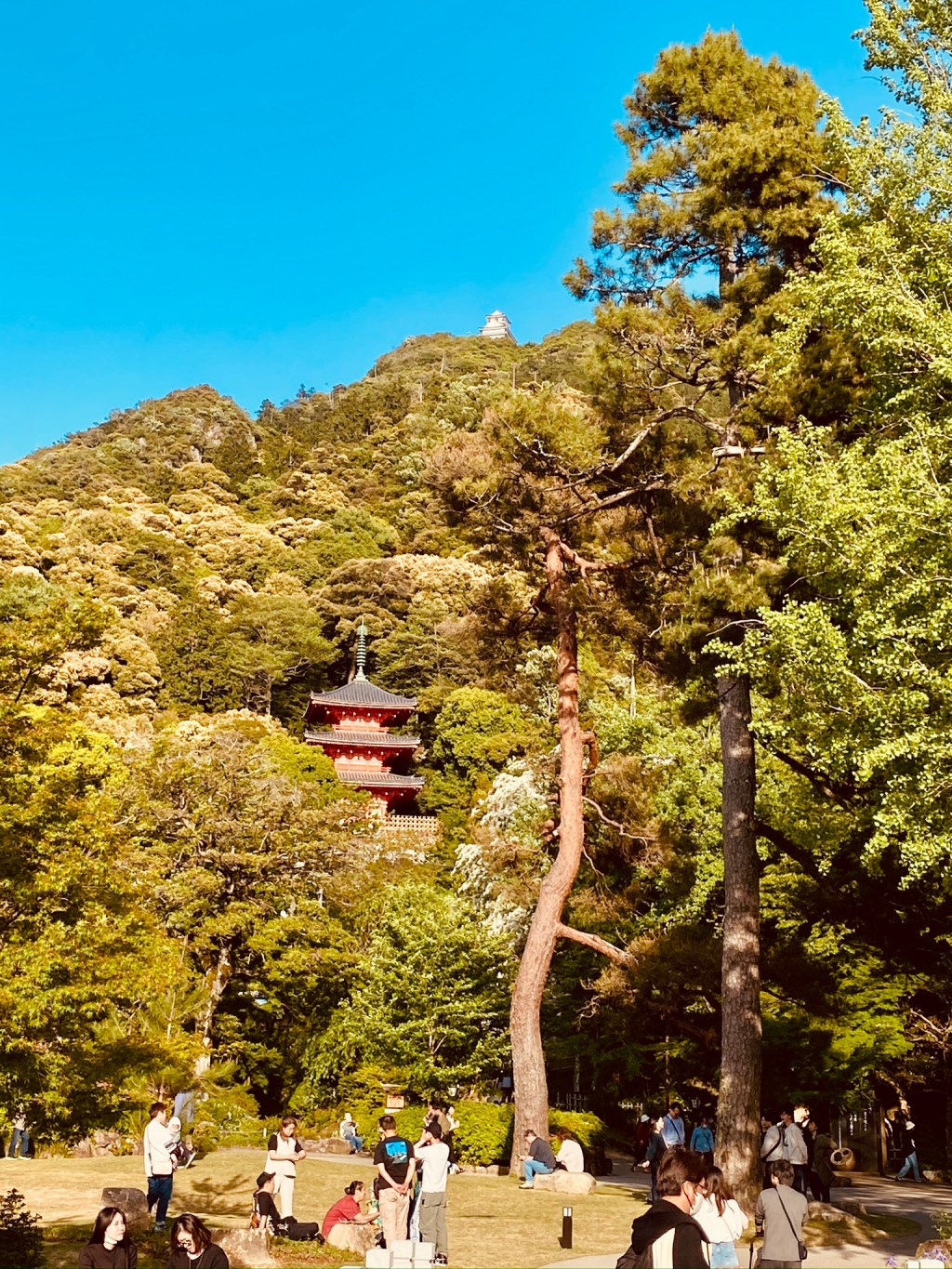
Landscapes shape daily movement. Edo period roads still connect places. Shrines remain embedded in ordinary routes rather than separated as destinations. History is not framed or explained. It is present through use.
Daily life involves fewer signals. Fewer prompts. Less instruction. Time is structured more by seasons and conditions than by constant scheduling.
For visitors arriving from environments built around speed, stimulation, and consumption, this difference is immediately legible.
For many foreigners, rural Japan represents something they no longer experience at home. Not tradition as spectacle, but systems that still operate without constant renewal. Places where modern life exists but does not overwrite everything else.
Japanese residents often carry different associations. Rural areas can represent aging populations, limited opportunity, or places people left in order to build careers elsewhere. These narratives coexist with beauty and history, but they shape perception.
Interest is not only about what a place is. It is about what it means.
Looking forward, this pattern is unlikely to reverse quickly.
Inbound tourism is expected to continue growing, and regional dispersion is now a strategic priority rather than a side effect. As cities reach their limits, rural areas will receive more attention, more visitors, and more pressure to adapt.
The challenge will be balance.
Rural Japan’s appeal lies in what it has not optimized away. As interest grows, the question is not how to modernize it further, but how to allow continuity without freezing it or commodifying it.
Perhaps the more useful question is not why foreigners appear more interested in rural Japan, but why attention is arriving from outside at this moment. Rural places did not suddenly become valuable. They remained. What changed was the surrounding world. As space, continuity, and limits grow rarer elsewhere, they become easier to recognize here. Whether this attention leads to renewal, pressure, or quiet coexistence will depend less on who notices rural Japan, and more on how gently it is allowed to continue.




 Experiences - Life - Inspiration 🇨🇭🇯🇵
Leave a comment