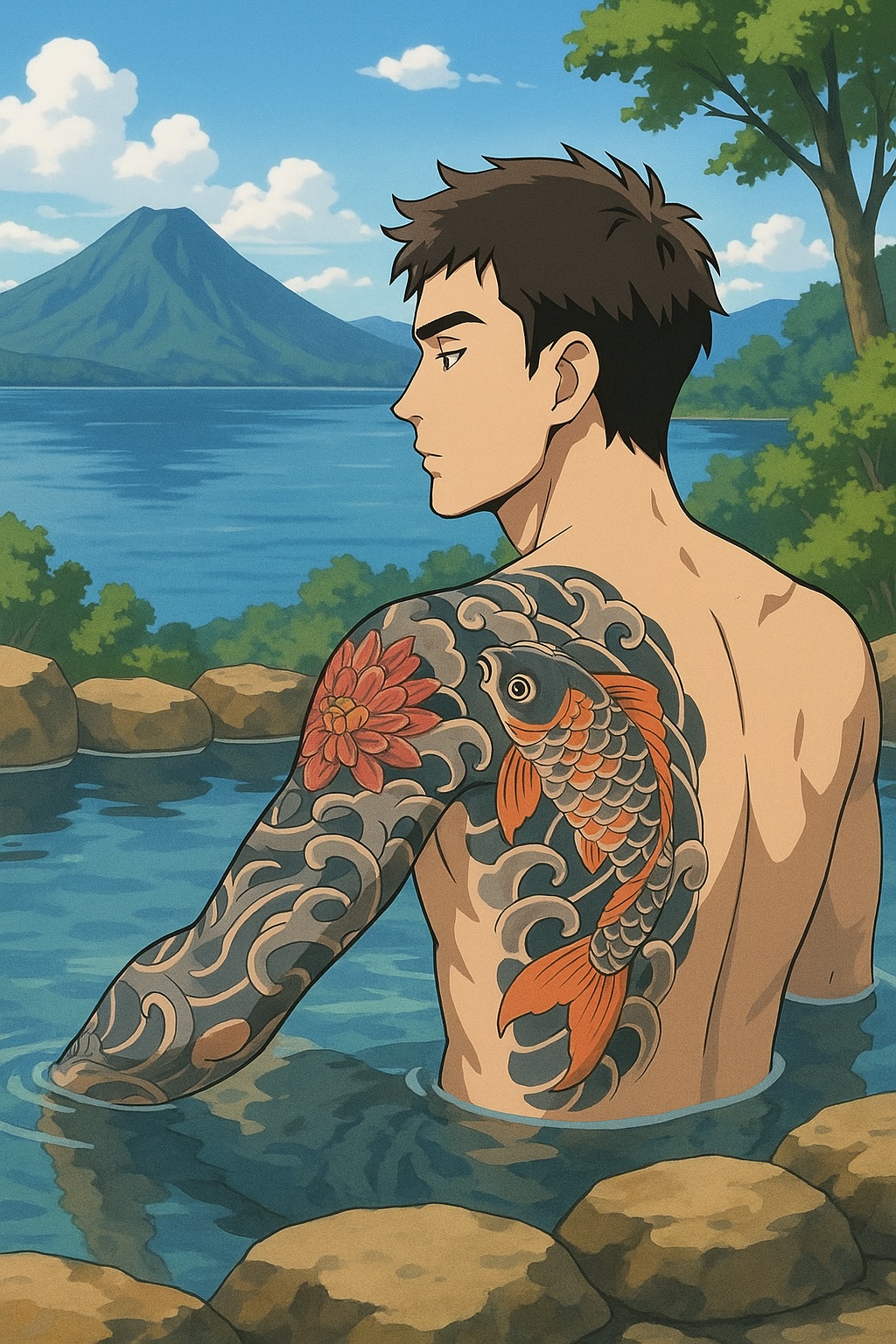
There’s something quietly fascinating about how tattoos are perceived in Japan. If you’re someone like me, visiting or living here with tattoos, you probably already know the cultural landscape around ink is a bit… unique. I have some pretty big tattoos myself. They’re not visible when I wear a T-shirt and shorts, and I usually keep them out of sight—not for my sake, but out of respect for the locals who might still feel uncomfortable seeing tattoos.
But here’s the thing. Japan in 2025 is not the same Japan it was even five or ten years ago when it comes to tattoo culture. And that’s what I want to share today—a mix of personal experience, cultural nuance, and a shift I’ve been noticing firsthand.
The Quiet Strategy: Covering Up (When It Helps)
Let me start by saying I have no problem showing my tattoos. I’m proud of them. But when I’m walking around town, I usually keep them covered. Not because I feel like I have to, but because I know that for many older Japanese people, tattoos can still stir up associations with the yakuza, Japan’s infamous organized crime groups.
It’s not about fear or danger. It’s just discomfort. A sort of quiet cultural unease. So I cover up as a gesture of respect, not because I feel like I’m hiding anything.
Also, and maybe this is just me being real for a second, I didn’t get these tattoos to show off or make a statement. I got them for deeply personal reasons, and I’ve never been the type to flash them around just so people can ask, “Did it hurt? What does it mean? Bla bla bla…”
Honestly, nothing is more annoying than having to answer the same superficial questions over and over. So keeping them discreet just saves me some mental energy too.
Onsen Etiquette: Ask First, and You Might Be Surprised
Let’s talk about onsen, one of the main places where tattoos have traditionally been a big no-no. And honestly, this is where things are changing fastest.
When I was in Hokkaido, I visited a beautiful onsen where I called ahead to ask if my tattoos would be a problem. The answer? “No problem at all.”
I was honestly surprised, considering how often you hear horror stories of people being turned away. But that’s the lesson. Just ask. Some places are still strict, but more and more are becoming flexible, especially if you’re polite and upfront about it.
Private baths, called kashikiri onsen, are also a great workaround. Some modern onsen even advertise themselves as tattoo-friendly to appeal to tourists and younger locals.
That said, even if you’re allowed to enter with tattoos, like I was, it doesn’t mean your fellow bathers will automatically be cool with it. You might still feel some glances or tension from other guests, especially older folks. It’s nothing personal, and honestly, it’s just part of how things are here. Something to keep in mind, and simply to be accepted as a normal reaction based on cultural background. I’ve found that staying relaxed and respectful tends to smooth everything over pretty quickly.
A New Generation: Cute, Minimalist, and Proud
Here’s the part that really caught my attention lately. I’m seeing more and more young Japanese people walking around with visible tattoos. We’re not talking about full sleeves or dramatic back pieces, but small, stylish, often kawaii (cute) designs. A heart on the wrist, a cat on the ankle, minimalist linework peeking out from a shirt collar.
It seems like Gen Z is slowly reshaping the narrative. Tattoos are no longer just about rebellion or underground culture. They’re becoming a lifestyle choice, a fashion accessory, a personal expression. And it’s refreshing to see that shift unfolding in real time.
Is the Stigma Disappearing?
Yes and no. The old associations with gangs and crime haven’t vanished completely, especially among older generations. But they’re fading.
Historically, tattoos in Japan were linked to the yakuza—Japan’s organized crime groups—which is why many traditional places like onsen, gyms, and public baths banned people with visible tattoos. That’s still the root of much of the caution you’ll sense from locals.
But here’s what’s interesting. These days, that link is becoming more and more irrelevant. I’ve come across news and commentary explaining that younger Japanese generations simply aren’t interested in joining the yakuza anymore. It’s seen as outdated, unappealing, and disconnected from modern life. As a result, membership numbers are dropping fast, and yakuza visibility in everyday life has nearly vanished.
And that matters because it’s also changing how tattoos are perceived. With that intimidating image fading into the background, tattoos are starting to be seen less as a threat and more as personal expression, especially among younger people.
In cities like Tokyo, Osaka, and even quieter places like Sapporo or Nagoya, you’ll probably find that most people won’t bat an eye at your ink. Especially if you’re not making a show of it.
What You Should Know (and Do)
If you’re planning to visit or live in Japan with tattoos in 2025, here’s what I’d recommend:
- 👕 Be discreet if possible. Not because you have to, but because it makes interactions smoother
- 🛁 Call ahead before visiting an onsen. Some will surprise you in a good way
- 🧥 Carry tattoo covers. UV sleeves or waterproof patches can help in a pinch
- 🚫 Don’t take it personally if someone seems uncomfortable. It’s cultural, not personal
- 🫶 Be respectful, but be yourself. The times are changing, and the more we normalize tattoos with kindness, the faster the change will spread
Final Thoughts
Tattoos in Japan still carry some old weight. But the shoulders holding that weight are slowly letting go. As someone who lives here and interacts daily with locals, I can say with confidence that 2025 feels different. There’s more acceptance, more nuance, and more space for tattooed people, both Japanese and foreign, to simply exist and enjoy life.
And if you ever find yourself wondering if you’ll be judged for your ink in Japan, just remember. You’re part of the shift.
Have you had any experiences with tattoos in Japan, good or bad? Drop a comment, share your story, or ask your questions below.






 Experiences - Life - Inspiration 🇨🇭🇯🇵
Leave a comment