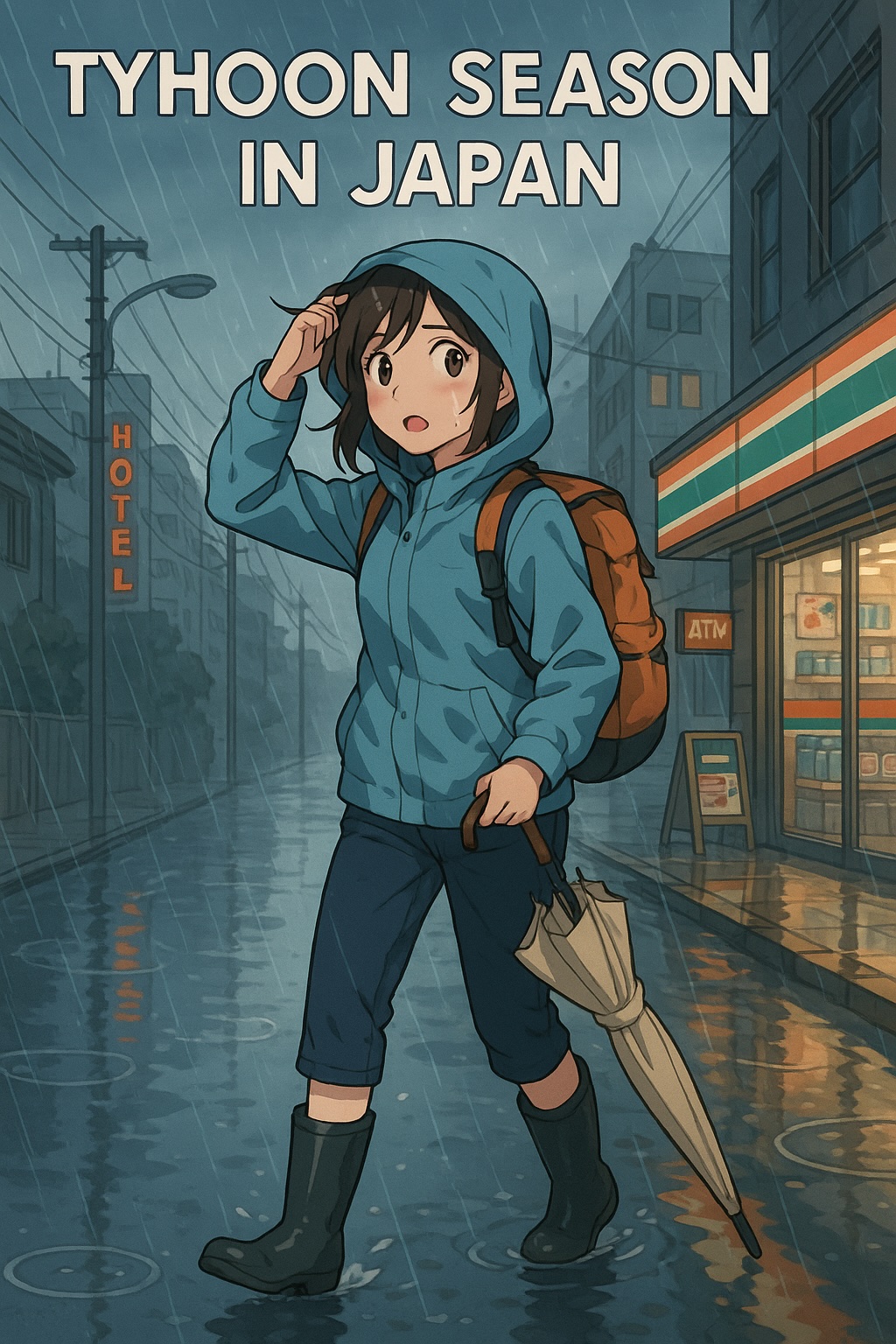
When planning a trip to Japan, most people think of the four classic seasons: the pink blush of spring cherry blossoms, the humid green of summer, the fiery red leaves of autumn, and the quiet snowscapes of winter. But there’s another season—less romantic, but just as important to know about if you’re visiting: typhoon season.
🌀 When Is Typhoon Season in Japan?
Typhoon season in Japan typically runs from May to October, with the peak months in August and September. Unlike the four seasons everyone talks about, this one isn’t marked by flowers or festivals but by storms that sweep in from the Pacific.
- August & September → Highest chance of typhoons.
- July & October → Still active, though slightly less intense.
- Outside this window → Typhoons are rare, but not impossible.
Think of it as Japan’s “hidden season” — a period that doesn’t always show up in guidebooks, but definitely shapes daily life.
🌧️ What Typhoons Are Like
A typhoon is essentially a tropical cyclone — the same kind of storm called “hurricane” in the Atlantic. They bring:
- Heavy rainfall (sometimes enough to flood streets or disrupt transport).
- Strong winds (umbrellas often don’t survive).
- Travel delays (train lines, flights, and ferries may stop).
The good news? Typhoons usually pass in a day or two. You might have one wild, rainy day — then clear skies right after.
👕 How to Dress & Prepare as a Traveler
If you’re caught in typhoon season, here’s how locals (and savvy travelers) deal with it:
- Lightweight rain jacket or poncho (umbrellas break easily in the wind).
- Waterproof shoes or short rain boots.
- Quick-dry clothing (jeans stay soggy forever).
- Portable phone charger (power outages can happen).
- Snacks and bottled water (trains and shops may close early).
Convenience stores (konbini) are everywhere in Japan, but before a storm, people rush to stock up. If you see locals buying onigiri and bread, take the hint!
🏠 How the Japanese Handle Typhoons
One thing visitors notice is how calm and prepared Japanese people are:
- Balcony plants, laundry, and bicycles are brought indoors before storms.
- Companies and schools may close early to keep people safe.
- Community evacuation centers open if flooding is expected.
- Emergency apps and alerts keep everyone informed (many available in English).
Most Japanese simply wait it out at home — treating typhoons as a natural part of the year, not an unexpected disaster.
✈️ What It Means for Your Trip
If you’re traveling during typhoon season:
- Expect flexibility: flights, shinkansen, or sightseeing might be delayed.
- Stay updated: apps like Yahoo!防災速報 or NHK World give English updates.
- Have a cozy Plan B: museums, cafés, or even a long soak in an onsen.
In fact, many travelers end up remembering a typhoon day as a unique cultural experience — a chance to slow down, observe daily Japanese life, and appreciate the resilience built into this country.
🌟 Final Thought
Japan’s typhoon season isn’t one of the “big four” seasons, but it’s worth keeping in mind when you plan your trip. With a bit of preparation, it doesn’t need to ruin your travel experience. Instead, it can remind you that Japan, like life itself, has rhythms that don’t always appear in the guidebooks — yet are part of the story you’ll take home.


 Experiences - Life - Inspiration 🇨🇭🇯🇵
Leave a comment