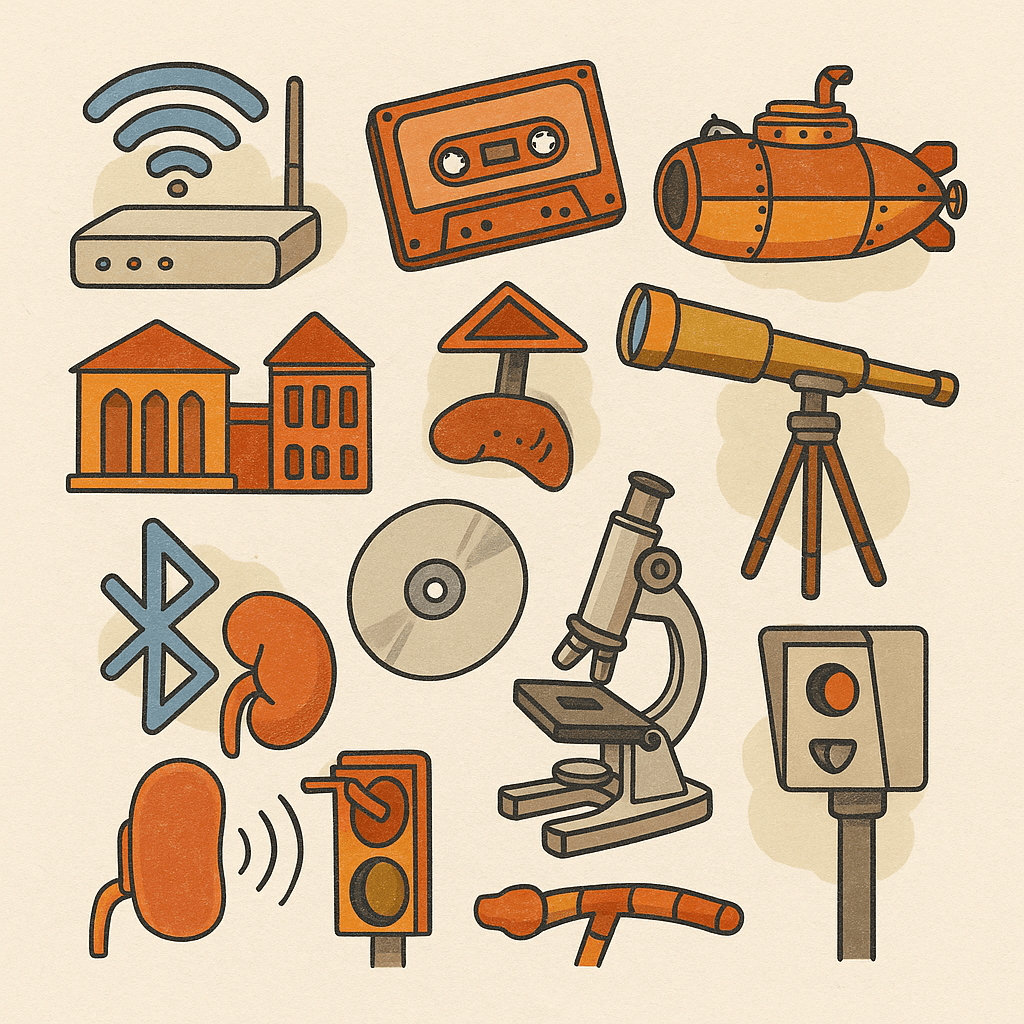
When people think of the Netherlands, it’s usually windmills, tulips, bikes, and maybe cheese. All true — but there’s a lot more. The Dutch have a quiet history of creating things that shaped the world, from life-saving breakthroughs to little conveniences you probably never thought of as Dutch.
Here’s my take on 10 Dutch inventions that might surprise you — ranked from the most unexpected to the ones that feel kind of obvious once you know.
🥇 1. Wi-Fi (1990s, Nieuwegein)
Yes, Wi-Fi — the invisible glue holding our lives together — was developed in the Netherlands. Vic Hayes, a Dutch engineer at NCR in Nieuwegein, played a key role in creating the IEEE 802.11 standards. Without it, no streaming, no scrolling, no Netflix binges in bed. Hard to imagine life without this.
🥈 2. Compact Cassette Tape (1963, Philips, Eindhoven)
That mixtape you made back in the day? Thank Philips in Eindhoven. They introduced the compact cassette tape in 1963. It changed music forever — cheap, portable, recordable. A true Dutch gift to the world.
🥉 3. The Submarine (1620, Cornelis Drebbel)
Long before modern navies, Dutch inventor Cornelis Drebbel built the first submarine in the early 1600s. He even tested it in the Thames River in London. Imagine the looks on people’s faces seeing a boat vanish underwater and then resurface.
4. The Telescope (1608, Middelburg)
Another Dutch classic: Hans Lippershey, a spectacle maker from Middelburg, is credited with inventing the telescope in 1608. Galileo later made it famous, but the idea of looking far into the heavens started with the Dutch.
5. The Microscope (17th Century, Netherlands)
While multiple people played a role, Dutch spectacle makers like Zacharias Janssen are often credited with the first microscopes. Later, Antonie van Leeuwenhoek refined them and became the father of microbiology. Small country, big discoveries.
6. The Stock Exchange (1602, Amsterdam)
The world’s first stock exchange was established in Amsterdam in 1602 with the founding of the Dutch East India Company. It basically set the blueprint for global finance as we know it today.
7. Bluetooth (1990s, Ericsson R&D in the Netherlands)
While it carries a Viking name, Bluetooth technology was also developed in part in the Netherlands through Dutch engineers working for Ericsson. Without it, no wireless headphones, no hands-free calls, no AirPods.
8. The CD (1980s, Philips, Eindhoven)
We had cassettes, but Philips wasn’t done. Together with Sony, they gave us the compact disc (CD) in the 1980s. Suddenly, music was crystal clear, no rewinding needed.
9. Artificial Kidney (1943, Willem Kolff)
Dr. Willem Kolff, a Dutch physician, built the first artificial kidney during World War II, saving countless lives. It’s one of those inventions that doesn’t get enough credit but changed medicine forever.
10. Speed Cameras (1958, Netherlands)
Not the most popular invention, but yes — speed cameras are Dutch. Invented by rally driver and engineer Maus Gatsonides in 1958. Ironically, he designed them to improve his own racing performance, but now they make sure we all slow down.
Wrapping It Up
The Netherlands has always been about looking outward — whether through telescopes, microscopes, or Wi-Fi signals. It’s a small country that somehow keeps leaving a huge fingerprint on daily life.
Next time you stream music over Wi-Fi, play an old cassette, or complain about a speed camera, remember: you’re living with a little Dutch creativity.
👉 For me, it’s still Wi-Fi. Having lived in the Netherlands for more than 30 years, I love knowing that this little country quietly gave the world something so essential.
Sources & References
- Wi-Fi origins and Vic Hayes (“Father of Wi-Fi”) — IEEE Spectrum
- Compact cassette tape (1963, Philips, Eindhoven) — Philips Museum
- Cornelis Drebbel and the first submarine (1620) — Royal Navy Museum
- Hans Lippershey and the telescope (1608) — Galileo Project, Rice University
- Zacharias Janssen, Antonie van Leeuwenhoek, and the microscope — Britannica
- Amsterdam Stock Exchange (1602) — Investopedia
- Bluetooth development and Dutch contributions — Ericsson History
- Philips and Sony develop the CD (1980s) — Sony Corporate History
- Willem Kolff and the artificial kidney — Smithsonian Magazine
- Maus Gatsonides and the speed camera — BBC Future








 Experiences - Life - Inspiration 🇨🇭🇯🇵
Leave a comment