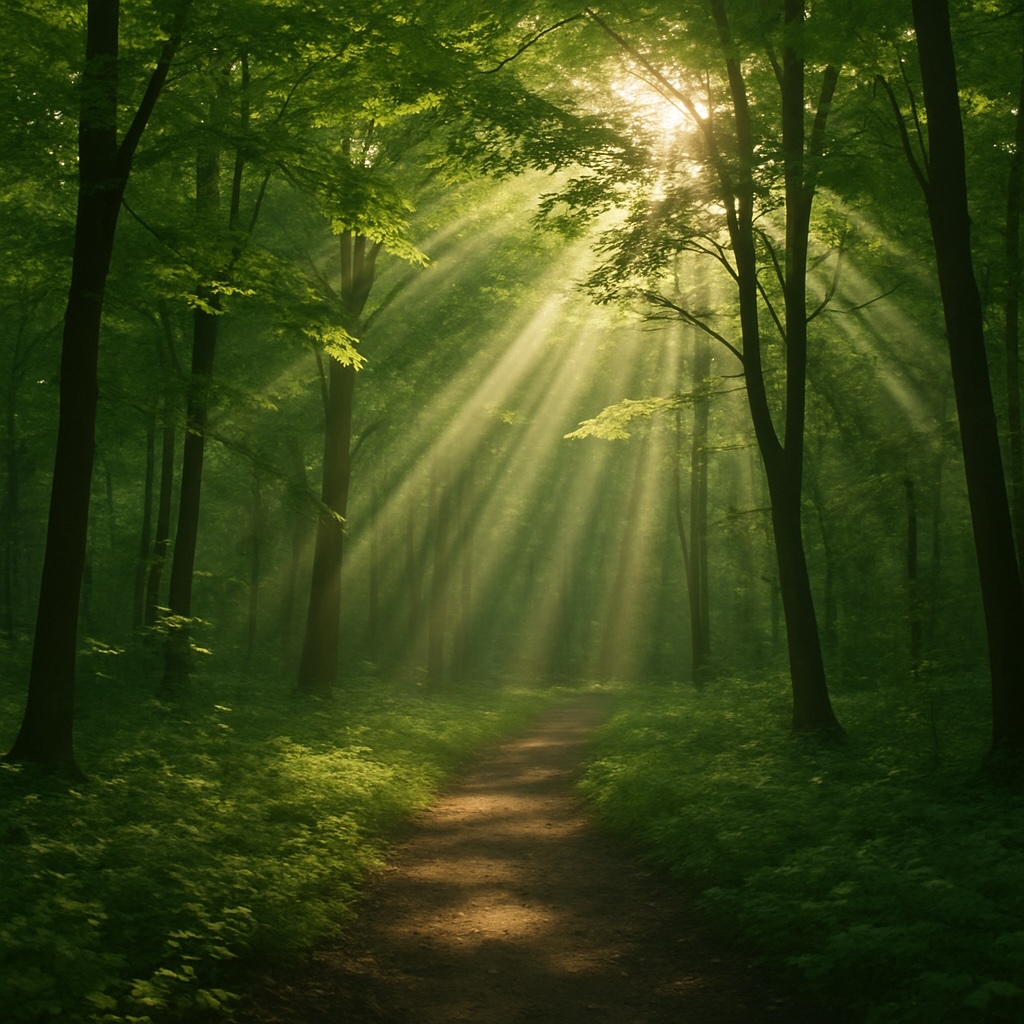
Have you ever sat under the leafy canopy of a forest on a hot summer day, feeling the soft sunlight gently dance across your skin? If so, you’ve experienced komorebi—the poetic Japanese word for sunlight filtering through the leaves of trees.
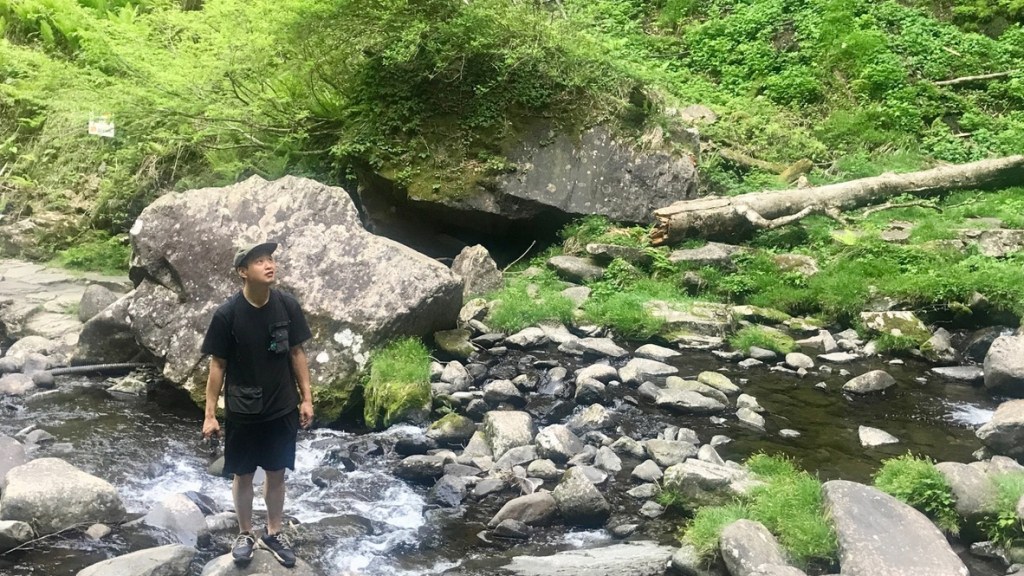
As someone who spends a lot of time hiking or flying drones across Japan, I often find myself spending time in forests and parks. Something curious happens every time: I feel recharged, calm, and more grounded—as if the forest is gently restoring me. And science says, I might be right.
🌞 The Light That Nourishes—and the Light That Harms
Sunlight is a complex force. It’s made up of many types of electromagnetic radiation:
- UVB rays help us produce vitamin D—essential for our bones and immune system.
- UVA rays penetrate deeper into the skin and contribute to aging and DNA damage.
- Infrared light, particularly red and near-infrared, can stimulate our cells’ mitochondria, boosting energy production and cellular repair.
- Visible light, especially in the blue spectrum, regulates our circadian rhythms and mood.
But prolonged exposure to direct sunlight, especially in the intense midday heat, can lead to oxidative stress, skin damage, and dehydration.
That’s where forests step in—not just as shade-givers, but as natural light filters.
🌿 Komorebi: The Forest’s Natural Filter
In a forest, the thick foliage acts like a filter that softens and transforms sunlight:
- UV rays—especially harmful UVA—are significantly reduced under the canopy.
- Red and near-infrared light still penetrate, delivering healing wavelengths that support cellular energy and repair.
- The dappled light creates a dynamic and ever-changing pattern that’s deeply soothing to the human nervous system.
Komorebi isn’t just beautiful—it’s biologically supportive. It creates the ideal balance of light: enough for vitality, not enough for harm.
🌲 The Science of Shinrin-Yoku (Forest Bathing)
Japan has long honored the practice of Shinrin-yoku, or “forest bathing,” as a form of natural therapy. And over the past two decades, researchers have backed it up with data:
Key Scientific Findings:
- Cortisol levels drop significantly after time spent in the forest.
- Heart rate and blood pressure are lowered.
- Mood and sleep improve.
- Natural killer (NK) cell activity, a key part of immune defense, increases after just a few hours in the woods.
- One study even showed that the effects of a single forest visit can last up to a week.
While many of these effects are due to forest air compounds like phytoncides (aromatic oils released by trees), filtered light plays a key role in lowering stress and restoring balance.
🌤️ Why Forest Shade Feels Cooler and Better
Forests aren’t just cooler in temperature; they’re cooler in experience.
- Trees block intense infrared and UV radiation, preventing overheating.
- The interplay of light and shadow reduces sensory fatigue and eye strain.
- The temperature drop under a forest canopy can range from 2–5°C compared to open ground—hugely welcome on a blazing Japanese summer day.
🧬 Your Cells Love Dappled Light
Inside your body, tiny energy producers called mitochondria respond to light—especially red and near-infrared wavelengths.
This process, called photobiomodulation, has been shown to:
- Increase ATP production (your body’s energy currency)
- Reduce inflammation
- Support tissue repair and regeneration
Filtered forest light provides these wavelengths without the burn of harsh UV rays, letting you soak up the benefits in peace.
🌱 Why You Should Intentionally Seek Out Forest Light
In our modern lives, we’re bombarded by artificial light, screens, and harsh indoor environments. But nature still holds the original blueprint for balance.
Stepping into a forest gives your body and mind a reset:
- Light that nourishes instead of harms
- Sounds that soothe instead of stimulate
- Air that heals instead of stresses
So next time you’re craving clarity, calm, or even a burst of energy, don’t just go outside—go into the woods.
📚 Sources & Further Reading
- Li, Q. (2010). “Effect of forest bathing trips on human immune function.” Environmental Health and Preventive Medicine, 15(1), 9–17. https://doi.org/10.1007/s12199-008-0068-3
- Park, B. J., Tsunetsugu, Y., Kasetani, T., Kagawa, T., & Miyazaki, Y. (2010). “The physiological effects of Shinrin-yoku (taking in the forest atmosphere or forest bathing): evidence from field experiments in 24 forests across Japan.” Environmental Health and Preventive Medicine, 15(1), 18–26. https://doi.org/10.1007/s12199-009-0086-9
- Hansen, M. M., Jones, R., & Tocchini, K. (2017). “Shinrin-Yoku (Forest Bathing) and Nature Therapy: A State-of-the-Art Review.” International Journal of Environmental Research and Public Health, 14(8), 851. https://doi.org/10.3390/ijerph14080851
- Choi, Y. A., & Lee, S. (2021). “Effects of visual stimulation with bamboo forest and urban images on brain activity and psychological responses.” International Journal of Environmental Research and Public Health, 18(3), 973. https://doi.org/10.3390/ijerph18030973
- Berman, M. G., Jonides, J., & Kaplan, S. (2008). “The cognitive benefits of interacting with nature.” Psychological Science, 19(12), 1207–1212. https://doi.org/10.1111/j.1467-9280.2008.02225.x
- Hamblin, M. R. (2016). “Shining light on the head: Photobiomodulation for brain disorders.” BBA Clinical, 6, 113–124. https://doi.org/10.1016/j.bbacli.2016.09.002
- Kuller, R. (2002). “The influence of light on circardian rhythms, mood, and performance.” Journal of Physiological Anthropology, 21(2), 87–91. https://doi.org/10.2114/jpa.21.87





 Experiences - Life - Inspiration 🇨🇭🇯🇵
Leave a comment