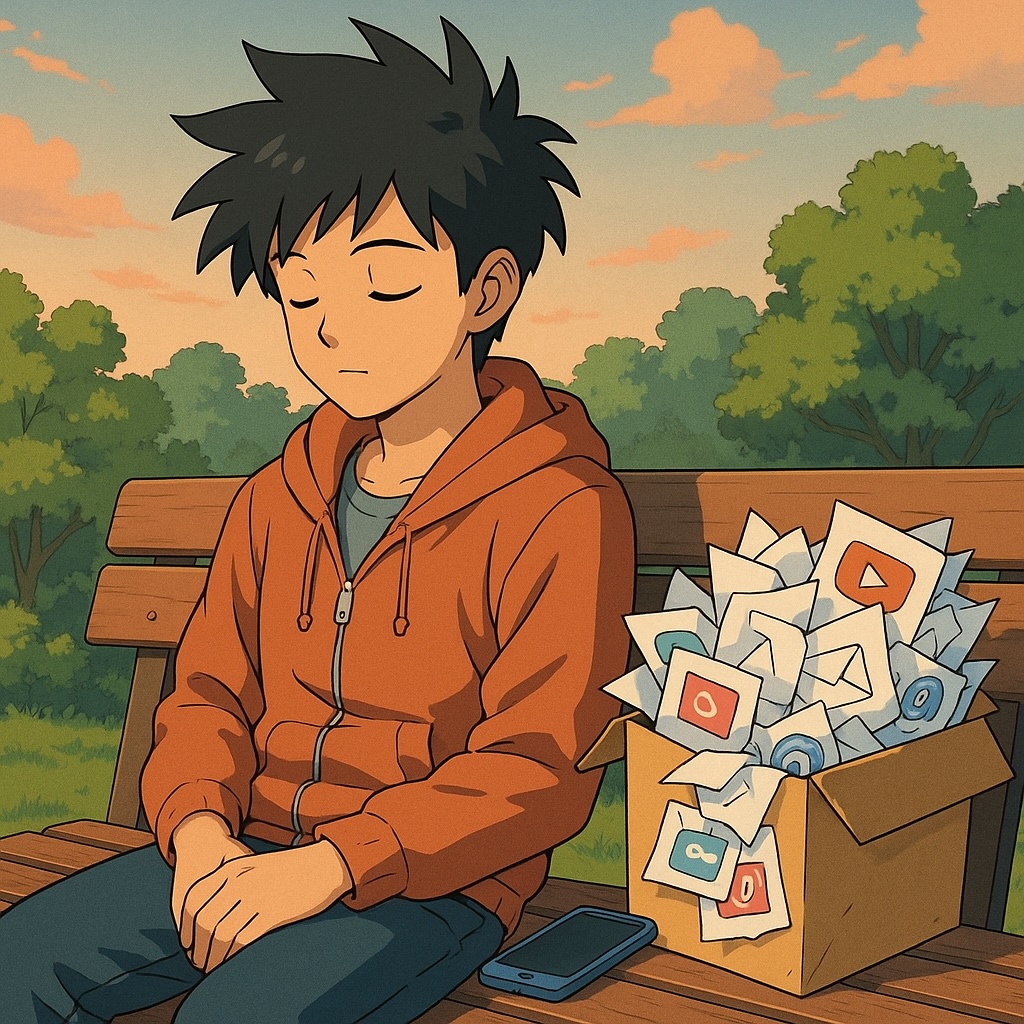
We live in a time when information is everywhere.
It’s in our pockets. On our wrists. Glowing beside our beds.
With a single tap, we can access more knowledge than anyone in history ever dreamed of.
And yet—despite this abundance—most of us feel more distracted, anxious, and mentally exhausted than ever before.
Why?
Because not all information is nourishing.
In fact, most of what we consume daily is junk.
🍔 Junk Food for the Mind
Like fast food, junk information is designed to be addictive. It’s:
- The never-ending stream of clickbait headlines
- Doom-scrolling disguised as “staying informed”
- Social media debates that drain your energy
- A news cycle that rarely leaves you feeling better
It grabs your attention but leaves you hollow.
🧠 Why It Matters
In the 1970s, Nobel Prize winner Herbert Simon warned:
“A wealth of information creates a poverty of attention.”
That quote lands even harder today.
Studies show the average person consumes around 74 gigabytes of information a day—the equivalent of watching 16 full-length movies. Every. Single. Day.
This constant intake is linked to:
- Higher stress and anxiety
- Shorter attention spans
- Poorer decision-making
It’s not that information is bad—it’s that we don’t give ourselves time to digest it.
We consume so compulsively that we forget how to think clearly.
🌿 My Turning Point
I used to feel like I had to stay on top of everything: the news, the latest podcasts, updates, trends. If I didn’t, I’d fall behind—right?
But over time, I began noticing how scattered I felt. How reactive. How drained.
Clarity was rare. Creativity, even rarer.
So I tried something small: I paused.
I put my phone on airplane mode for an hour. Then for a morning.
Eventually, I left it in flight mode for entire days.
I turned off all social media notifications.
Some platforms I even closed entirely—because I realized they were draining more energy than they gave.
And something surprising happened:
My urge to constantly seek digital stimulation faded.
In the quiet, something returned that I hadn’t realized was missing:
My own thoughts.
🌟 What Is an Information Fast?
An information fast isn’t about cutting yourself off from the world.
It’s about creating intentional space so your mind can breathe again.
Just like your body benefits from rest, so does your attention.
✨ What You Might Gain
People who try information fasts often experience:
✅ Clearer thinking
✅ Greater focus
✅ More calm
✅ Renewed creativity
✅ A reconnection to what really matters
And no—you don’t need to escape to the mountains.
You can start right where you are.
🚀 5 Simple Ways to Try an Information Fast
1. No-Scroll Mornings
Avoid your phone for the first 60 minutes after waking.
Stretch. Breathe. Write. Sip your coffee in peace. Let your mind wake up before the world rushes in.
2. One Screen, One Purpose
Every time you unlock your device, ask:
“What do I actually need to do right now?”
Then do just that—and nothing more.
3. Declutter the Noise
Unfollow, unsubscribe, or mute any source that drains you.
You don’t need 100 voices shouting for your attention. Keep only what truly feeds your growth.
4. Replace with Depth
Swap 10 minutes of scrolling with 10 minutes of something nourishing:
- A meaningful book
- A slow, thoughtful podcast
- A quiet journal entry
Depth over dopamine.
5. Silent Sundays (or any day that fits)
Go input-free for half a day.
No news. No feeds. Just walks, music, nature, or time with someone you love. Let the silence speak.
🌱 One Gentle Step at a Time
This isn’t about perfection. It’s not about quitting the internet or living off-grid.
Maybe you don’t need a full digital detox.
Maybe you just need a little space—so you can hear yourself again.
Try a small pause.
One hour. One morning. Even one deep breath between tabs.
Let your mind rest. Let it recover.
You might be surprised what rises in the stillness.




 Experiences - Life - Inspiration 🇨🇭🇯🇵
Leave a comment