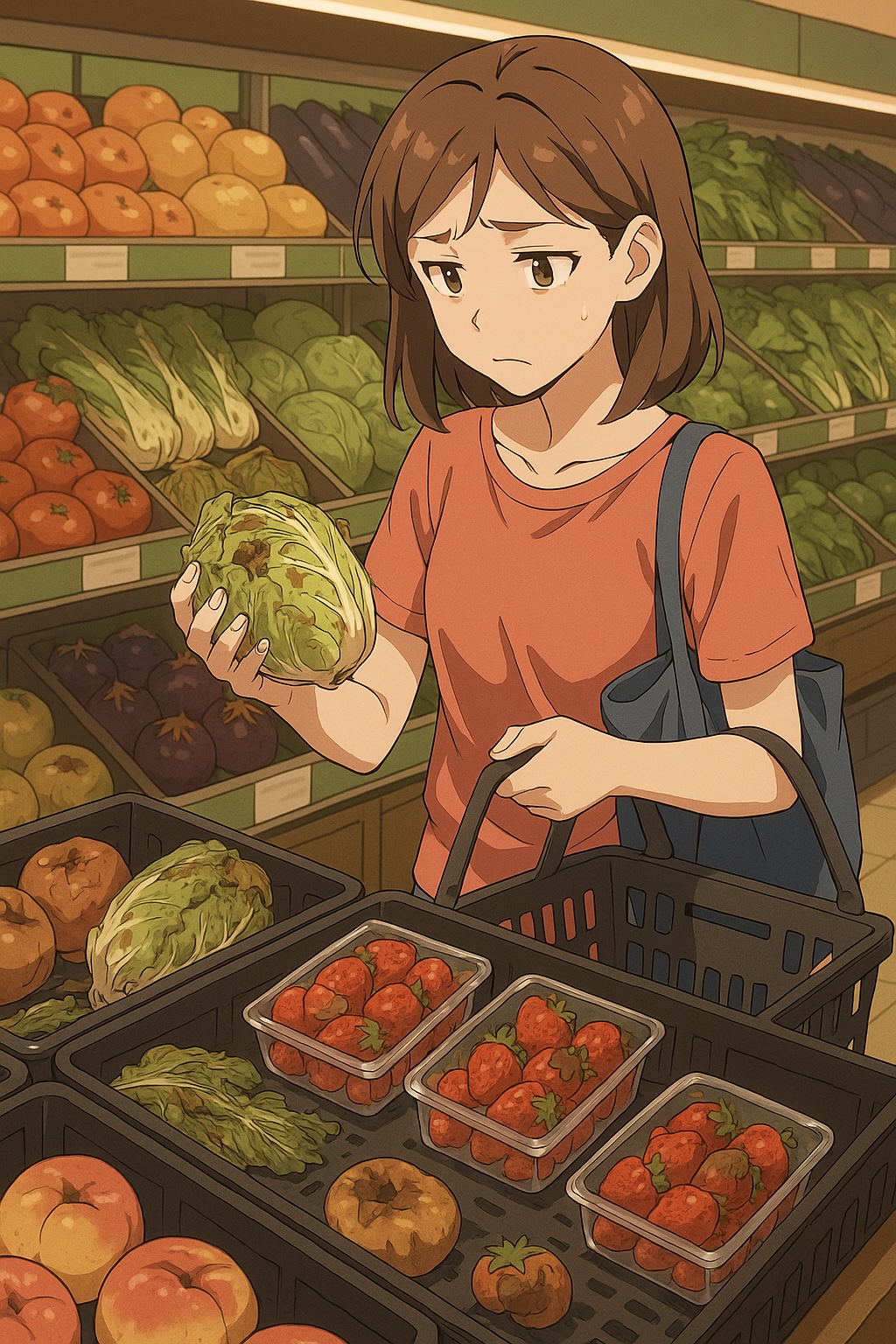
Japan’s record-breaking June heat is doing more than burdening health services—it’s damaging produce, disrupting supply chains, and driving prices upward in grocery stores across Tokyo and beyond .
🍓 What’s Happening?
NHK World reported that record heat is “damaging farmer’s vegetable crops, reducing selection at supermarkets, and causing higher prices” . Popular items like leafy greens, berries, and summer fruits are arriving wilted, discolored, or overly soft, missing the quality standard expected by high-end retailers.
🚚 Why It’s Happening
- Heat-stressed crops in fields across Japan (especially central/southern regions) are ripening too quickly, sunburning, or losing firmness and flavor.
- Refrigerated transport and storage systems are overwhelmed by extreme ambient temperatures. Trucks and cold storages can’t maintain optimal cool-downs during midday heat peaks.
- Produce arriving from distant farms—intended for Tokyo’s fresh markets—is often already compromised by the time it reaches store shelves.
🛒 What This Means for Shoppers
- Reduced availability of top-quality domestic seasonal produce.
- Price increases on items like tomatoes, lettuce, strawberries, and peaches.
- Some high-end grocers are forced to discard shipments that don’t meet their standards.
🌱 A Wake‑Up Call
This is more than a seasonal glitch—it’s evidence of how climate extremes are harming food systems. With rising temperatures expected to persist:
- Farmers are starting to use shading nets, shift to earlier morning harvests, and trial heat-tolerant varieties.
- Logistics providers are moving deliveries to early hours and upgrading refrigerated fleets.
- Supermarkets are adapting acceptance criteria, sourcing alternatives, and informing customers of the reasons behind shortages and price changes.
✅ Summary
The June 2025 heat wave in Japan is actively impacting what lands on our plates—by reducing produce quality, shrinking choices, and increasing prices. It serves as a direct reminder that climate change affects not just the environment, but also daily essentials like food availability. This summer’s experience should urge stakeholders—from farmers to consumers—to invest in resilient agriculture, smarter logistics, and transparent communication.




 Experiences - Life - Inspiration 🇨🇭🇯🇵
Leave a comment