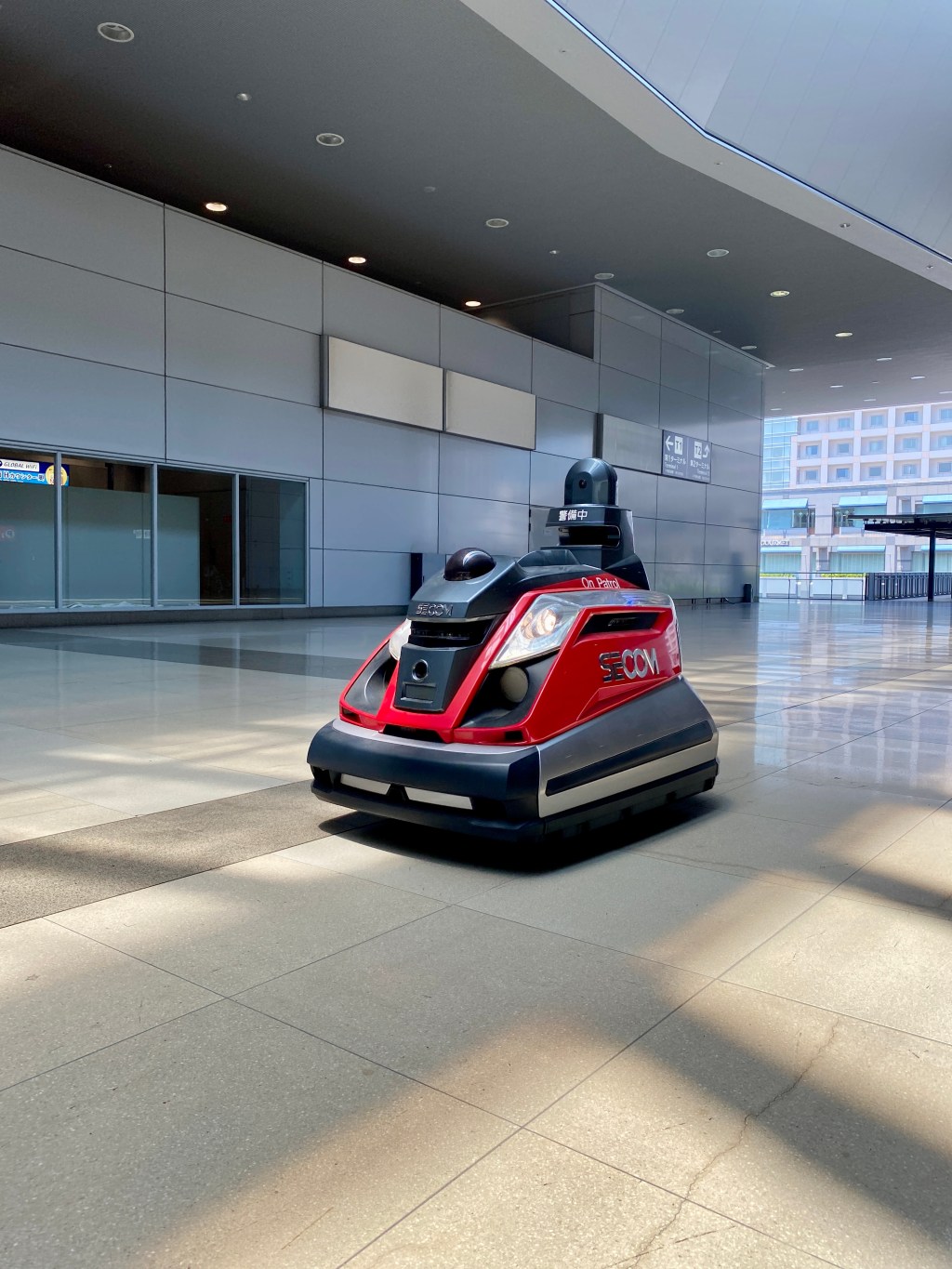
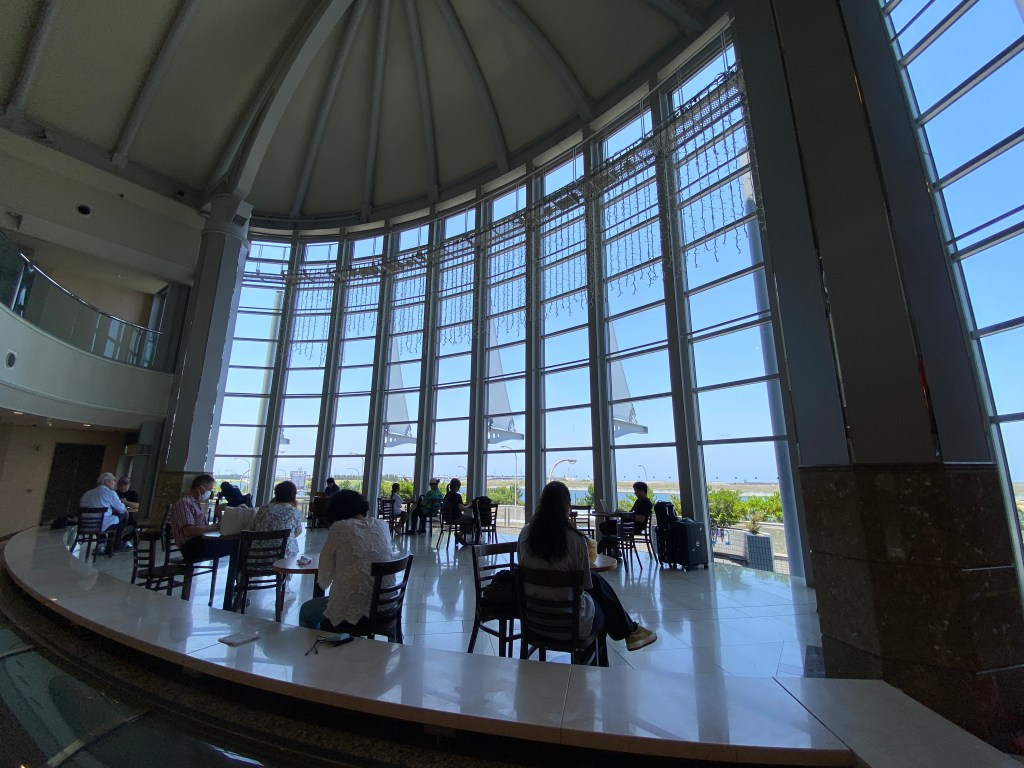
I was sitting in Terminal 1 at Kansai International Airport this morning—at the McDonald’s, of all places. I’ve got my noise-canceling earphones in, music playing softly in the background, and the hum of airport life buzzing around me. People rushing, announcements echoing, suitcases rolling—it all flows past like a river while I sit here writing this.
I’m not flying anywhere today. My wife has a business meeting at the airport, and I came along for the ride. But that ride turned out to be a highlight in itself—one I didn’t expect.
The journey from Osaka City to KIX felt like something straight out of an industrial futurism dream. The landscape was raw and mechanical, yet strangely beautiful. Massive factories, endless rows of shipping containers, and towering cranes dominated the skyline. Then came the bridges—gigantic steel structures that leapt across the sea from island to manmade island, each one a bold display of human engineering and ambition.
We passed through a roadside service area just before reaching the airport, and it was no ordinary rest stop. The building was a bold architectural statement—part lookout tower, part dining hub, with panoramic views of Osaka Bay and the vast mechanical sprawl stretching toward the sea. It made me feel like I was already somewhere far away, even before setting foot in the terminal.
And then we arrived.
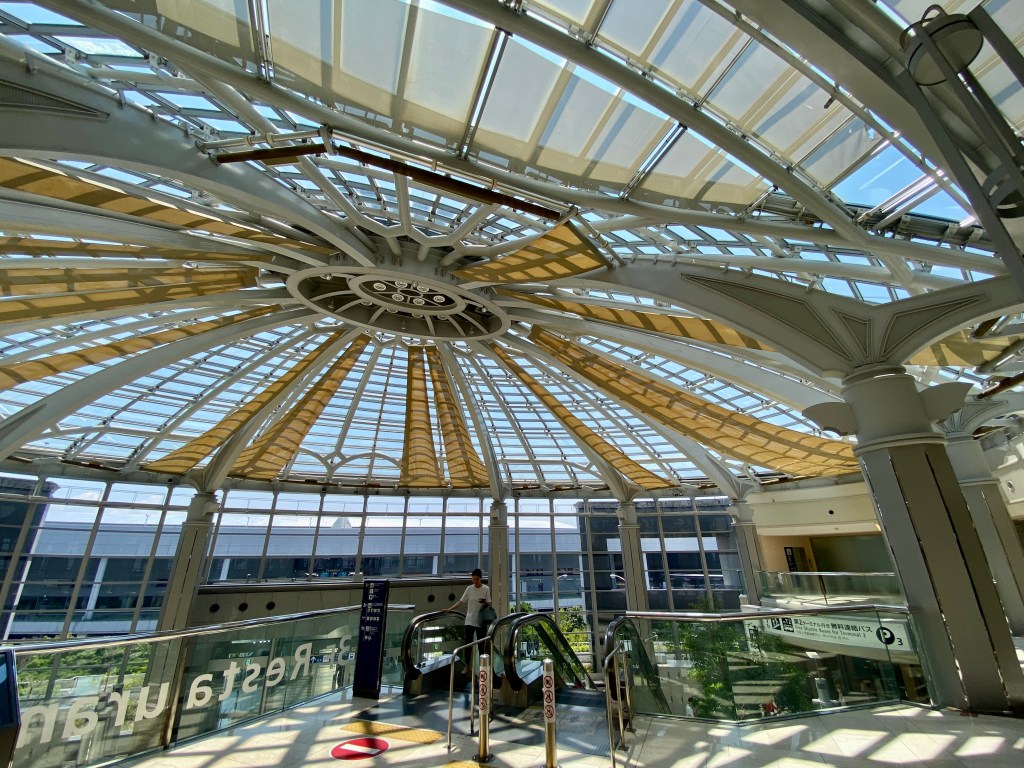
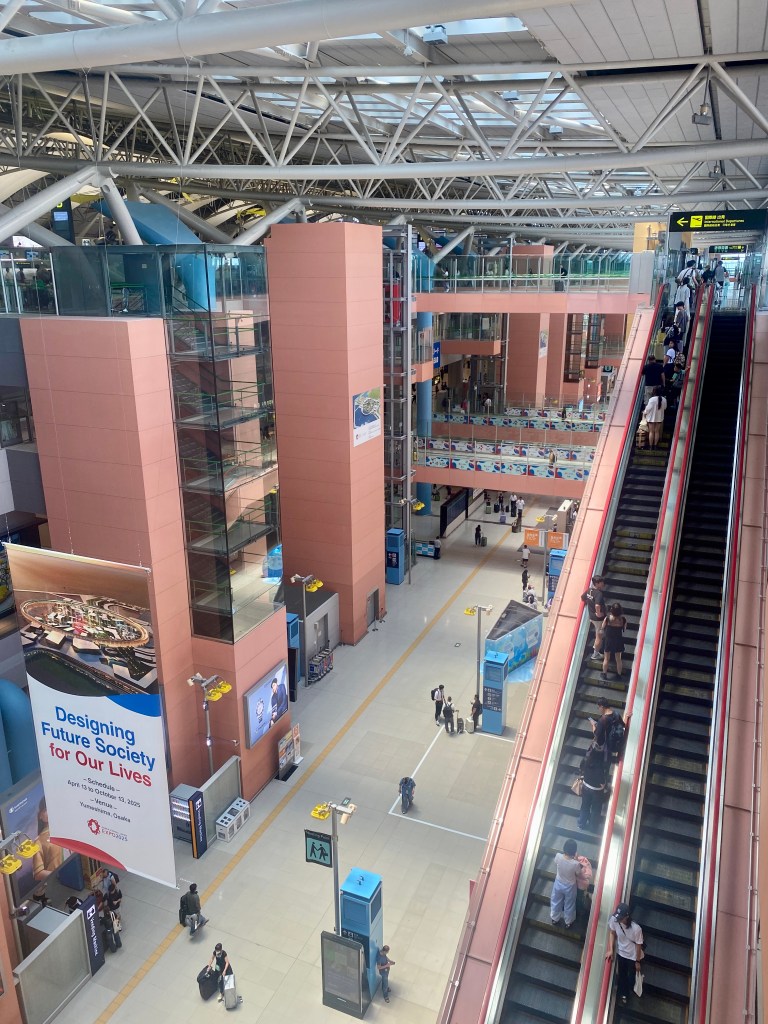
Kansai International Airport is built entirely on an artificial island in Osaka Bay, about 38 kilometers from the city. It’s one of Japan’s most daring and impressive engineering feats. Terminal 1, where I’m sitting now, was designed by Renzo Piano and stretches 1.7 kilometers—making it the longest airport terminal in the world. It curves gracefully like the wing of a bird, filled with natural light and lined with wide corridors that absorb the movement of millions of travelers each year.
Opened in 1994, KIX was built to relieve congestion at Itami Airport and to serve the broader Kansai region—Osaka, Kyoto, and Kobe. The airport is connected to the mainland by the Sky Gate Bridge R, a 3.75-kilometer bridge that’s an engineering marvel in itself. Despite being built on reclaimed land that continues to slowly sink, KIX remains a model of innovation and efficiency. It’s frequently ranked among the best airports in the world and holds a near-mythical reputation for its baggage system—some say it’s never lost a bag since opening.
In 2018, it weathered the powerful Typhoon Jebi, which caused major damage and temporarily cut it off from the mainland. But like much of Japan, KIX bounced back quickly—renovated, reinforced, and ready for the future. In fact, the airport recently completed a major renovation of Terminal 1 to prepare for Expo 2025 in Osaka.









 Experiences - Life - Inspiration 🇨🇭🇯🇵
Leave a comment