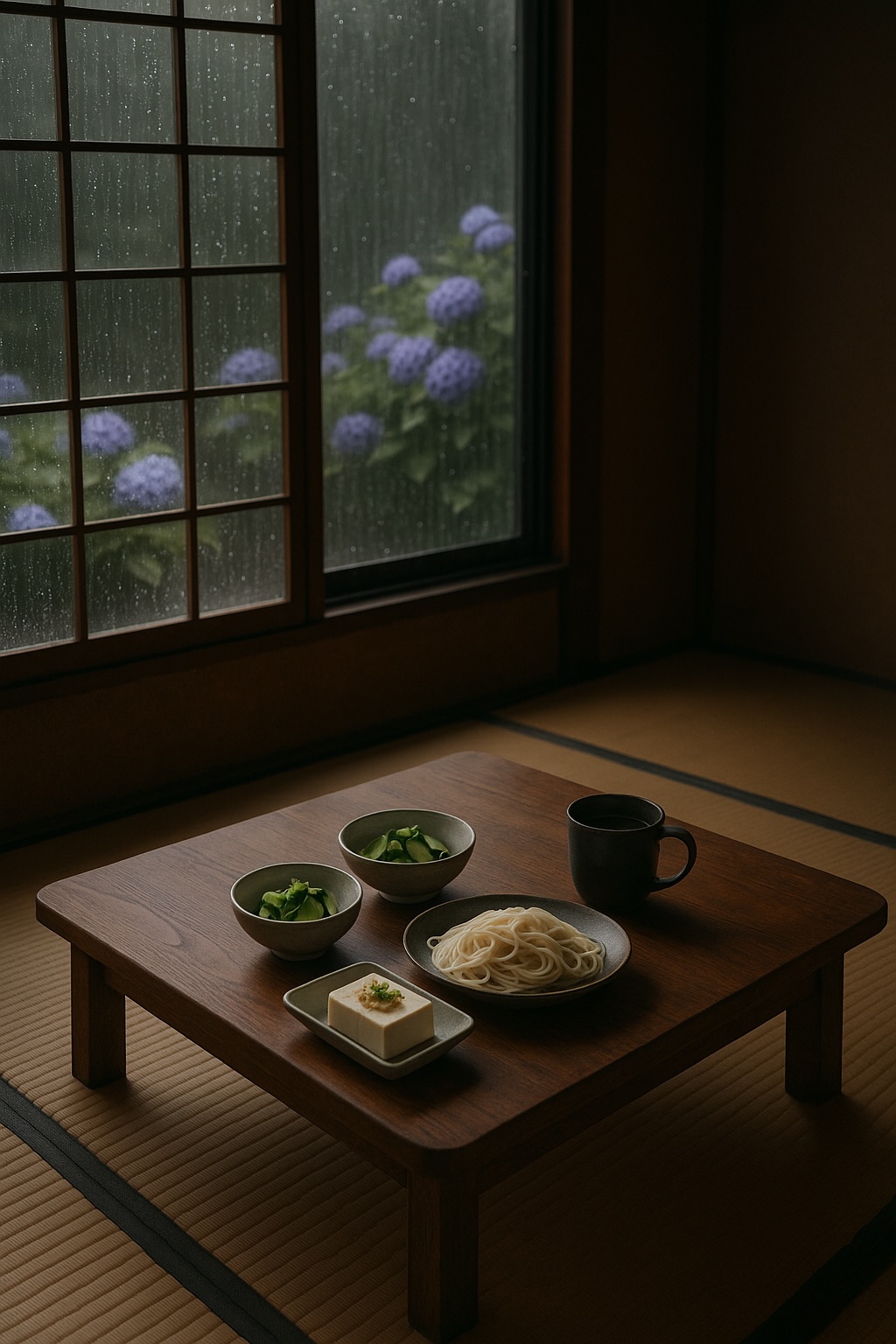
It’s been raining almost every day lately. Not just a passing shower—those long, heavy rains that fall slow and steady, soaking everything and settling in like they’ve got nowhere else to be. Yep, tsuyu is here. Japan’s rainy season.
While the hydrangeas bloom and the rice paddies fill up just right, I find myself staring out the window feeling a bit… off. My drones are charged, ready to fly, and the skies just keep saying “not today.” I miss the freedom of flying, the peace of cruising above the fields or catching that perfect horizon shot. But this weather? It’s grounding me. And not in the meditative way.
Lately, I’ve been feeling that sluggish, sticky, low-energy haze the Japanese call tsuyu-zure (梅雨連れ). It’s that quiet drag on your mood and motivation that creeps in when the air is heavy and the sun hides for days on end. Everything feels a little slower, a little softer, a little damp. I feel it in my body, sure—but also in my habits, my routines, my creativity.
And this isn’t new. In fact, Japan’s had a way of dealing with tsuyu-zure and its hotter cousin, natsubate (夏バテ, summer fatigue), for centuries. One of the cleverest ways? Food.
During this season, traditional Japanese meals are often designed to lighten the load. Not just on the stomach, but on the whole body. Here are some of the foods people turn to when the air thickens and energy starts to lag:
🍋 Traditional Foods to Fight Off Tsuyu-zure and Natsubate
Sunomono (vinegared vegetables):
Cool, crisp cucumber or wakame seaweed splashed with rice vinegar. It’s refreshing, wakes up your taste buds, and helps with digestion when your appetite is low.
Hiyayakko (chilled tofu):
Soft silken tofu straight from the fridge, usually topped with grated ginger, green onions, and soy sauce. Light, protein-rich, and perfect when you want to eat something nourishing without effort.
Umeboshi (pickled plums):
Salty and incredibly sour, these little plums have been a staple energy booster in Japanese households for generations. They’re also known for their antibacterial properties and stomach-soothing effects.
Sōmen (thin, cold noodles):
Often served chilled in icy water with a light dipping sauce. Sōmen is easy to prepare, quick to eat, and feels just right on a muggy day when cooking seems like too much.
Neba-neba foods (sticky/starchy textures):
Okra, grated yam (tororo), and natto might not be everyone’s favorite, but these sticky foods are believed to increase stamina and digestion. They’re summer staples across Japan.
There’s something quietly beautiful about this approach. Japan doesn’t just endure tsuyu—it meets it, adapts to it, and even finds rhythm in it. When I start eating like the season, I notice a shift. The stillness feels less frustrating. The rain becomes part of the background. And while I may not be flying through the skies, I get the chance to focus inward, reflect, and rest.
I’ll still be dreaming of clear days and open skies. But for now, maybe a bowl of sōmen and the sound of rain against the shoji will do just fine.





 Experiences - Life - Inspiration 🇨🇭🇯🇵
Leave a comment