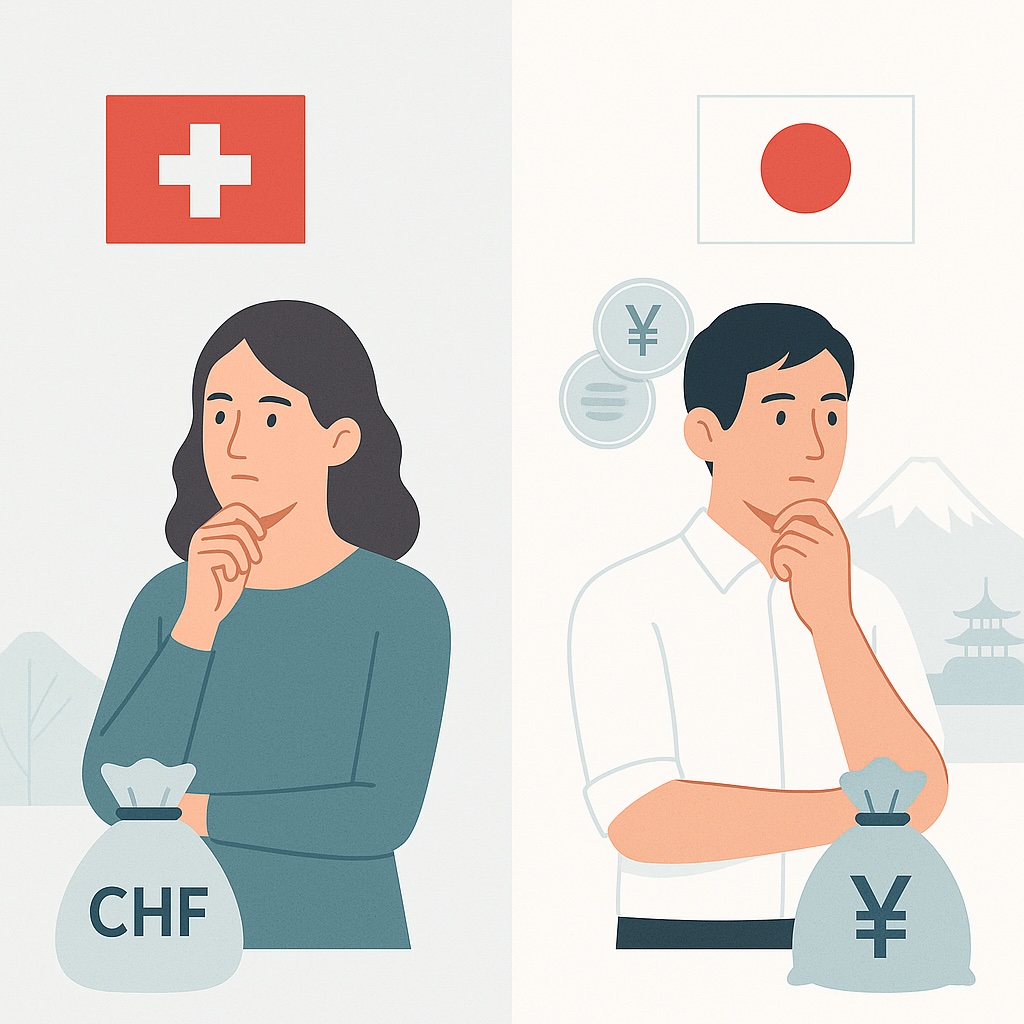
When it comes to handling money, the world often looks to flashy success stories, fast-track investments, or overnight millionaire schemes. But if you shift your focus to Switzerland and Japan, you’ll find a very different kind of wisdom: the quiet, disciplined, long-term approach to wealth.
Having lived in both cultures, I’ve come to appreciate their deep similarities—and their key differences. Both societies value frugality, stability, and planning. Yet the way they go about it reflects unique cultural mindsets shaped by history, philosophy, and everyday behavior.
I began thinking more deeply about this comparison after living in Japan for over two years now. Being raised in Switzerland and now immersed in Japanese life, I can see how both financial mindsets echo similar values, even though they express them in distinct ways.
Similar Ground: Frugality, Modesty, and Long-Term Thinking
1. Frugality Is a Cultural Pillar
In Switzerland, people don’t spend to show off. Wealth is discreet. A quality coat may last ten winters. Repairs are normal. Flashy purchases? Rare.
Japan shares this mindset. The concept of mottainai (“don’t be wasteful”) encourages people to reuse, fix, and be mindful. Brand obsession exists, yes, but practicality and modest living often win.
Takeaway: Both cultures believe that wealth is not about what you show—but about what you keep and protect.
2. Planning for the Future Is Second Nature
In Switzerland, saving for retirement starts early through the three-pillar pension system. Investments are steady and risk-aware.
In Japan, while stock market participation is lower, people save diligently. Many elderly citizens live off pensions and substantial savings accumulated over decades.
Takeaway: Slow and steady is more than a saying. It’s a way of life.
3. Financial Responsibility Is Social Responsibility
Both Swiss and Japanese cultures teach that financial recklessness is shameful. Debt is avoided, bills are paid on time, and insurance is taken seriously.
In Japan, there’s a deep-rooted sense of not wanting to burden others. In Switzerland, personal responsibility is emphasized through both legal and social expectations.
Takeaway: Managing your money well isn’t just smart—it’s respectful.
Where the Roads Split: Risk, Conversation, and Ownership
1. Investment Culture vs. Saving Culture
Switzerland has a robust investment culture. Even average citizens understand portfolios, pension funds, and diversification.
Japan, on the other hand, is more cash-oriented. Many people save diligently in bank accounts but hesitate to invest due to fears of loss or lack of trust in financial markets.
Why it matters: With inflation and low interest rates, avoiding investments could mean falling behind. But Japan’s caution comes from hard-earned lessons.
2. Talking About Money
In Switzerland, discussing finances, taxes, or real estate isn’t necessarily taboo—especially in professional or educated circles.
In Japan, money is a private matter. Even close family members may avoid talking about it openly. Transparency is rare unless necessary.
Why it matters: This cultural silence can prevent financial literacy and shared learning. But it also protects privacy and harmony.
3. Home Ownership Attitudes
Swiss people often rent, especially in cities. Mortgages are strict, and the property market is expensive.
In Japan, buying a home is common but often not viewed as an appreciating asset. Houses lose value fast due to aging, natural disasters, and cultural beliefs around newness.
Why it matters: While both cultures take real estate seriously, their expectations of value and permanence differ.
Final Thoughts: Two Models Worth Learning From
Switzerland and Japan offer us something powerful in an age of hustle and hype: the reminder that wealth built with care, patience, and respect tends to last.
Whether you choose to embrace the Swiss habit of investing and planning, or the Japanese focus on savings and modesty, one thing is clear:
Money isn’t just a number. It’s a reflection of mindset, discipline, and values.
And maybe, just maybe, we need more of that in today’s world.




 Experiences - Life - Inspiration 🇨🇭🇯🇵
Leave a comment