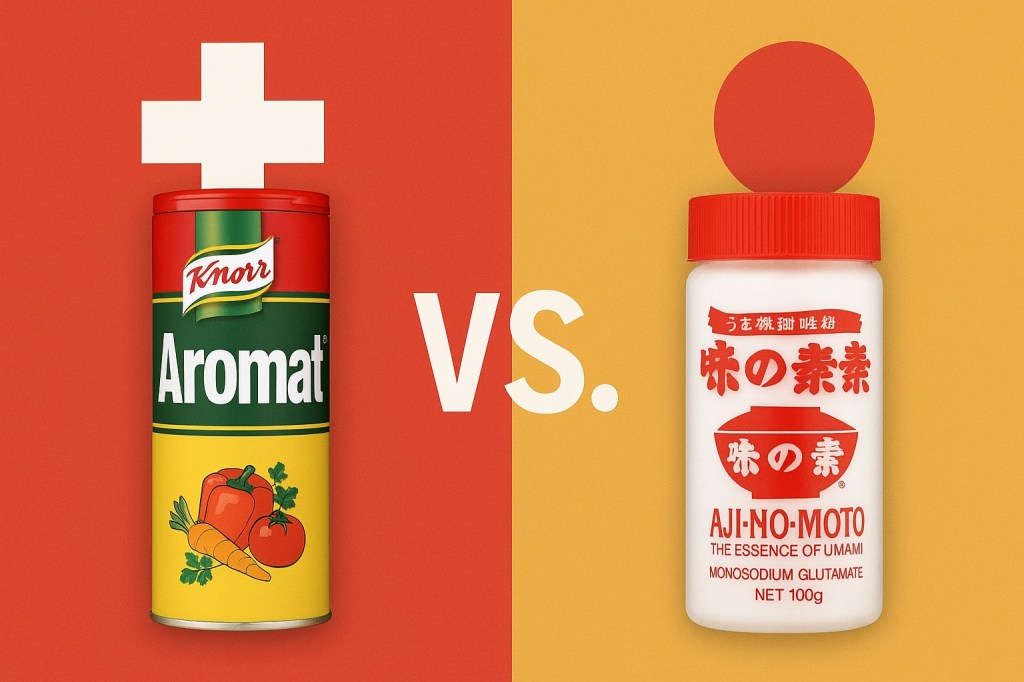
You know that one spice or sauce you always reach for—sometimes before even tasting your food? It’s the comfort seasoning. The secret weapon. The little container that somehow makes everything taste “just right.”
For many Swiss folks, that’s Aromat. And for many in Japan? It’s Ajinomoto.
I didn’t grow up in a five-star kitchen or with a gourmet chef for a parent—but there was always this yellow canister on the table: Knorr’s Aromat. We sprinkled it on eggs, pasta, salads, vegetables, even buttered toast. It wasn’t fancy, but it worked magic.
Aromat was invented in 1952 by a Swiss food technician named Walter Obrist, working for Knorr in a small town called Thayngen. At first, it came as cubes (kind of like bouillon), but they soon realized sprinkling was more fun—and more practical. And thus, a cult seasoning was born.
If you’ve never tried it, imagine a warm, savory blend of MSG, salt, herbs, a touch of paprika, and a little something you can’t quite name—but your taste buds know they love it.
Then I moved to Japan.
Enter: Ajinomoto, Japan’s iconic white shaker of pure MSG—no herbs, no frills. Just flavor science at its most distilled. It was created by chemist Kikunae Ikeda back in 1908, who discovered that glutamic acid (found in seaweed broth) was responsible for the elusive fifth taste: umami.
In Japan, adding Ajinomoto to dishes is totally normal. A pinch in miso soup, ramen broth, stir-fries—it’s just what you do. No drama. No MSG panic. Just flavor.
Now here’s where it gets fun.
- Aromat = Swiss comfort food in a can. A blend of MSG, salt, herbs, turmeric, and cozy familiarity.
- Ajinomoto = Pure umami power. No distractions. Just MSG in its most honest form.
They’re basically culinary cousins—raised in different countries, but both gifted with the power to make your lunch taste 10x better.
One day I caught myself wondering: what would happen if I combined the two? Sprinkled Aromat on onigiri (Japanese rice balls)? Added Ajinomoto to rösti (Swiss potato pancakes)? The results? Surprisingly awesome
In the end, these little shakers represent more than just flavor. They’re a reminder of where we come from and how food can bridge cultures without needing translation.
So whether you’re team Aromat, team Ajinomoto, or just team “Whatever tastes good,” know this: seasoning is universal love language—and a sprinkle can go a long way.








 Experiences - Life - Inspiration 🇨🇭🇯🇵
Leave a comment