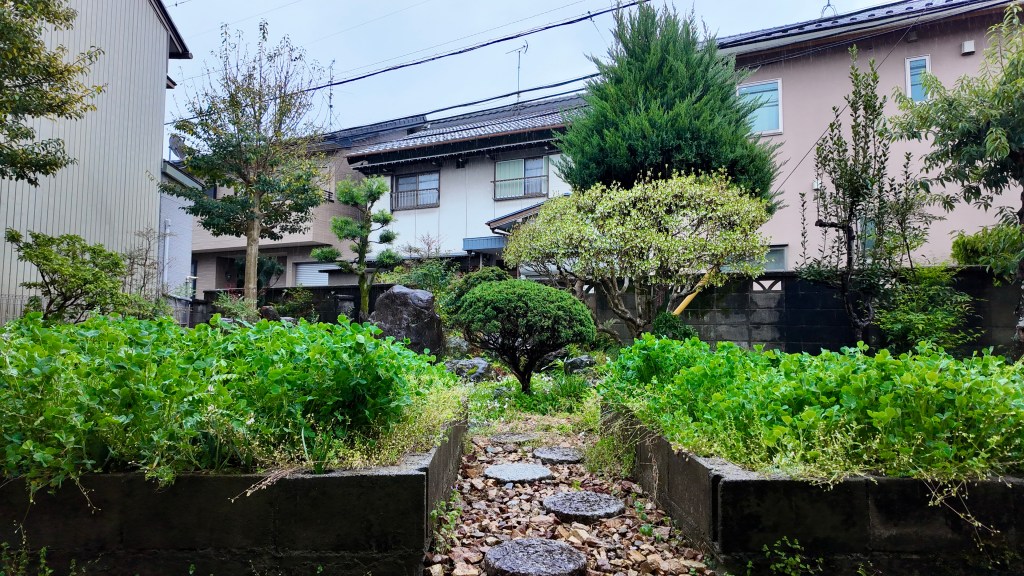
Our garden has turned into a huge green salad.
I mean, I let it all grow and did almost nothing since before last winter.
It sounds lazy on paper, but it wasn’t neglect—it was intentional. The idea of letting nature do its work took root in my mind after reading The One-Straw Revolution by Masanobu Fukuoka.
This book isn’t just about farming—it’s about rethinking our entire relationship with nature. Fukuoka, a trained microbiologist who abandoned conventional agriculture, believed that the more we interfere with nature, the more we break what was already working. His so-called “do-nothing farming” doesn’t mean doing nothing, but rather doing only what is necessary—and nothing more.
I started absorbing that philosophy. No tilling. No chemical fertilizers. No aggressive weeding. I wanted to see what would happen if I allowed the soil to breathe, rest, and rebuild on its own.
Over a year ago, I seeded crimson clover throughout the garden. I let it bloom, die back, and decompose naturally. This spring, it’s returned—stronger and more vibrant than before. Alongside it, spring stars and snowbells are reappearing in full force, as if the earth is remembering its own rhythm.
The bees and butterflies noticed, too. After the clover blossomed, I saw more pollinators than ever before, and I assume they’ve quietly taken over the pollination process without my help. That, to me, is one of the most beautiful parts of this experiment. Nature steps in where we step back.
Of course, I haven’t gone entirely hands-off. I still prune and trim where necessary. I still have plans—intentions. I’m looking to plant fruit trees soon, and I’ve been preparing a few garden beds for seasonal vegetables. I’m curious to see how they’ll grow in this naturally revitalized soil, and even more curious about how they’ll taste.
Fukuoka’s approach taught me that gardening doesn’t have to be a struggle or a fight for control. It can be a dialogue. A collaboration. His words echo in my mind:
“The ultimate goal of farming is not the growing of crops, but the cultivation and perfection of human beings.”
I’m not trying to be perfect, but I do feel more aware—more connected to the cycles of life in the soil beneath my feet. This isn’t a return to the wild. It’s a quiet return to balance.
And maybe that’s the real revolution.



 Experiences - Life - Inspiration 🇨🇭🇯🇵
Leave a comment