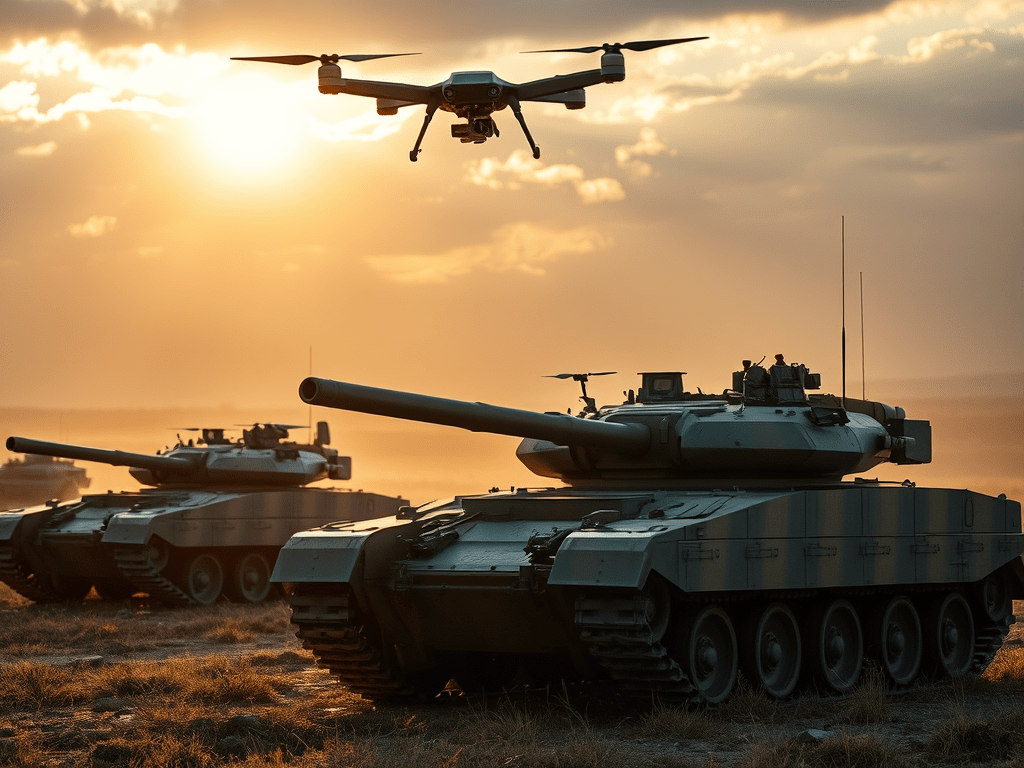
Recently, European leaders have increasingly discussed the need for a stronger and more independent defense force, especially in response to Russia’s aggressive actions in Ukraine. While the idea of a unified European military capable of defending the continent sounds appealing, the reality presents serious challenges.
1. Lack of Military Resources
One of the biggest obstacles to European defense is the lack of sufficient military resources. Many European nations drastically reduced their armed forces after the Cold War, believing that large-scale conflicts on the continent were unlikely. As a result, today’s European militaries suffer from equipment shortages, outdated weapon systems, and insufficient stockpiles of ammunition.
Germany, for example, was once a military powerhouse, but today, a significant portion of its military vehicles and aircraft are non-operational due to decades of underfunding. Many other European countries face similar issues, with defense budgets only now beginning to recover. While some nations, like Poland, are aggressively modernizing their forces, they remain exceptions rather than the rule.
2. Disorganization and Lack of Coordination
Unlike the United States, which operates under a single unified military command, Europe is fragmented. Each country has its own military priorities, procurement processes, and strategic goals. This lack of coordination makes joint military operations complex and inefficient.
While there have been attempts to create a European army, political disagreements and concerns over national sovereignty have prevented any meaningful progress. Even within NATO, interoperability issues between European forces remain a challenge. The European Union’s “Strategic Compass” initiative aims to improve this, but it will take years before real operational capabilities are in place.
3. Industrial and Supply Chain Limitations
Europe’s defense industry lacks the capacity for rapid wartime production. The war in Ukraine has shown that Europe struggles to produce and deliver weapons at the scale and speed needed for prolonged conflicts.
- Dependency on foreign arms suppliers (mainly the U.S.) means Europe cannot fully sustain its own military operations without external support.
- Germany’s Rheinmetall and France’s Thales produce advanced weapons, but production rates are too slow to replenish stockpiles quickly.
Without a stronger defense production infrastructure, Europe will continue to struggle with self-sufficiency in military logistics.
4. Energy Dependency and Economic Vulnerabilities
Despite reducing dependence on Russian gas, many European countries remain economically tied to energy imports, which could limit their ability to sustain a prolonged war effort. A major war with Russia could cripple European economies, especially in countries with high energy dependence.
5. Cybersecurity and Hybrid Warfare Threats
- Russia has repeatedly used cyberattacks, disinformation campaigns, and election interference to weaken European unity.
- A modern war would not just involve tanks and soldiers but also cyberwarfare, targeting infrastructure, banking systems, and communication networks.
- Europe’s cyber defenses remain fragmented, with countries having different levels of preparedness and response capabilities.
Without a unified approach to cybersecurity, Europe remains vulnerable to Russian hybrid warfare tactics.
6. Demographic Challenges and Recruitment Issues
Another major problem is Europe’s aging population. With low birth rates across the continent, there are fewer young people available for military service. Many European countries struggle with recruitment because military careers are often seen as unattractive compared to civilian job opportunities.
Several European nations, including Germany, have even debated reintroducing conscription to address troop shortages. However, public resistance to compulsory military service remains strong, making this an unlikely solution in the near future.
7. Dependence on NATO and the United States
Ultimately, Europe’s military readiness still relies heavily on NATO and U.S. support. While individual countries are increasing defense spending, their capabilities remain limited without American military backing. The war in Ukraine has made this painfully clear—most of Europe’s arms and ammunition supplies for Ukraine have come from the U.S.
Additionally, Europe lacks a unified nuclear deterrence strategy. While France and the UK have nuclear weapons, there is no common European nuclear doctrine, making it difficult for the EU to independently counter Russian threats.
8. Logistics and Border Defenses
Unlike Russia, which has vast internal land connections, Europe has many logistical bottlenecks that could slow troop movements.
- The EU lacks fast military mobility, meaning it would struggle to reinforce Eastern European countries in the event of an invasion.
- Railways, roads, and air transport networks are not optimized for rapid military deployment.
Possible Solutions to Strengthen Europe’s Defense
If Europe wants to become militarily independent, it should:
- Increase joint weapons production and secure a reliable supply chain for arms and ammunition.
- Expand cyber defense programs and counter Russian disinformation efforts.
- Improve military transport and logistics for rapid troop deployment.
- Enhance political unity to speed up defense decision-making.
- Address recruitment shortages through targeted incentives or reconsidering conscription.
Final Thoughts
Given these challenges, Europe is not yet capable of fully defending itself against Russia without NATO’s help. While military investments are increasing and cooperation is improving, serious structural issues remain—from outdated equipment to recruitment struggles and political disunity.
If Europe truly wants to become militarily independent, it must address these weaknesses by investing in defense industries, increasing recruitment efforts, and streamlining military cooperation. Until then, NATO will remain the cornerstone of Europe’s security.
#EuropeanDefense #MilitaryStrategy #NATO #Geopolitics #EUArmy #SecurityChallenges #RussiaUkraineWar #CyberWarfare #DefenseIndustry #EnergySecurity






 Experiences - Life - Inspiration 🇨🇭🇯🇵
Leave a comment