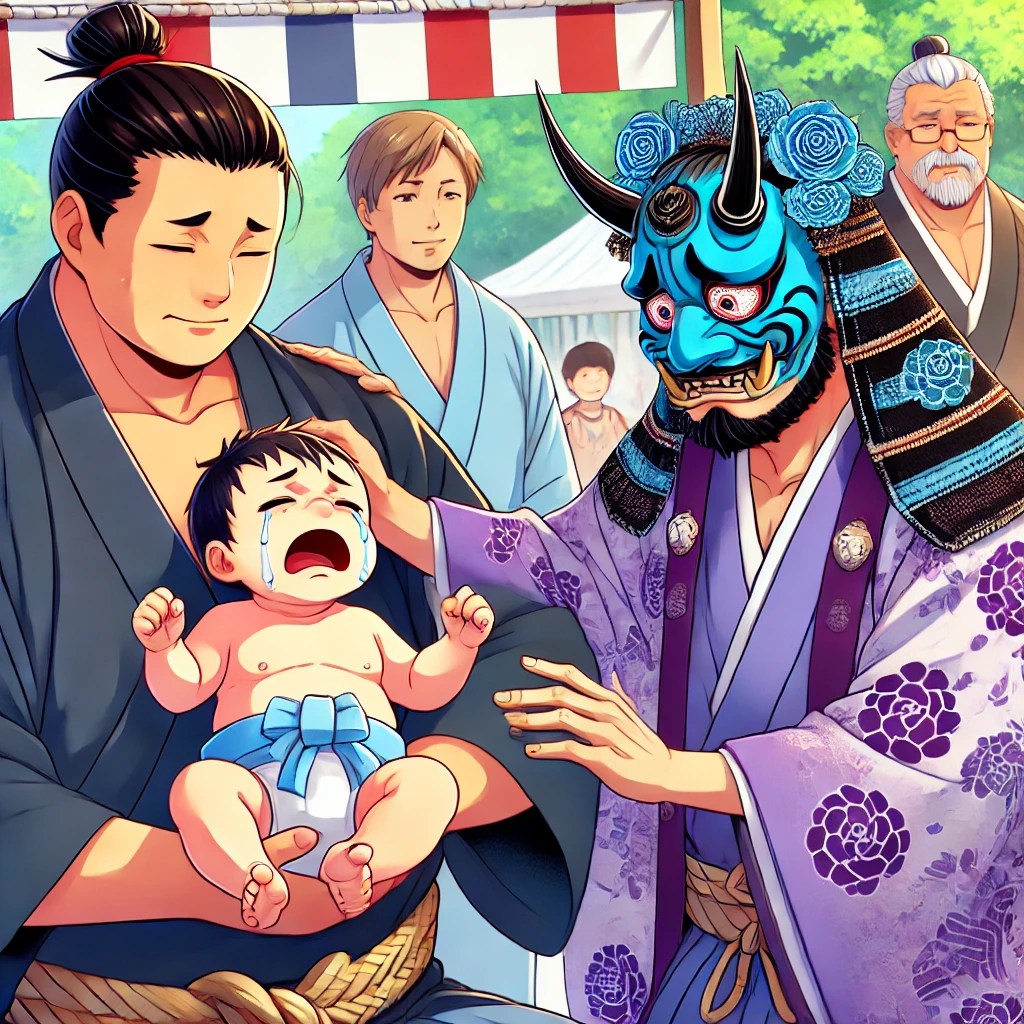
Japan never ceases to amaze me with its rich tapestry of traditions, but there’s one festival that stands out as probably the most unusual I’ve ever heard of: the Naki Sumo Crying Baby Festival (泣き相撲). As strange as it might sound at first, this age-old event isn’t just about making babies cry—it’s deeply rooted in the belief that a baby’s loud wail can ward off evil spirits and bring health, strength, and good fortune.
I haven’t had the chance to witness this festival in person, but just reading about it left me both puzzled and fascinated. Imagine this: sumo wrestlers, symbols of immense strength and discipline, holding tiny infants in their massive arms, gently coaxing them to cry—sometimes even wearing masks or bouncing them softly in an effort to bring on the tears. And all of this takes place in front of cheering crowds, with a judge (often dressed as a sumo referee) determining which baby’s cries are the loudest or come first.
It might seem bizarre from a modern, outside perspective, but the meaning behind the Naki Sumo Festival runs deep. The tradition dates back to the Edo period and ties into Japan’s spiritual belief that crying strengthens a child’s vitality and drives away misfortune. In fact, there’s an old Japanese saying: “Naku ko wa sodatsu” (泣く子は育つ), which translates to “Crying babies grow fast.”
The festival typically takes place at temples like Senso-ji in Tokyo, drawing families from across the country who want their little ones to receive blessings for a long, healthy life.
The Naki Sumo Crying Baby Festival remains, without a doubt, the most unusual Japanese festival I’ve ever heard of.
#NakiSumo #CryingBabyFestival #JapanTraditions #CulturalHeritage #EdoPeriod #TravelJapan



 Experiences - Life - Inspiration 🇨🇭🇯🇵
Leave a comment