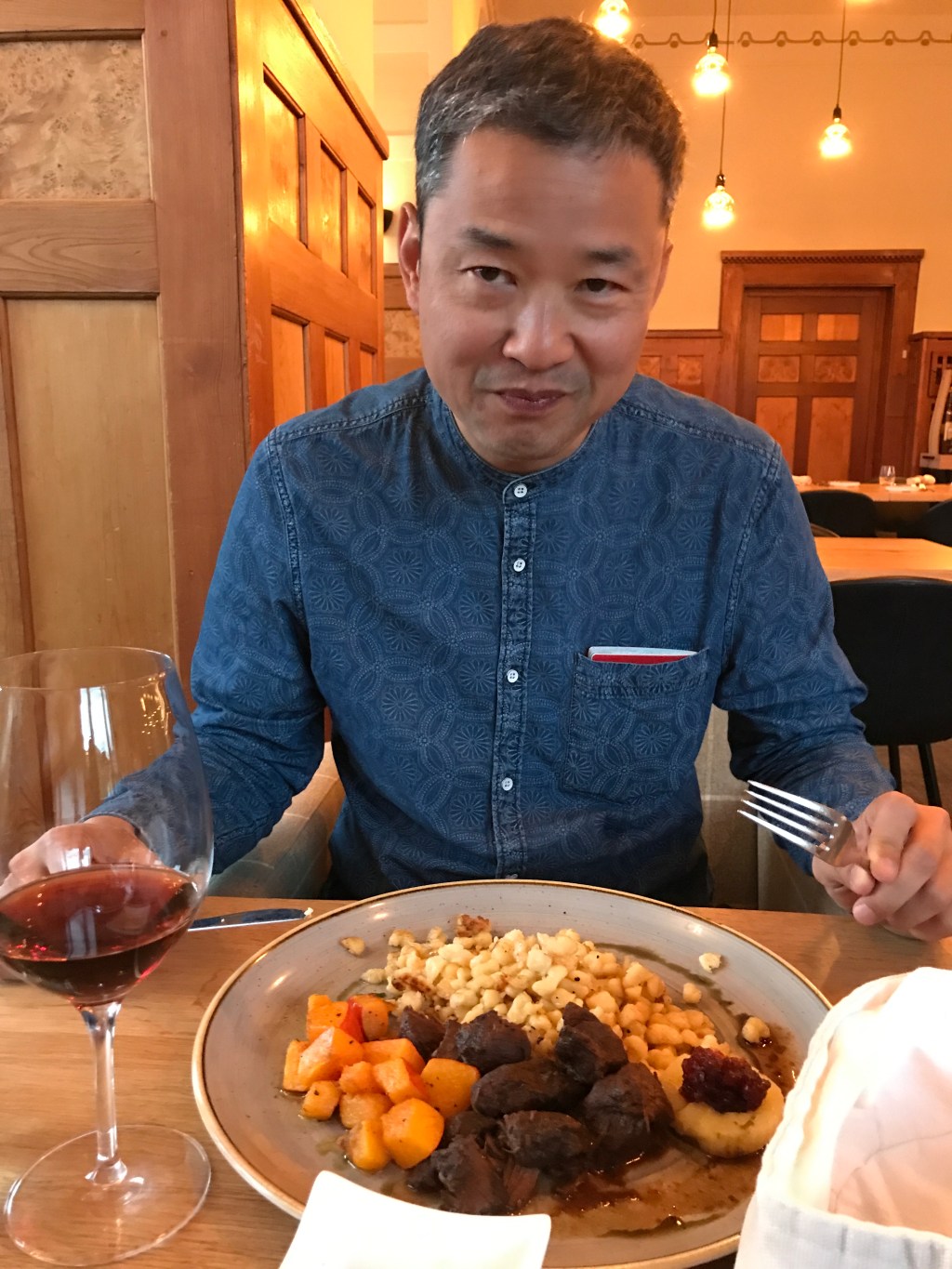
Back in Switzerland last September, Hiromi and I had the pleasure of savoring some delectable Rehpfeffer.
Rehpfeffer is a dish that embodies richness, aromatic flavors, and comforting warmth—all the qualities one desires for a cool autumn evening. The slow-cooked venison becomes incredibly tender, while the sauce develops into a complex symphony of flavors thanks to the marinade and spices. It pairs beautifully with a robust red wine.

If meat isn’t your preference, you might want to pause here; however, for those who do enjoy it, this blog post offers an intriguing exploration of alternative culinary traditions, particularly as we delve into sustainable dining options.
I have a deep fondness for venison, indulging in it primarily during my trips back to my home country, Switzerland, as I did last September.
Interestingly, I recently discovered that venison is also enjoyed in Japan, though mainly in select prefectures. Living in Gifu Prefecture, I’m particularly curious about how venison is prepared and appreciated in this region. Before you jump to conclusions about “poor deer!” consider the broader conversations surrounding the consumption of domesticated animals. It’s a topic that can evoke diverse reactions, yet understanding that eating deer in Japan is increasingly regarded as a sustainable meat option is crucial; I will elaborate on this.
Eating deer (鹿肉, shikaniku) in Japan carries rich cultural and ecological significance. It is increasingly recognized as a sustainable and traditional food source, especially in rural communities. Here are a few insights:
Cultural Background
- Traditional Use: Historically, deer meat was not widely consumed due to Buddhist dietary restrictions. However, certain regions embraced it, especially among hunters and rural residents.
- Regional Specialties: Various areas of Japan, abundant in wildlife, celebrate deer meat. It’s commonly prepared in stews, grilled, or transformed into sausages or jerky.
Modern Perspectives
- Sustainable Eating: As Japan addresses the overpopulation of wild deer, consuming their meat acts as a dual solution for wildlife management and ecosystem preservation.
- Wild Game Cuisine: Known as gibier (ジビエ), venison is gaining popularity in specialized restaurants, often viewed as a delicacy due to its lean, flavorful profile.
Ecological and Ethical Aspects
- Wildlife Overpopulation: Overgrazing by deer can adversely affect agriculture and forests, making controlled hunting and consumption of venison a practical solution.
- Hunting Regulations: Strict licensing and hygiene standards govern deer hunting in Japan, ensuring safety and sustainability.
Nutritional Value
Deer meat is not only rich in protein and low in fat, but it is also loaded with iron and vitamins—making it a nutritious alternative to other meats.
Where to Try It
- Local restaurants in rural areas, particularly those specializing in gibier.
- Specialty shops or farmers’ markets that may offer frozen or processed deer meat.
- Local festivals or events that often feature venison dishes as highlights of regional cuisine.
Have you tried deer meat, or are you considering giving it a chance? I’d love to hear your thoughts and experiences!
In the coming weeks, Hiromi and I will visit a gibier restaurant in Gujo and will be sure to share our experience with you.

#Venison #Shikaniku #Gibier #SustainableEating #CulinaryTraditions #WildlifeManagement #Gifu #JapaneseCuisine #TravelDiaries #FoodAdventures




 Experiences - Life - Inspiration 🇨🇭🇯🇵
Leave a comment