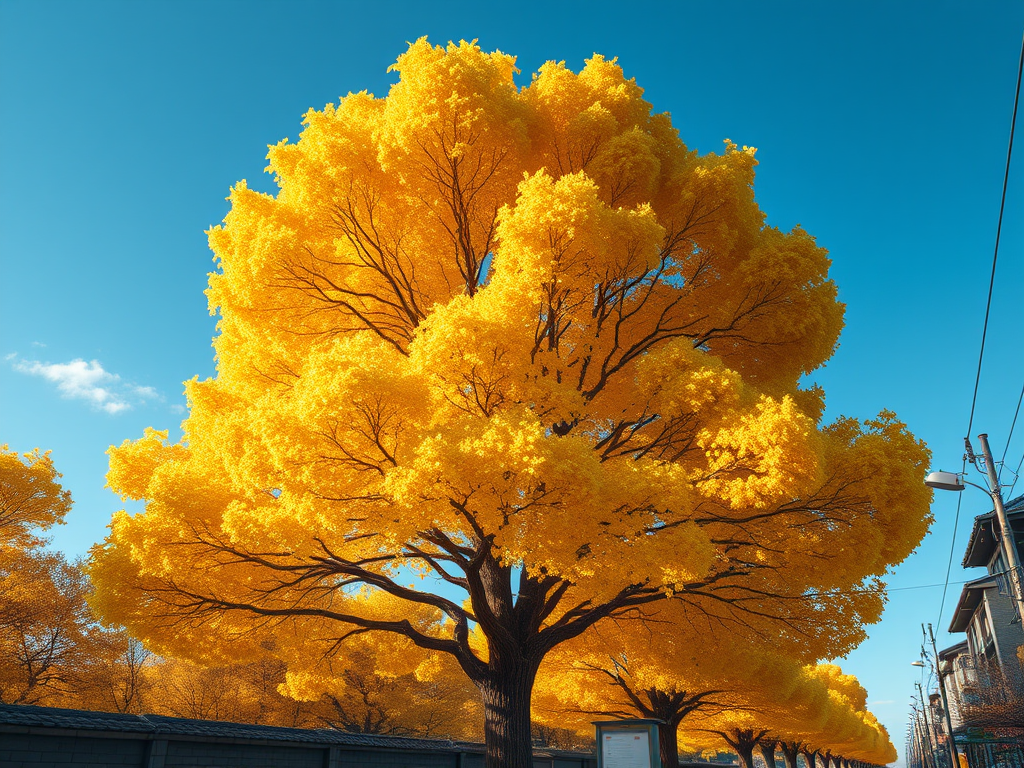
Japanese ginkgo trees (Ginkgo biloba), often celebrated as “living fossils,” boast an incredible lineage that stretches back over 200 million years. Revered in Japan for their remarkable resilience, deep cultural significance, and breathtaking autumn foliage, these trees are a natural wonder worth exploring. Here’s a closer look:
Characteristics:
- Appearance:
- Leaves: The fan-shaped, bilobed leaves are not only unique but also highly identifiable. In autumn, they transform into a stunning golden-yellow, creating picturesque landscapes that attract photographers and nature lovers alike.
- Height: Mature ginkgo trees can reach heights of 20–35 meters, making them a striking addition to any environment.
- Form: Young trees have a pleasing pyramidal shape, which gradually spreads out as they age, adding character to urban and rural settings.
- Resilience:
- Ginkgo trees are incredibly hardy, showing resistance to pests, diseases, and urban pollution.
- Remarkably, some ginkgo trees in Hiroshima survived the atomic bombing in 1945, serving as powerful symbols of resilience and renewal in the face of adversity.
- Reproductive Features:
- Ginkgos are dioecious, meaning they possess separate male and female trees.
- Female trees produce seeds encased in a fleshy coating that emits a strong odor when fallen, often compared to rancid butter or vomit, which offers a fascinating, albeit pungent, aspect of their biology.
Cultural Significance in Japan:
- Symbolism:
- The ginkgo leaf is a profound symbol of longevity, hope, and peace, embodying the spirit of resilience.
- It features prominently on the crest of Tokyo’s government and in various design and architectural elements across the country.
- Landmark Trees:
- Ginkgo-lined streets, particularly in Tokyo and Kyoto, are enchanting autumn destinations. Notable sites include the renowned Meiji Jingu Gaien in Tokyo, where visitors flock to experience the shimmering golden sights.
- Religious Importance:
- Ginkgos are commonly planted near temples and shrines, revered as sacred and protective trees that bless the surroundings.
Uses:
- Culinary:
- Ginkgo nuts (seeds) are considered a delicacy, often roasted or incorporated into dishes like chawanmushi (savory egg custard), adding a unique flavor profile.
- Due to mild toxicity in their raw form, it’s essential to consume them in moderation.
- Medicinal:
- The leaves of the ginkgo tree are utilized in both traditional and modern medicine, believed to enhance memory and improve circulation.
In summary, the remarkable ginkgo tree embodies resilience and beauty, making it a cherished natural icon in Japan and beyond.
#GinkgoTree #LivingFossils #JapaneseCulture #BotanicalBeauty #NatureLovers #SustainableLiving #CulinaryDelights #MedicinalPlants







 Experiences - Life - Inspiration 🇨🇭🇯🇵
Leave a comment