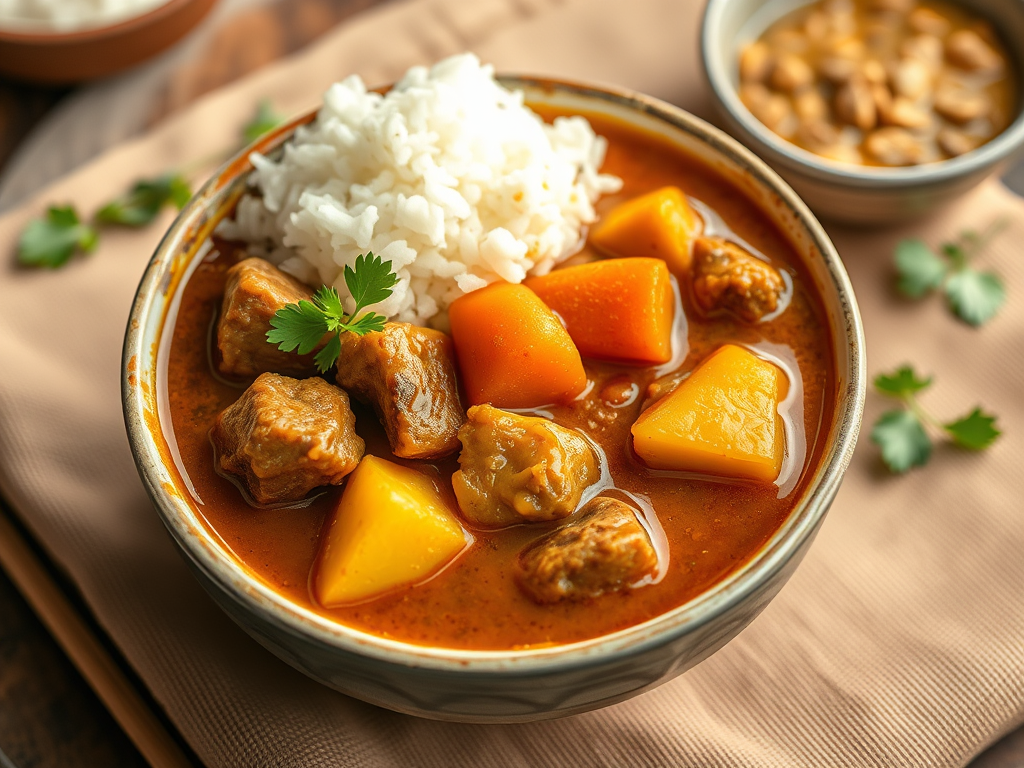
For most of my life, I have been enjoying Thai curries, primarily because my mom is Thai, and she always cooked delicious Thai dishes for me. It wasn’t until I met Hiromi about eight years ago that I was introduced to Japanese curry. While I was familiar with tempura, sushi, and teppanyaki, her Japanese curry was a whole new experience. At first taste, I realized how different it was from the Thai curries I loved.
Today, I delved into the distinctive traits of Japanese curry and how it diverges from traditional Indian and Thai curries.
Japanese curry (カレー, karee) is a beloved comfort food in Japan, known for its rich, mildly spicy, and slightly sweet flavor profile. Typically served with rice (karee raisu), it can also be found in forms like curry udon or curry bread (karee pan). The unique characteristics of Japanese curry set it apart in taste, ingredients, and preparation. Here’s a breakdown:
Key Characteristics of Japanese Curry
- Texture & Flavor:
- Japanese curry is thick and velvety, thanks to a roux (a mixture of flour and fat) that thickens it. In contrast, Indian and Thai curries tend to be more liquid-based.
- The flavor focuses on umami and mild sweetness, often derived from ingredients like honey, apples, or caramelized onions, making it less spicy and aromatic.
- Ingredients:
- The primary constituents are simple: chunks of meat (beef, chicken, or pork), potatoes, carrots, and onions.
- It relies on store-bought curry roux blocks that simplify preparation compared to the freshly ground spices used in Indian and Thai curries.
- Serving Style:
- Japanese curry is usually served with sticky Japanese short-grain rice, making it a satisfying meal. A popular variation called katsu curry introduces a topping of breaded and fried cutlets.
Comparison with Indian Curry
- Spices: Indian curries incorporate a variety of freshly ground spices (turmeric, cumin, coriander), while Japanese curry uses fewer spices and leverages pre-made roux for convenience.
- Heat Level: Ranging from mild to very spicy, Indian curries contrast sharply with the mild Japanese curry, which appeals to broader palates.
- Texture: Indian curries can be broth-like or creamy, whereas Japanese curry is consistently thick and stew-like.
- Ingredients: Indian curries feature diverse ingredients, such as lentils and various vegetables, offering more variety.
Comparison with Thai Curry
- Base Ingredients: Thai curries utilize a coconut milk base for richness, while Japanese curry relies on roux.
- Spices: The fresh ingredients of Thai curries create vibrant flavors, unlike the subdued flavor profile of Japanese curry.
- Heat Level: Thai curries can be very spicy, but Japanese curry is mild in comparison.
- Aroma: The aroma of Thai curry is fresh and fragrant, while Japanese curry focuses on savory and sweet notes.
Why is Japanese Curry Different?
Japanese curry traces its origins to British-style curry introduced during the Meiji era (1868–1912), evolving over time to fit local tastes. The creation of curry roux blocks in the 20th century made it an accessible dish, establishing its role in Japanese home cooking and schools.
Cultural Role of Japanese Curry
- It is a staple of home-cooked meals, known for its hearty and satisfying qualities.
- Curry restaurants like CoCo Ichibanya allow for customization of spice levels and toppings, showcasing its versatility.
- Enjoyed across all ages, its approachable taste makes it a favorite among families.
Conclusion
Japanese curry represents a unique fusion of Indian, British, and Japanese influences, prioritizing comfort and simplicity over spice and complexity. Despite sharing a name with Indian and Thai curries, it stands alone with its distinct identity and charm.
#JapaneseCurry #CulinaryJourney #FoodLovers #ComfortFood #FoodComparison #CurryCulture #HomeCooking #JapaneseCuisine #ThaiCuisine #FoodieFavorites







 Experiences - Life - Inspiration 🇨🇭🇯🇵
Leave a comment