When you blog every day about Japan or topics related to it, paying attention to the details becomes a habit. Occasionally, I do struggle to find an inspiring topic, but it’s a rare occurrence.
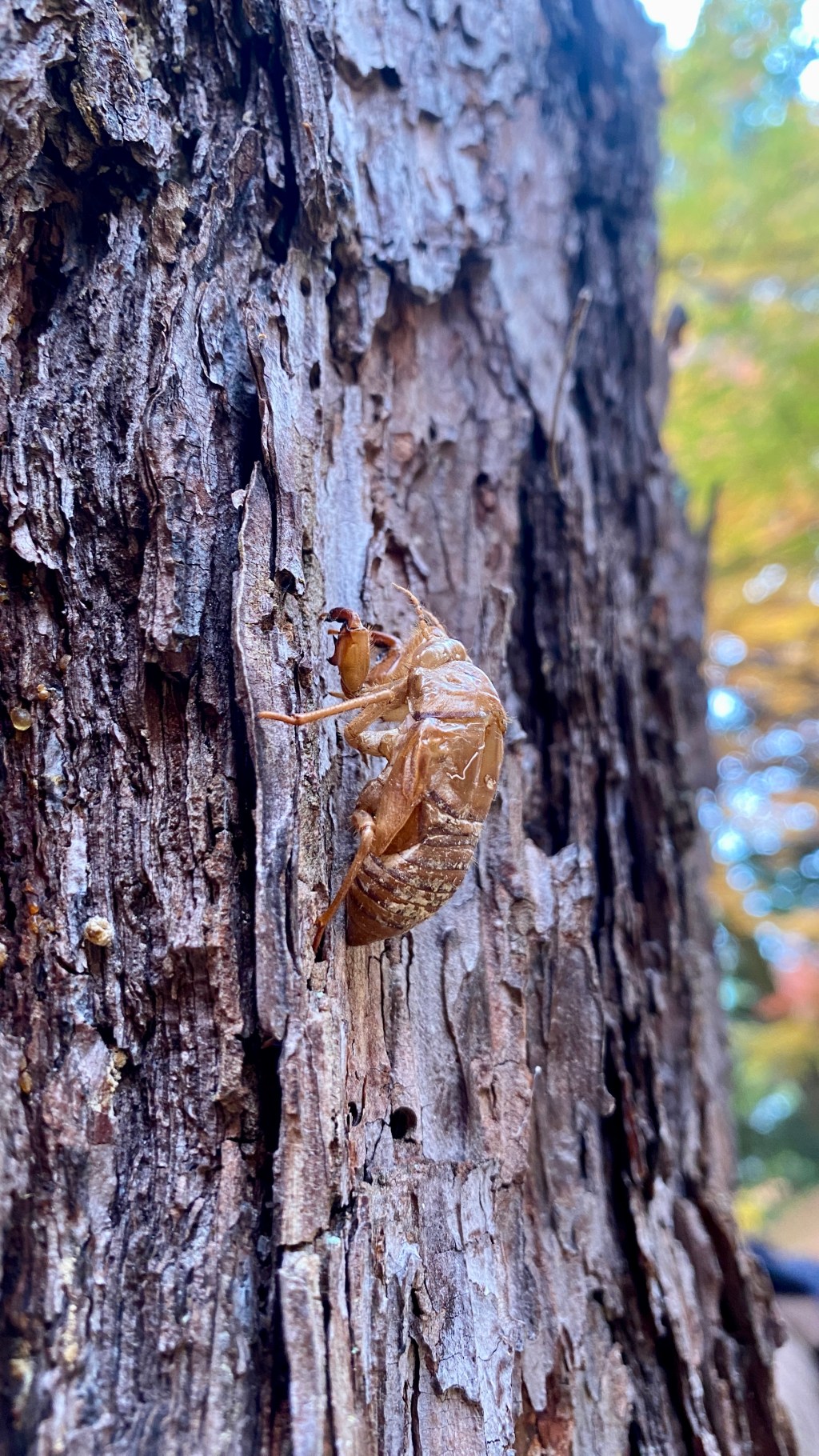
A captivating experience here in Japan is encountering cicadas during the summer. Now that fall has arrived, the cicadas have gone silent, yet just a few days ago, I discovered a cicada shell in Shiroyama Park, Takayama. It was clinging to the tree bark, and upon close inspection, I was amazed by the intricacy of its structure.
Finding a fully intact cicada exoskeleton (exuvia) attached to bark is quite common and represents a fascinating aspect of the cicada’s life cycle. Here’s how and why this happens:
The Cicada Molting Process
- Nymph Stage: Cicadas spend most of their lives underground as nymphs, feeding on sap from tree roots. When they’re ready to transition into adulthood, they dig their way to the surface.
- Emergence: Once above ground, the nymph climbs onto a stable surface, like a tree trunk or branch.
- Molting (Ecdysis): The cicada’s outer shell splits along the back, allowing the adult cicada to slowly emerge. This delicate process takes several hours, during which the adult expands its wings and hardens its body.
- Left Behind: The old exoskeleton remains firmly attached to the surface. The claws of the exoskeleton grip the bark tightly, which is why it can stay in place for an extended period.
Why is it Intact?
The molting process is precise, with cicadas carefully extricating themselves without damaging their exoskeleton. The result is a ghostly, detailed shell that resembles the cicada itself.
Have you ever come across a cicada shell? Share your experiences in the comments!
#Cicada #Japan #Nature #Biodiversity #LifeCycle #Takayama #Blogging #NaturePhotography #Insects




 Experiences - Life - Inspiration 🇨🇭🇯🇵
Leave a comment