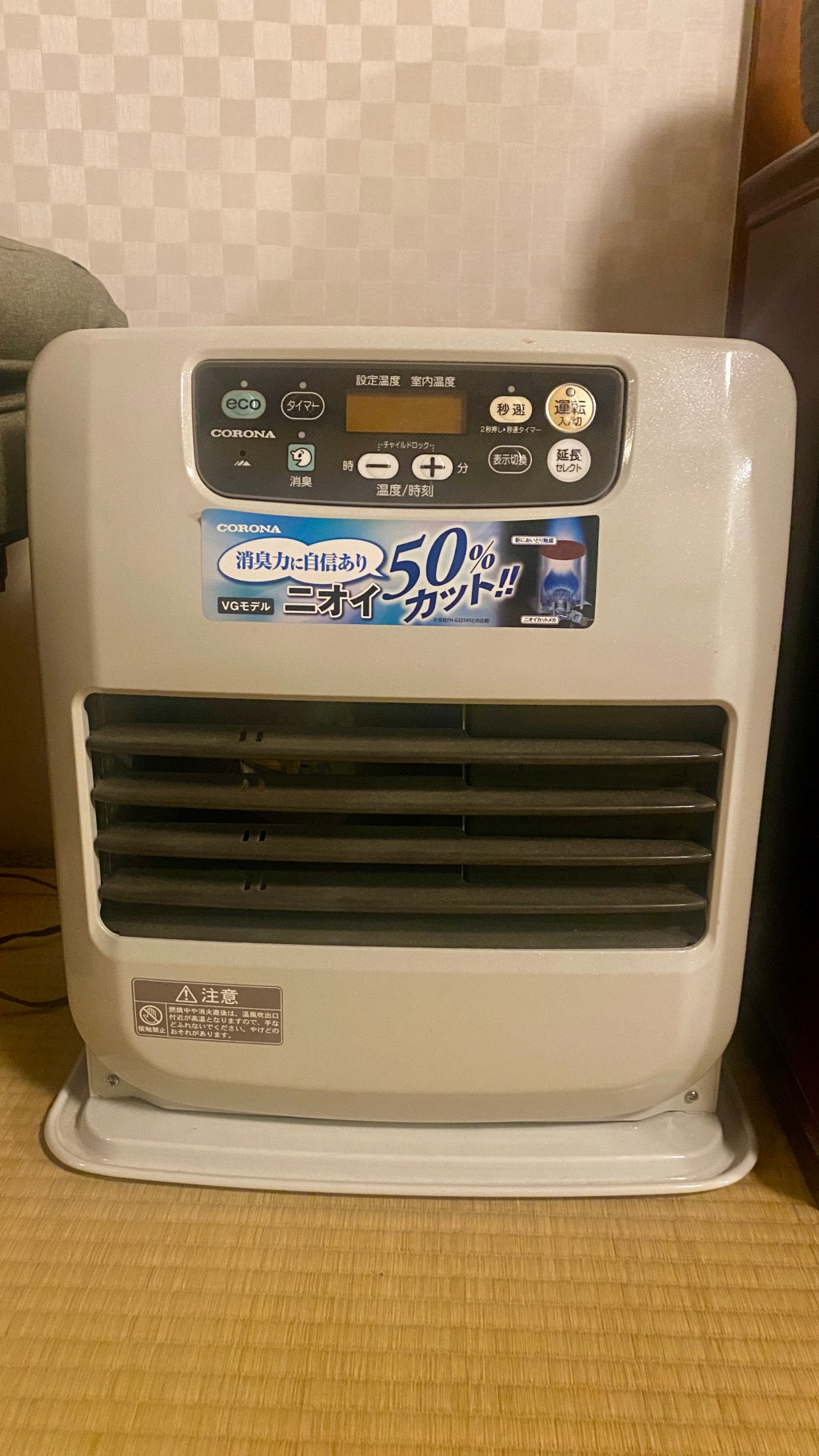
I remember my first winter visit to Gifu, where I was introduced to kerosene heaters. Initially, I was taken aback by the sight of kerosene being used for heating homes. Coming from Europe, I was accustomed only to central heating systems that circulate water heated by gas through radiators. The idea of heating a home with kerosene and manually filling the heaters felt like a revelation. Fast forward to today, I now embrace the presence of several kerosene heaters scattered throughout our traditional Japanese home. They provide me with a genuine sense of what it means to live in Japan. The sound they make when igniting and the distinct smell of kerosene have become as familiar to me as they are comforting—I kid you not.
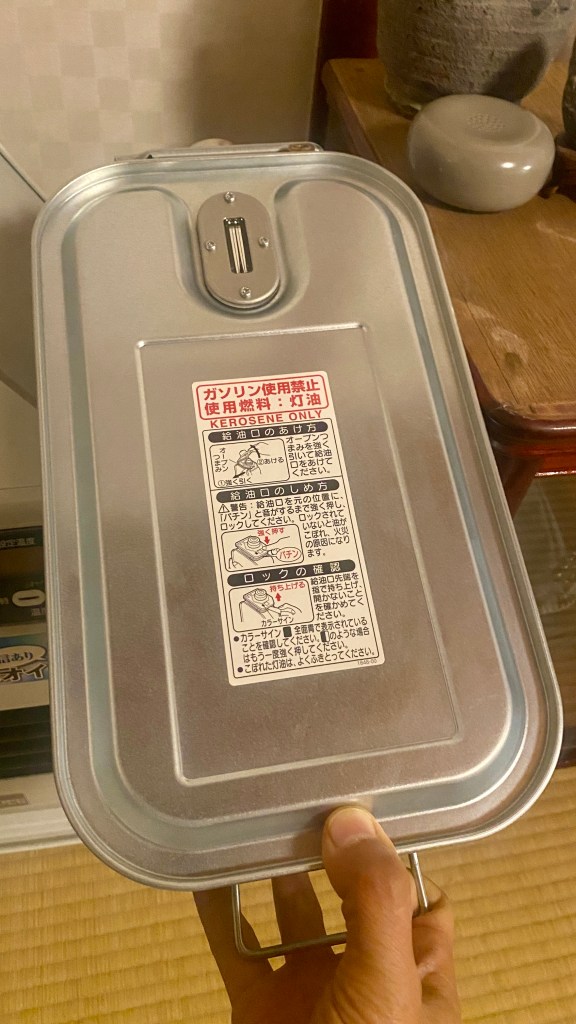
Kerosene heaters (touyu sutobu or 石油ストーブ) occupy a significant place in Japan’s history and culture, particularly in rural areas. They embody a blend of practicality, tradition, and adaptation to local needs in a country characterized by diverse climates and architectural styles. Here’s a closer look at their historical and cultural significance:
Historical Background
- Introduction of Kerosene in Japan:
- Kerosene made its entrance into Japan during the Meiji Era (1868–1912) when the nation began embracing Western technology. Its availability and efficiency quickly made it a preferred fuel for lighting and heating.
- Early designs of heaters were rudimentary, resembling lanterns, and were often used in conjunction with hibachi (charcoal braziers) as a primary warmth source.
- Post-War Era Boom:
- Following World War II, kerosene heaters became prevalent, especially in rural areas lacking modern central heating infrastructure.
- They presented an economical heating solution for expansive, drafty wooden houses built in the traditional Japanese style, often lacking adequate insulation.
- Evolving Designs:
- While the early models were purely functional, by the 1960s and 1970s, companies like Toyotomi and Zibro began producing safer, more efficient, and user-friendly models.
- Iconic designs emerged, such as the toaster-style heaters with visible flames, evoking nostalgia among older generations.
Cultural Stories and Significance
- Gathering Around the Heater:
- In rural homes, kerosene heaters serve more than just warmth—they act as a social center. Families often congregate around them during winter nights to share meals, tea, or stories.
- The heater’s surface is frequently used to warm food, dry socks, or prepare simple dishes like nabe (hot pot).
- Symbol of Resilience:
- The heater stands as a symbol of resilience and self-sufficiency in rural Japan, especially during natural disasters. After the 2011 Tōhoku earthquake and tsunami, kerosene heaters played a crucial role in providing warmth in areas without electricity.
- Integration into Daily Life:
- Preparing the heater for winter has become a seasonal ritual in rural communities. Tasks such as cleaning, refueling, and ensuring proper ventilation are integral to this winter routine.
- Delivery Trucks and Jingles:
- Kerosene delivery trucks are a staple of rural Japanese life. The cheerful jingles they play, like the beloved tune “Yuyake Koyake” (夕焼け小焼け), evoke nostalgia, signifying the arrival of winter.
Pop Culture and Nostalgia
- In Literature and Film:
- Kerosene heaters frequently appear in Japanese films, novels, and manga set in rural or traditional contexts, serving as visual metaphors for warmth, family connections, and the slower rhythms of rural life.
- In Yasujiro Ozu’s films, for instance, scenes featuring the heater evoke simplicity and familial harmony.
- Nostalgia for Older Generations:
- Many older Japanese individuals associate kerosene heaters with their childhood winters, recalling the characteristic scent of kerosene, the soothing crackle of the heater, and the cozy warmth during snowy days.
Decline and Persistence
Although modern electric and gas heaters are becoming more prevalent, kerosene heaters continue to thrive in rural locales, owing to their reliability and cultural significance. They remain emblematic of the ingenuity and practicality inherent in rural Japanese life, striking a balance between tradition and contemporary necessity.
#KeroseneHeaters #JapaneseCulture #HomeHeating #WinterTraditions #RuralLife #Nostalgia #JapaneseHistory #SustainableLiving



 Experiences - Life - Inspiration 🇨🇭🇯🇵
Leave a comment