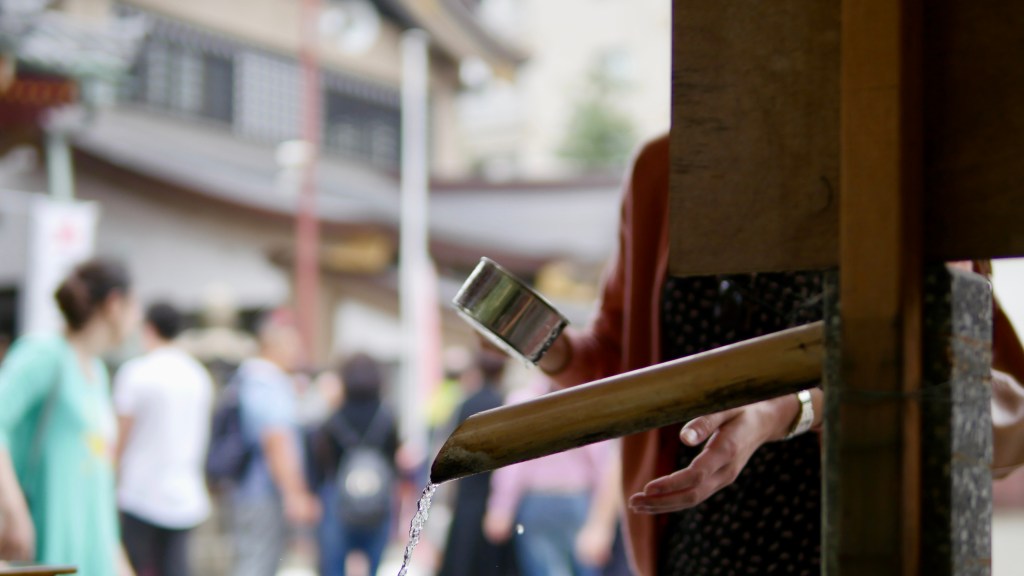
When visiting Shinto shrines in Japan, beginning your prayers involves taking a moment to look inward and connect with the divine amidst these sacred spaces. The procedure for praying at a Shinto shrine, known as “sanpai” (参拝), is traditional and respectful. Each step is simple yet laden with deep symbolism, representing reverence for the kami (deities) believed to reside within the shrine. Below is an overview of this common and meaningful procedure:
- Purification (Temizuya)
Before approaching the main shrine, it’s customary to purify yourself at a water basin called temizuya. This cleansing ritual involves washing both your hands and mouth, symbolizing the purification of body and spirit.
Steps:
- Hold the ladle in your right hand and scoop water to pour over your left hand.
- Switch the ladle to your left hand and pour water over your right hand.
- Pour water into your left hand and rinse your mouth (be sure to spit the water to the side of the basin, not back into it).
- Finally, rinse the handle of the ladle by tipping it upright.
- Approaching the Main Shrine
As you walk towards the shrine, refrain from stepping on the center path, which is reserved for the kami—a gesture of profound respect.
- Offering Money (Saisen)
Many visitors toss a small coin (typically 5 yen, considered lucky) into the saisenbako (offering box) as a token of gratitude to the kami. While this act is not mandatory, it is a customary and meaningful practice.
- Ringing the Bell
Upon arriving at the main hall (haiden), pull the bell rope once to ring the bell. This action signifies your presence and invokes the kami’s attention. The sound of the bell is believed to purify the space and announce your arrival to the spirits.
- Offering at the Main Shrine
When you reach the main hall (haiden), follow the traditional prayer procedure known as ni-rei, ni-hakushu, ichi-rei:
- Bow Twice (Ni-rei): Bow deeply two times to demonstrate your respect.
- Clap Twice (Ni-hakushu): After the second bow, clap your hands twice to draw the kami’s attention and express gratitude. Position your hands slightly offset, with the right hand lower than the left.
- Pray Silently: Offer your prayer in silence, typically focusing on themes such as health, happiness, or protection. You may also wish to express a personal desire.
- Bow Once (Ichi-rei): Finish your prayer with a final deep bow.
- Exit Respectfully
Upon concluding your prayer, bow once more as you leave the shrine grounds.
In essence, the key elements of Shinto prayer revolve around respect and sincerity. This fosters a tranquil and introspective atmosphere that connects you with nature and the spiritual realm.
#Shinto #Japan #SpiritualJourney #Kami #CulturalExperience #Mindfulness #Tradition




 Experiences - Life - Inspiration 🇨🇭🇯🇵
Leave a comment