
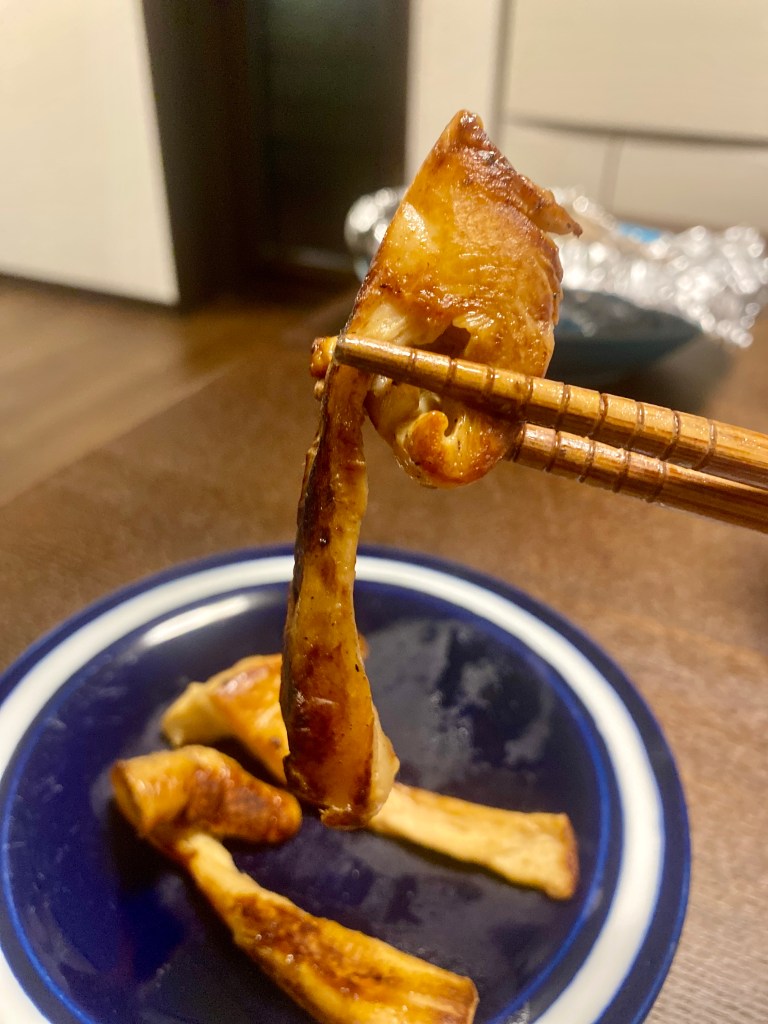
Well, I have only recently learned about Matsutake, and today I have an exciting reason to blog about it! In the picture, I’m holding two of three pieces of Matsutake that my mother-in-law gifted us yesterday. Initially, I had no idea of its significance, but Hiromi informed me that Matsutake is quite a big deal in Japan. Intrigued, I did a little digging and found the following.
Matsutake (Tricholoma matsutake) is a highly prized wild mushroom, renowned for its distinct aroma and firm texture. Commonly referred to as the “pine mushroom,” it grows in symbiosis with pine trees, making its Japanese name translate directly to “pine mushroom.” Here’s why Matsutake is so special:
1. Habitat and Growth
- Native Regions: Matsutake can be found in temperate forests, primarily in Japan, Korea, China, Finland, and parts of the Pacific Northwest in North America. It prefers sandy soils and thrives in forests dominated by red pine, Japanese black pine, or other coniferous trees.
- Growth Conditions: This unique fungus forms a mycorrhizal relationship with the roots of certain trees, aiding in nutrient exchange, making it beneficial for both. Harvesting typically occurs from late summer to early winter.
2. Appearance
- Cap: The cap of the Matsutake ranges from 5 to 20 cm in diameter, starting off convex and flattening as it matures. Its surface is often brownish with distinct scales or a cracked appearance.
- Stipe (Stem): The stem is thick, firm, and measures 5 to 20 cm tall, usually white or cream-colored with brownish streaks, offering a rugged look.
- Aroma: Its most distinctive feature is the strong, spicy, and sweet aroma, often described as having hints of cinnamon, earth, or pine—a key characteristic that sets it apart from other mushrooms.
3. Culinary Importance
- In Japan: Matsutake holds a revered status in Japanese cuisine, considered a delicacy due to its rarity and unique flavor. It’s often enjoyed grilled, steamed with rice (matsutake gohan), or in soups and hot pots. The mushroom’s flavorful fragrance enhances these dishes.
- Texture and Flavor: With a meaty, firm texture and a slightly spicy, piney flavor, Matsutake holds its shape well during cooking, making it versatile for various preparations.
- Value: Due to the challenges in finding and harvesting Matsutake, it ranks among the world’s most expensive mushrooms, with prices varying based on size, shape, condition, and origin.
4. Cultural and Symbolic Significance
- Symbol of Autumn: In Japan, Matsutake symbolizes autumn and is closely linked with traditional celebrations during the fall harvest. It has been consumed for over a thousand years and is often given as a gift.
- Rarity and Sustainability: The rarity of Matsutake is due to the specific ecological conditions it requires. In Japan, populations of Matsutake have declined because of habitat loss, pests like pine nematodes, and other environmental changes. Efforts to cultivate it have largely failed, adding to its exclusivity.
5. Global Demand and Markets
- While Japan is the largest consumer of Matsutake, international demand has surged, particularly in North America and Europe. The Pacific Northwest has seen wild Matsutake harvesting develop into a significant seasonal industry.
- Different regions produce Matsutake with subtle variations in aroma and flavor, yet Japanese consumers generally prefer domestic Matsutake, considering it of higher quality than imports.
6. Health Benefits
- Low in calories and rich in nutrients such as B vitamins, potassium, and fiber, Matsutake also contains antioxidants and has been studied for its potential immune-boosting properties, though more research is needed to confirm these benefits.
Matsutake’s cultural significance and unique qualities make it one of the most sought-after wild mushrooms globally, drawing both chefs and foragers alike.
Now that we understand its allure, how is Matsutake priced?
The price of Matsutake mushrooms varies significantly based on several factors:
Pricing Factors
- Country of Origin: Japanese Matsutake are the most expensive, fetching up to $1,000 per kilogram (2.2 lbs) or more during peak season. Imported Matsutake from China, Korea, and North America range from $100 to $600 per kilogram depending on quality and grade.
- Quality Grading: Premium-grade Matsutake with unblemished, thick, and closed caps fetch the highest prices, while lower grades are still valued but significantly less expensive.
- Season and Availability: Prices peak at the beginning of the harvesting season and can surge due to low harvest conditions.
- Market Fluctuations: Demand, especially during cultural holidays, plays a vital role in pricing, alongside the rarity in regions where Matsutake grows.
- Packaging and Presentation: High-quality Matsutake often come packaged for gifts, which can increase their price due to presentation.
Price Examples
- Premium Japanese Matsutake: $500 to $1,000+ per kilogram.
- Imported Matsutake: $100 to $500 per kilogram.
- North American Matsutake: $200 to $600 per kilogram.
- Lower-grade Matsutake: $50 to $300 per kilogram.
In regions where Matsutake grows naturally, like the Pacific Northwest, foragers might sell their finds at lower prices, though they remain a luxury item.
Now that we’ve explored its significance and pricing, how do we prepare Matsutake without compromising its quality? Cooking Matsutake is about highlighting its unique aroma and flavor. Here are some delicious methods to enjoy it:
Cooking Methods
1. Matsutake Gohan (Matsutake Rice)
A traditional dish where the mushrooms infuse the rice with their aroma.
Ingredients:
- 2–3 Matsutake mushrooms
- 2 cups short-grain rice
- 2 cups dashi or water
- 2 tbsp soy sauce
- 1 tbsp mirin
- 1 tsp sake
- Optional: salt, chopped mitsuba or green onions for garnish
Instructions:
- Rinse and soak rice for 30 minutes; then drain.
- Clean Matsutake gently with a damp cloth, avoiding washing.
- Slice the mushrooms and add them on top of the rice with other ingredients in a rice cooker or pot.
- Cook as usual and fluff the rice gently once done, mixing in the mushrooms. Garnish if desired.
2. Grilled Matsutake (Yakimatsutake)
Grilling brings out the best of Matsutake’s natural flavor.
Ingredients:
- 2–3 Matsutake mushrooms
- Sea salt
- Soy sauce and yuzu (or lemon) for dipping
Instructions:
- Clean and slice Matsutake.
- Grill lightly until tender and browned, about 1–2 minutes per side.
- Sprinkle with sea salt and serve with dipping sauce.
3. Matsutake Dobin Mushi (Steamed Mushroom Soup)
A light, aromatic soup perfect for showcasing Matsutake’s flavor.
Ingredients:
- 1–2 Matsutake mushrooms, sliced thinly
- 3 cups dashi stock
- 1–2 slices of chicken or shrimp (optional)
- Yuzu or lemon peel
- Soy sauce and sake
Instructions:
- Clean and slice mushrooms.
- Heat dashi, add soy sauce and sake, simmer, and then add remaining ingredients.
- Serve hot with a piece of yuzu peel for aroma.
4. Matsutake Tempura
A light and crispy dish that retains the mushroom’s texture.
Ingredients:
- 2 Matsutake mushrooms, cut into bite-sized pieces
- Tempura batter
Instructions:
- Clean and cut mushrooms.
- Prepare the batter and fry the pieces until golden brown, about 2–3 minutes.
- Serve hot with dipping sauce or salt.
These recipes aim to preserve and showcase the Matsutake’s natural flavor and its legendary fragrance. Enjoy experimenting with these methods for a delightful Matsutake experience!
#Matsutake #PineMushroom #CulinaryDelight #JapaneseCuisine #MushroomCooking #Foraging #WildMushrooms #GourmetFood #Foodie #Umami




 Experiences - Life - Inspiration 🇨🇭🇯🇵
Leave a comment