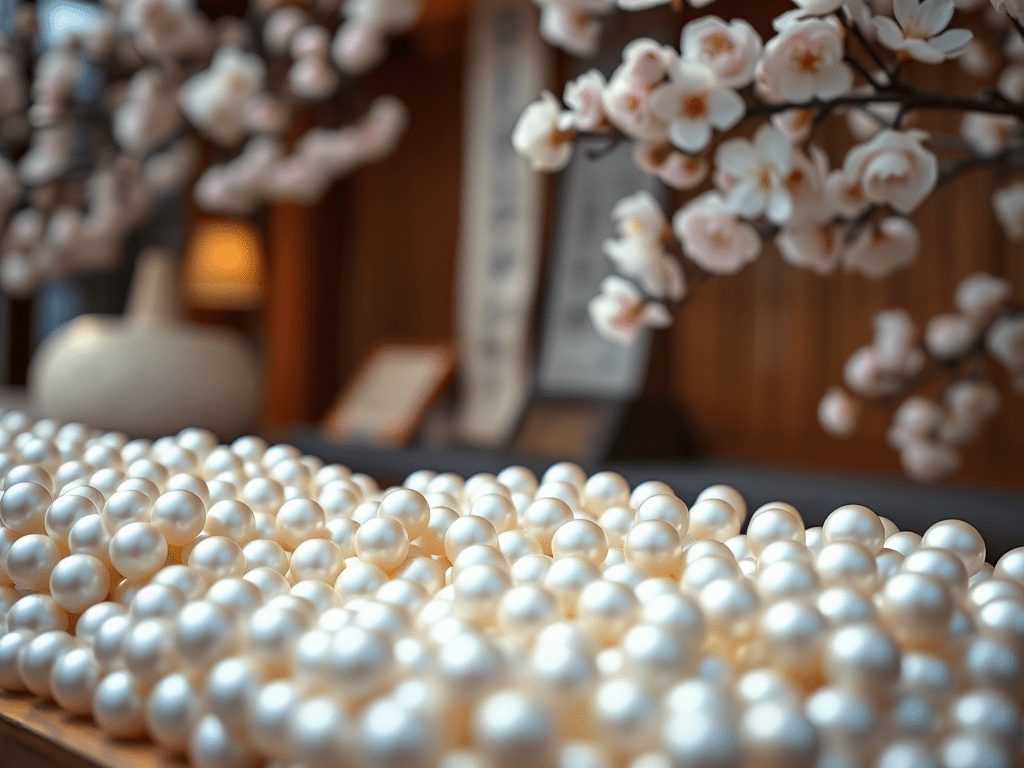
Just arrived back home in Gifu after a delightful day trip to Toba!
While it wasn’t part of the original itinerary when my mother visited a week ago, her keen interest in Japanese pearls prompted a wonderful change of plans. As a lifelong lover of pearl jewelry, her enthusiasm inspired me to dive into some research. I soon discovered that Mikimoto Pearl Island in Toba would be a dream destination for her. After our visit to Nara, we took an early morning train to Toba, and the journey was well worth it.
I had no idea that Japanese pearls held such significance until now. Mikimoto Kōkichi, it turns out, was the visionary entrepreneur responsible for transforming pearls into a global phenomenon.
Mikimoto Kōkichi (1858–1954) is renowned as the pioneering entrepreneur who perfected the art of cultivating pearls, revolutionizing the pearl industry and establishing one of Japan’s most iconic luxury brands. Born into a modest family in Toba, Mie Prefecture, he cultivated a fascination with pearls from a young age, recognizing their potential both as exquisite natural treasures and profitable business opportunities.
In the late 19th century, when natural pearls were rare and costly, Mikimoto sought a way to produce them artificially. With unwavering support from his wife and collaboration with scientists like Dr. Tokichi Nishikawa and Dr. Tatsuhei Mise, he embarked on years of tireless experimentation. In 1893, after numerous setbacks, he achieved a monumental breakthrough by cultivating the world’s first cultured pearl through a method of implanting a nucleus into an oyster. This innovative approach revolutionized the industry, making pearls far more accessible and affordable while preserving their inherent beauty.
Mikimoto was not only an extraordinary innovator but also a savvy businessman. He founded the Mikimoto Pearl Company, which blossomed into a globally recognized luxury brand. By showcasing Japan’s cultured pearls at international exhibitions, he garnered attention from both European and American markets, where his pearls became synonymous with elegance and quality.
Beyond his contributions to the pearl industry, Mikimoto’s legacy is one of promoting Japanese craftsmanship and beauty on the world stage. Today, Mikimoto pearls symbolize luxury, and his remarkable achievements beautifully intertwine science, art, and commerce.

#Mikimoto #PearlJewelry #JapaneseCulture #Toba #TravelDiaries #LuxuryBrands #CulturalHeritage #Innovation #Craftsmanship #TravelJapan





 Experiences - Life - Inspiration 🇨🇭🇯🇵
Leave a comment