Just returned to the hotel, taking a break before heading out again for dinner.
While my mom is currently enjoying a dip in the hotel’s onsen, I’m seizing this opportunity to jot down today’s blog.
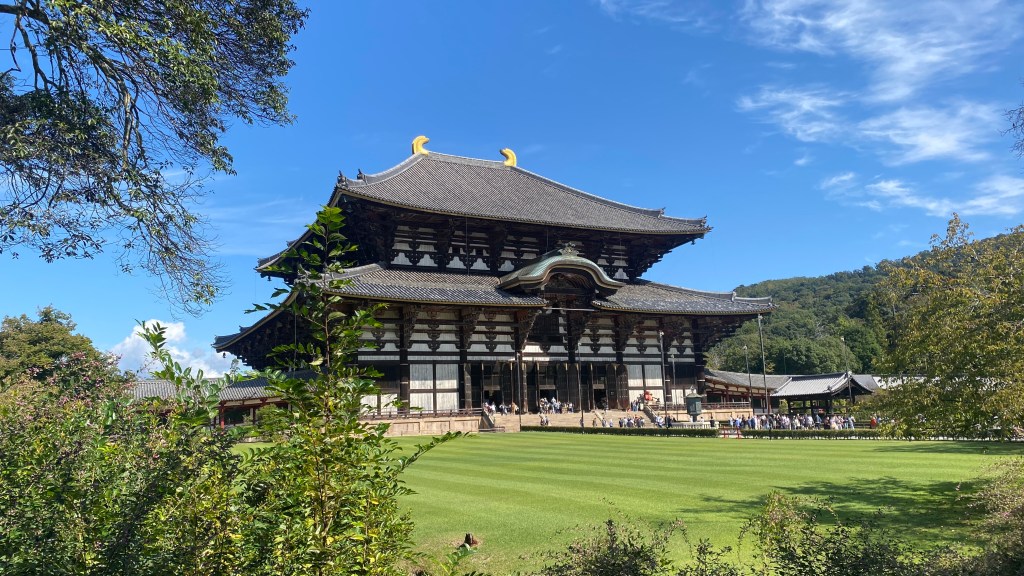
This morning, we ventured out to Nara Park to explore the magnificent Tōdaiji Temple. I had mentioned to my mom that we might encounter deer roaming freely, curious to see her reaction. To my surprise, she didn’t find them charming at all and remarked that they stink! I chuckled and reminded her that there are certainly worse smells out there.

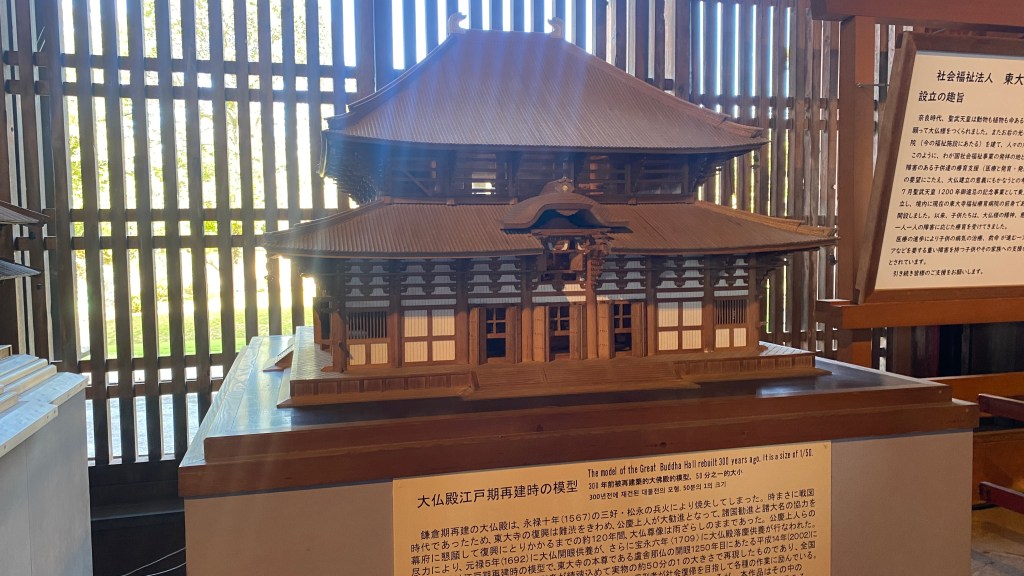
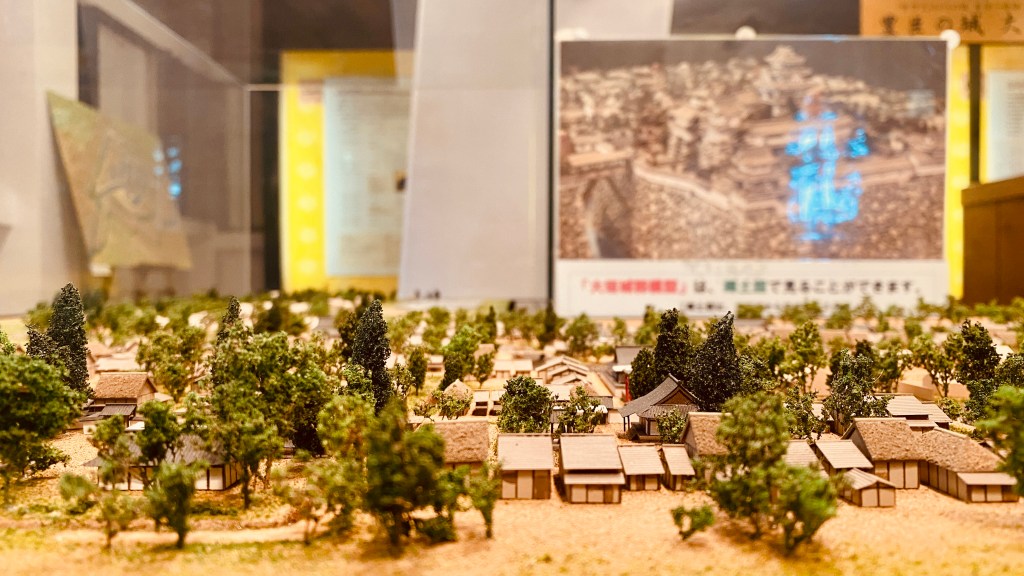
As we entered Tōdaiji Temple, we were awe-struck by the imposing wooden South Gate and later by the grandeur of the Great Buddha Hall itself. Even though I had previously visited this temple with Hiromi several years back, I had overlooked the fact that the Great Buddha Hall has undergone different designs throughout history due to fires and wars. I managed to take some photographs showcasing how the Great Buddha Hall appeared 800 and 300 years ago.

Tōdaiji Temple (東大寺) is one of Japan’s most historically significant and visually stunning landmarks, nestled in Nara. Originally constructed in 752 during the Nara period, it is a UNESCO World Heritage site and serves as the head temple of the Kegon school of Buddhism.
Here are some key highlights of Tōdaiji:
- Daibutsuden (Great Buddha Hall): The main hall of Tōdaiji, the Daibutsuden, houses one of the largest bronze Buddha statues in the world, the Daibutsu. The seated Buddha measures about 15 meters tall and weighs over 500 tons. This hall was the largest wooden structure in the world until modern times, though the current building (reconstructed in 1709) is slightly smaller than the original.

- Historical Importance: Tōdaiji was founded by Emperor Shōmu as a symbol of unity for Japan under Buddhism and to help bring peace during a period of turmoil. The temple’s construction was a massive national project that nearly bankrupted Japan at the time due to the resources it required.
- Buddhist Center: In the early days, Tōdaiji served as the head of all provincial temples in Japan, playing a crucial role in the spread of Buddhism. It remains a key spiritual site today.
- Architectural Wonders: The temple complex is vast and features stunning architectural achievements, including the Nandaimon Gate, a massive wooden gate flanked by statues of the Nio guardians (traditional protectors of Buddhist temples).

- Surrounding Grounds: The temple is set within Nara Park, known for its wild yet friendly deer. These deer are regarded as sacred messengers of the Shinto gods.


#NaraPark #TodaiJiTemple #JapanTravel #CulturalExploration #Buddhism #HeritageSite #TravelDiaries #FamilyAdventures





 Experiences - Life - Inspiration 🇨🇭🇯🇵
Leave a comment