
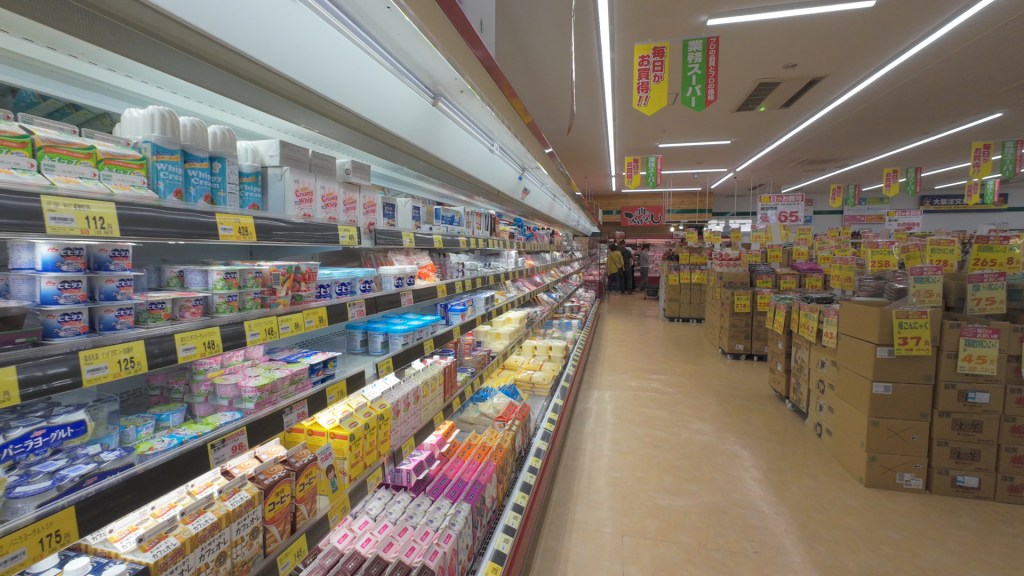
It’s been a while since my wife and I last visited Gyomu Super for groceries, but today we finally made the trip. I’ve previously shared my enthusiasm for Gyomu Super in a blog post, and it continues to be our preferred go-to store for non-Japanese products at competitive prices. The range of products, including European items like pastas, canned tomatoes, and cheeses, resonates with us due to our time living in the Netherlands. While it’s challenging to fully capture what sets Gyomu Super apart as a supermarket chain, it bears a resemblance to the German Aldi. However, Gyomu Super’s approach to bulk buying and its appeal to both individual consumers and businesses closely aligns with that of Costco. Let’s delve into the detailed comparison between Gyomu Super and Costco to understand their similarities and differences.
Similarities Between Gyomu Super and Costco
Bulk Purchasing:
- Gyomu Super: Offers a wide variety of products in bulk quantities, catering to both families and businesses.
- Costco: Specializes in bulk sales, providing significant discounts on large quantities, appealing to both individual consumers and businesses.
Product Range:
- Gyomu Super: Stocks a mix of domestic and imported foods, raw ingredients, and other essentials, often in large packages.
- Costco: Offers a diverse range of products including groceries, household goods, electronics, and clothing, with many items available in bulk sizes.
Target Audience:
- Gyomu Super: Targets regular consumers and businesses, particularly restaurants and small enterprises that benefit from buying in bulk.
- Costco: Serves individual members and businesses, offering products and services to cater to both segments.
Store Layout and Shopping Experience:
- Gyomu Super: Adopts a utilitarian store layout designed to handle large quantities of goods, prioritizing practicality over aesthetics.
- Costco: Features warehouse-style stores that prioritize efficiency and practicality, with simple layouts designed to accommodate large pallets of products.
Pricing Strategy:
- Gyomu Super: Implements competitive pricing on bulk items, making it cost-effective for large purchases.
- Costco: Renowned for its low prices on bulk items, leveraging its membership model to pass savings on to customers.
Membership Model:
- Gyomu Super: Does not typically use a membership model.
- Costco: Operates on a membership-based model, driving customer loyalty and ensuring regular revenue.
Differences to Consider
Membership:
- Gyomu Super: No membership required; open to all customers.
- Costco: Requires a membership fee, which can be a barrier for some potential customers but provides various benefits to members.
Product Variety:
- Gyomu Super: Focuses primarily on food items, especially those suitable for bulk purchase by restaurants and large families.
- Costco: Offers a broader product range including non-food items like electronics, furniture, and clothing.
Store Presence:
- Gyomu Super: Primarily located in Japan, with a focused domestic market.
- Costco: Boasts a significant international presence, with stores in multiple countries around the world.
Conclusion
While Gyomu Super and Costco operate in different markets and have distinct operational approaches, they share several similarities in their business strategies, particularly their focus on bulk purchasing and catering to both individual and business customers. This positions Costco as the Western supermarket chain most comparable to Gyomu Super.
#GyomuSuper #Costco #SupermarketComparison #BulkBuying #BusinessStrategies







 Experiences - Life - Inspiration 🇨🇭🇯🇵
Leave a comment