Last August, I embarked on a gardening journey with no prior knowledge or experience in growing vegetables, herbs, or managing a Japanese garden. My move to a rural town in Japan unexpectedly provided me with the opportunity to immerse myself in the world of native Japanese plants and cultivating our own produce.
Faced with the challenge of merging permaculture and Japanese garden aesthetics—both newfound passions of mine—I’ve found myself exploring uncharted territory. Surprisingly, I have yet to encounter a permaculture expert who has delved into the realm of Japanese aesthetics, making me feel like a pioneer in this area.
Nevertheless, I’m determined to forge ahead, relying on trial and error to navigate this unexplored terrain.
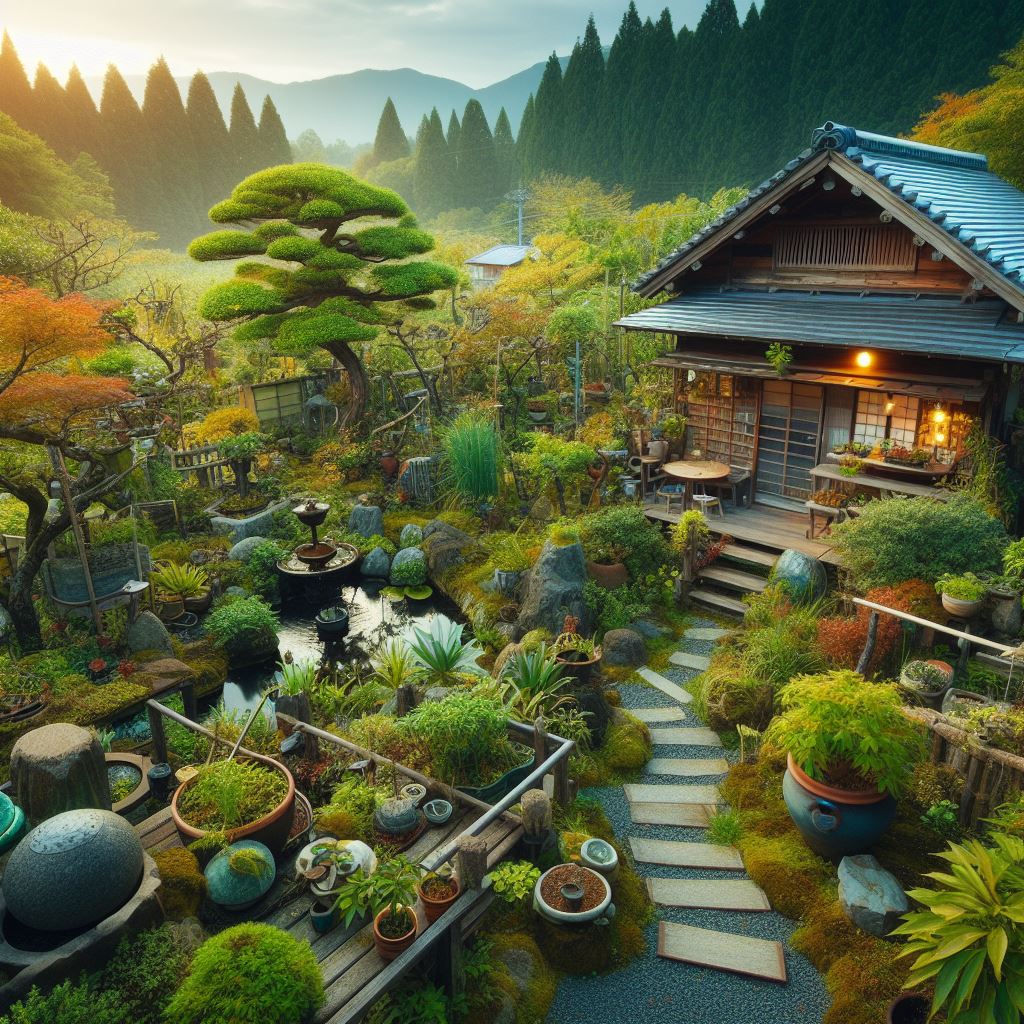
Thankfully, I’ve discovered that permaculture and Japanese garden aesthetics can indeed complement each other. Here are some ways in which they can be combined:
Integration of Edible Plants: Permaculture emphasizes incorporating edible plants into landscape design. Within a Japanese garden, this can involve integrating fruit trees, berries, herbs, and vegetables while preserving the garden’s aesthetic appeal.
Water Features: Japanese gardens often include ponds, streams, and waterfalls, which can serve multiple purposes in a permaculture system. These water elements provide habitat for aquatic life, support irrigation for nearby plants, and enhance biodiversity.
Natural Materials and Textures: Both permaculture and Japanese garden design utilize natural materials like stone, wood, and bamboo. These elements can be used to create pathways, seating areas, and garden structures that seamlessly blend with the landscape.
Seasonal Interest: Japanese gardens highlight the beauty of each season through carefully selected plants and design elements. Permaculture design can embrace this concept by incorporating a diverse range of plants that offer seasonal interest, such as flowering trees and shrubs, fruit-bearing plants, and colorful foliage.
Sustainable Practices: Permaculture advocates for sustainable gardening practices like composting, rainwater harvesting, and companion planting. These practices can be seamlessly integrated into Japanese garden design to minimize environmental impact and maximize ecological benefits.
Combining permaculture principles with Japanese garden aesthetics allows for the creation of a landscape that is not only beautiful but also functional, providing aesthetic pleasure, ecological benefits, and food production.
#Permaculture #JapaneseGarden #Gardening #Sustainability #LandscapeDesign #EcologicalDesign #NativePlants #AestheticDesign







 Experiences - Life - Inspiration 🇨🇭🇯🇵
Leave a comment