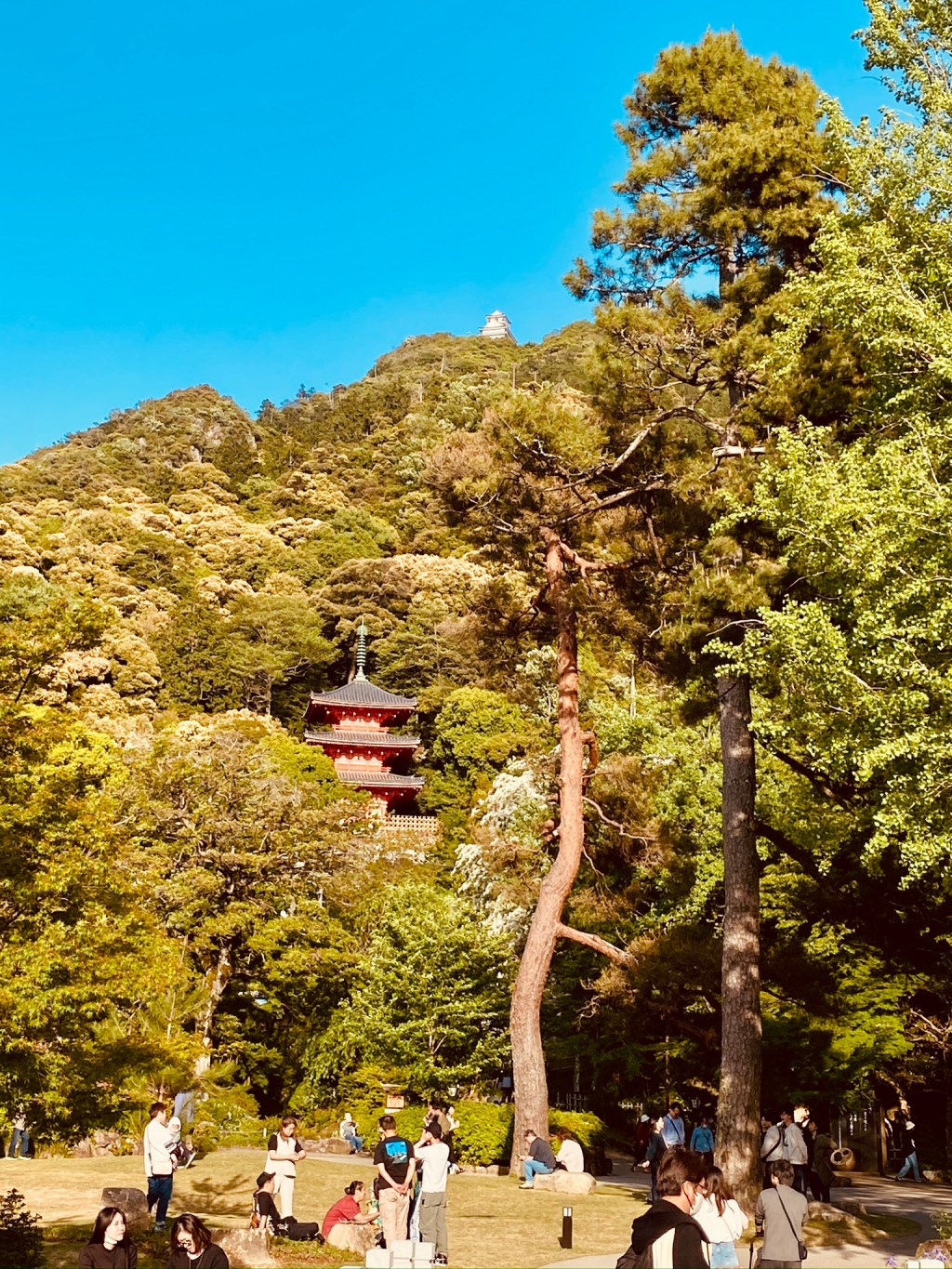
After revisiting relevant sections of the Sakuteiki and exploring various Japanese garden styles, I had an epiphany: Karikomi is the essence of what I’ve always admired.
Karikomi, a traditional Japanese gardening technique, involves meticulously shaping and pruning shrubs into dense, rounded masses or mounds. This method creates visually striking and meticulously maintained landscapes within Japanese gardens. Here are some key aspects and characteristics of Karikomi:
Dense Groupings: Karikomi emphasises dense groupings of shrubs, meticulously pruned and shaped into rounded forms. These shrubs are often planted in overlapping layers to create depth and texture within the landscape.
Precision Pruning: Achieving the desired rounded shapes in Karikomi requires careful and precise pruning techniques. Gardeners use specialized shears and tools to trim the shrubs into smooth, curved forms, ensuring uniformity and balance in the design.
Seasonal Variation: While predominantly green due to evergreen shrubs, Karikomi gardens also incorporate seasonal flowering plants for bursts of color throughout the year, enhancing visual interest and providing changing focal points.
Formal Integration: Karikomi is often incorporated into formal garden designs, such as Japanese tea gardens and strolling gardens. The meticulously maintained shrub masses contribute to the overall sense of order and balance in these landscapes.
Symbolic Meaning: Like many elements of Japanese garden design, Karikomi may carry symbolic meaning. The rounded shapes of the shrubs evoke natural features like hills or clouds, symbolizing harmony with nature and creating tranquility in the garden.
Maintenance: Maintaining Karikomi gardens requires ongoing care and attention to detail. Regular pruning is necessary to preserve the rounded shapes of the shrubs and prevent overgrowth. Bamboo sticks or guides are often used to ensure uniformity and precision in pruning work.
In our garden, I’ve already cut down many outgrown shrubs to achieve the balanced look of grouped, rounded shrubs. Although the garden may appear bare in the coming season as shrubs regrow from the ground, I’m excited to prune them into small, cute round shapes.
As seen in the second picture, this is the aesthetic I’m aiming for.
Our garden also features taller trees that I’ve been pruning and trimming. I’ll maintain the cloud pruning style with exposed branch structures, enhancing the garden’s appeal from every angle. While cloud pruning isn’t feasible for some trees due to their height, I believe a mix of natural growth adds to the garden’s organic charm.
It took months of observation, study, and hands-on work, but I’ve finally crystallised this vision. Will it unfold exactly as I’ve envisioned? There’s only one way to find out.


#KarikomiStyle #JapaneseGardening #GardenDesign #GardeningTechniques #Landscaping #NatureInspired #TranquilSpaces #GardenJourney #GardeningInspiration






 Experiences - Life - Inspiration 🇨🇭🇯🇵
Leave a comment